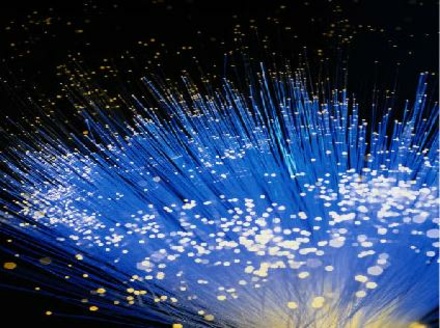
A real life Alice In Wonderland story is a little closer to reality now that researchers in China have created the first tunable electromagnetic gateway.
In a new paper, researchers from the Hong Kong University of Science and Technology and Fudan University in Shanghai have described the concept of a "a gateway that can block electromagnetic waves but that allows the passage of other entities" like a "'hidden portal' as mentioned in fictions."
The gateway uses transformation optics and an amplified scattering effect from an arrangement of ferrite materials called single-crystal yttrium-iron-garnet that force light and other forms of electromagnetic radiation in complicated directions to create a hidden portal.
The green of a tree's leaves is from the larger proportion of the chlorophyll pigment in the leaves. As days get shorter, less chlorophyll is produced and green is no longer dominant because yellow xanthophylls and orange carotenes are also present in the chloroplasts.
But why will the leaves of some trees be red in America yet yellow in Europe?
Did late Lower Paleolithic people hunt or were they scavengers? A University of Arizona anthropologist says that humans living at a Paleolithic cave site (Qesem Cave) in central Israel between 400,000 and 250,000 years ago were as successful at big-game hunting as were later stone-age hunters at the site, but earlier humans shared meat differently.
Qesem Cave ("Qesem" means "surprise") people hunted cooperatively, then carried the highest quality body parts of their prey to the cave, where they cut the meat with stone blade cutting tools and cooked it with fire.
Treelines are not responding to global warming the way previous projections said they should, according to the first global quantitative assessment of the relationship between warming and treeline advance published in Ecology Letters.
The study tests the consensus that treelines have been globally advancing in response to the warming climate since 1900.
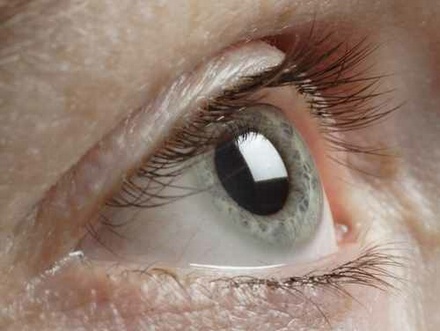
Even in adults born with extremely impaired sight, the brain can rewire itself to recognize sections of the retina that have been restored by gene therapy. This surprising adaptability comes a year after three blind volunteers received doses of corrective genes to selected areas of their retinas at Shands at the University of Florida medical center.
More than a year later, tiny portions of the patients' retinas that have received gene therapy have kept their restored function, as much as 1,000-fold increases for day vision and 63,000-fold for night vision.
Labels on prescription drugs tell you what researchers know about the medication, but what is left out can be important as well and researchers from the Stanford University School of Medicine think it's high time that the labeling tell you what isn't known.
Randall Stafford, MD, PhD, associate professor of medicine at the Stanford Prevention Research Center, and colleagues write in an essay in the New England Journal of Medicine that the U.S. Food and Drug Administration should require drug manufacturers to state how new medications compare with similar, existing treatments.


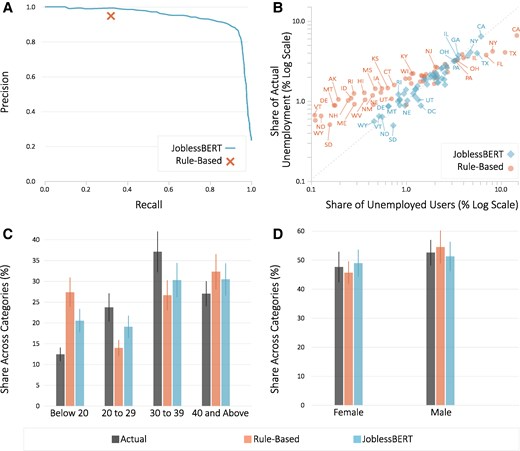 Social Media Is A Faster Source For Unemployment Data Than Government
 Gestational Diabetes Up 36% In The Last Decade - But Black Women Are Healthiest
 Object-Based Processing: Numbers Confuse How We Perceive Spaces
 Males Are Genetically Wired To Beg Females For Food