Banner
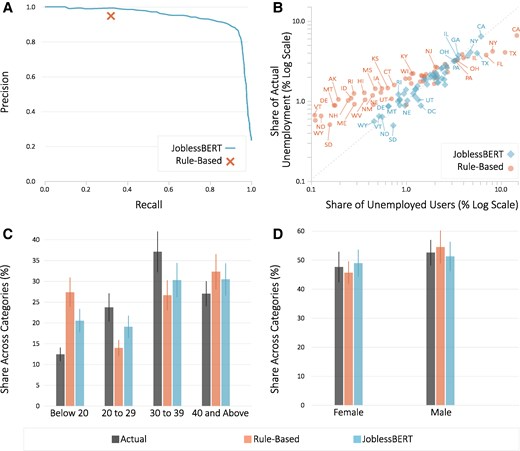
Social Media Is A Faster Source For Unemployment Data Than Government

Government unemployment data today are what Nielsen TV ratings were decades ago - a flawed metric...
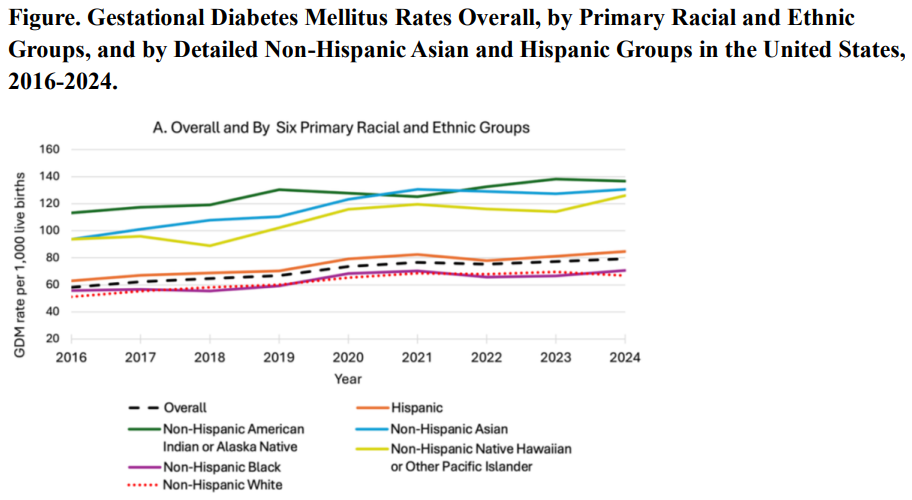
Gestational Diabetes Up 36% In The Last Decade - But Black Women Are Healthiest

Gestational diabetes, a form of glucose intolerance during pregnancy, occurs primarily in women...

Object-Based Processing: Numbers Confuse How We Perceive Spaces

Researchers recently studied the relationship between numerical information in our vision, and...

Males Are Genetically Wired To Beg Females For Food

Bees have the reputation of being incredibly organized and spending their days making sure our...

User picture.
News StaffRSS Feed of this column.

News Releases From All Over The World, Right To You... Read More »

Blogroll
Scientists in Nevada are reporting development of a new and environmentally friendly process for chicken parts that are a lot better for you than Chicken Nuggets - namely, producing biodiesel fuel from 'chicken feather' meal, the 11 billion pounds of poultry industry waste that accumulate annually in the United States alone.

In the study Mano Misra, Susanta Mohapatra, Narasimharao Kondamudi, and Jason Strull used chicken feather meal, which consists of processed chicken feathers, blood, and innards that have been processed at high temperatures with steam.
University of Utah School of Medicine researchers and their colleagues at University of Texas (UT) Southwestern Medical Center have found strong evidence that abnormal calcium signaling in neurons may play an important role in the development of spinocerebellar ataxia type 2 (SCA2), a disorder causing progressive loss of coordination, speech difficulty, and abnormal eye movements. Their findings are published in the Journal of Neuroscience.

SCA2 is an inherited neurodegenerative disease that predominantly affects neurons called Purkinje cells in the cerebellum, the region of the brain that controls voluntary muscle movements, balance, and posture. It is one of a group of genetic disorders characterized by ataxia, or loss of muscle coordination. 
Scientists in Hangzhou joined residents and tourists across China and India in observing the longest total solar eclipse in a century - and probably the most-viewed one ever.  The moon's shadow traced a path across the world's two most populous countries for five minutes and 36 seconds, a treat for scientists and spectators alike. 

"We saw it! The clouds kept getting thinner, and we even had a pretty good-sized hole in the clouds for the five minutes of totality," reported Expedition Leader Jay Pasachoff, Field Memorial Professor of Astronomy at Williams and chair of the International Astronomical Union's Working Group on Solar Eclipses, at an observatory near Hangzhou, China as part of the Williams College Eclipse Expedition. 
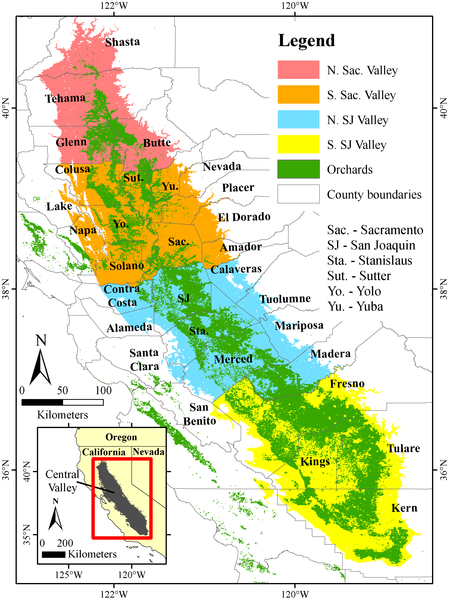
If global warming projections hold up, tree crops that rely on the 'winter chill' in California's Central Valley could be in peril, say researchers in a new study.   If you aren't aware, California's Central Valley fields produce 25 percent of America’s table food, which seems like a big responsibility for a state that is below Romania in world standing in the eyes of financiers who gauge whether or not a government can pay its bills.

The study is the first to map winter chill projections for all of California, which is home to nearly 3 million acres of fruit and nut trees that require chilling. The combined production value of these crops was $7.8 billion in 2007, according to the California Department of Food and Agriculture.
A new study conducted by researchers at the National Institute of Mental Health (NIMH) and Georgia State University looked at psychiatrically healthy Americans ages 9 to 17 to determine what happens in the brains of preteens and teens at a time of significant change in social behavior.

The youths looked at photos of peers and rated their interest in interacting with each one. Then they underwent a brain scan while reviewing the pictures and rated how much each young person in the picture might want to interact with them in return. The youths were told they would be matched with a peer for a chat after the scan.
The three-spine stickleback, tiny fish that thrive in oceans and in fresh water, appear to be the same yet ecologists are finding that they are actually a diverse collection of very specialized individuals.   Understanding the ecological causes and consequences of such ecological variation is the goal of a group of scientists meeting at the National Institute for Mathematical and Biological Synthesis (NIMBioS) at the University of Tennessee, Knoxville, July 27-29.