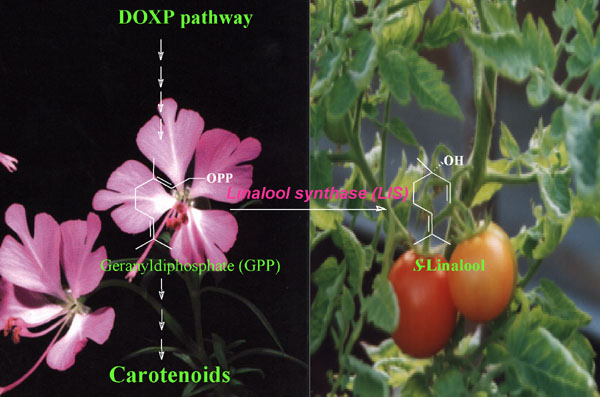
Feeling stressed? The scent of a lemon or any other fragrant plants will help you feel better, say scientists in Japan who report the first scientific evidence that inhaling certain fragrances alters gene activity(!) and blood chemistry in ways that can reduce stress levels.
Their study appears in the Journal of Agricultural and Food Chemistry.
People have inhaled the scent of certain plants since ancient times to help reduce stress, fight inflammation and depression, and induce sleep. Aromatherapy, the use of fragrant plant oils to improve mood and health, is a popular form of alternative medicine and linalool is one of the most widely used substances to soothe away emotional stress, the authors say.
Researchers from the University of Cincinnati find the forest and water conservation practices of the The ancient Mayans had concerns about forest and water conservation practices 3,000 years ago, according to paleoethnobotanist(1) David Lentz of the University of Cincinnati, who has concluded that not only did the Maya people practice forest management but when they abandoned their forest conservation practices it led to their eventual doom.
Scientists have linked an overactive response by one of the immune system's key weapons against infection, natural killer (NK) cells, to the onset of biliary atresia in infants, a disease where blocked bile ducts can cause severe liver damage and death.
Researchers at Cincinnati Children's Hospital Medical Center also report that blocking a gene that helps NK cells attack bile duct tissues lessens damage and may be a way to treat the most common cause of chronically progressive liver disease in children. The study, to be published in the Aug. 3 Journal of Clinical Investigation, is posted online on the journal's website.
New genetic research in BMC Evolutionary Biology found telltale mutations in modern-day Indian populations that are exclusively shared by Aborigines. The new study indicates that Australian Aborigines initially arrived via south Asia.
Dr Raghavendra Rao worked with a team of researchers from the Anthropological Survey of India to sequence 966 complete mitochondrial DNA genomes from Indian 'relic populations'. He said, "Mitochondrial DNA is inherited only from the mother and so allows us to accurately trace ancestry. We found certain mutations in the DNA sequences of the Indian tribes we sampled that are specific to Australian Aborigines. This shared ancestry suggests that the Aborigine population migrated to Australia via the so-called 'Southern Route'."
A new impact on Jupiter is getting all the attention this week but it can happen here - and has. Nanosized diamonds found just below the surface of Santa Rosa Island off the coast of Santa Barbara are evidence of a 'cosmic impact' approximately 12,900 years ago
The hypothesis by the researchers behind the study is that fragments of a comet struck across North America at that time.
Purdue University researchers have created magnetically responsive gold nanostars that gyrate when exposed to a rotating magnetic field and can scatter light to produce a pulsating or "twinkling" effect. This twinkling allows them to stand out more clearly from noisy backgrounds like those found in biological tissue.
Alexander Wei, a professor of chemistry, and Kenneth Ritchie, an associate professor of physics, led the team that created the new gyromagnetic imaging method.


 Social Media Is A Faster Source For Unemployment Data Than Government
 Gestational Diabetes Up 36% In The Last Decade - But Black Women Are Healthiest
 Object-Based Processing: Numbers Confuse How We Perceive Spaces
 Males Are Genetically Wired To Beg Females For Food