"It's not supposed to do that" - Sandia principal investigator Jack Houston.
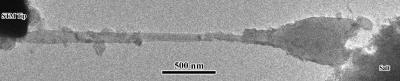
Researchers from Sandia National Laboratories and the University of Pittsburgh have found they can make salt, a solid, physically stretch.
"Unlike, say, gold, which is ductile and deforms under pressure, salt is brittle. Hit it with a hammer, it shatters like glass, " says Houston.
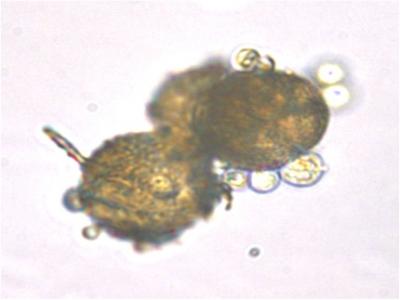
Labyrinthulomycetes, single-celled marine decomposers that eat non-living plant, algal, and animal matter, are ubiquitous and abundant, particularly on dead vegetation and in salt marshes and mangrove swamps.
Although most labyrinthulomycetes species are not pathogens, the organisms responsible for eelgrass wasting disease and QPX disease in hard clams are part of this group.
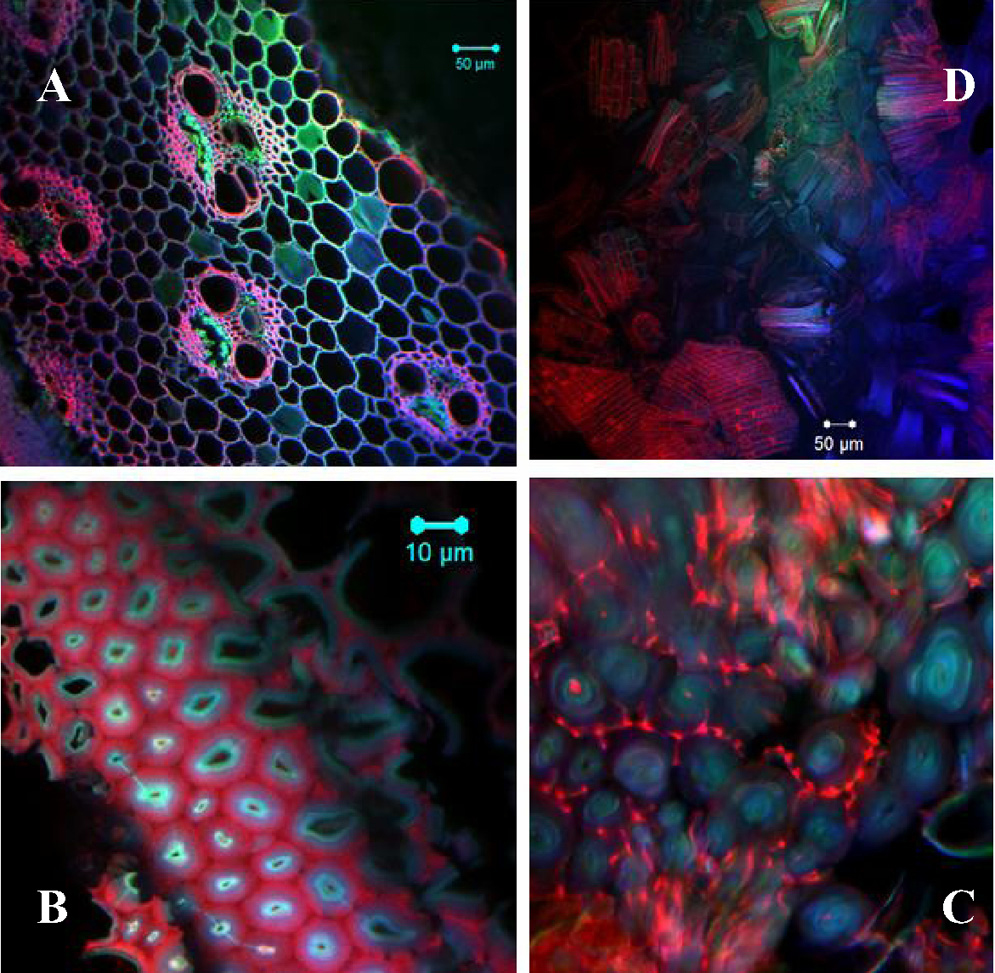
Before we can begin to implement sustainable, carbon-neutral gasoline - "grassoline" - from inedible plant material like fast-growing weeds and agricultural waste, some technology hurdles have to be overcome. Namely, finding better ways to break lignocellulosic biomass down into fermentable sugars.
Over 60 percent of the nearly 5,000 genome projects reported in the Genomes OnLine Database involve microbes. It's no surprise. Microbes are important in everything from bioenergy to agriculture and medicine and are involved in Earth’s biogeochemical cycles.
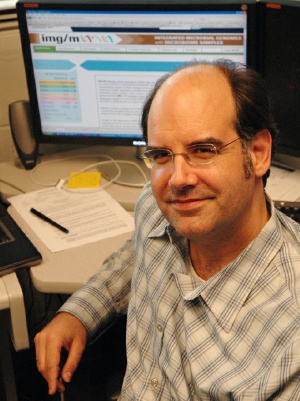
A lot could be done with microbial genomics, says DOE JGI Genome Biology head Nikos Kyrpides writing in Nature Biotechnology, if researchers go beyond the present anthropocentric focus and institute shared standards for genomic data collection and analysis.
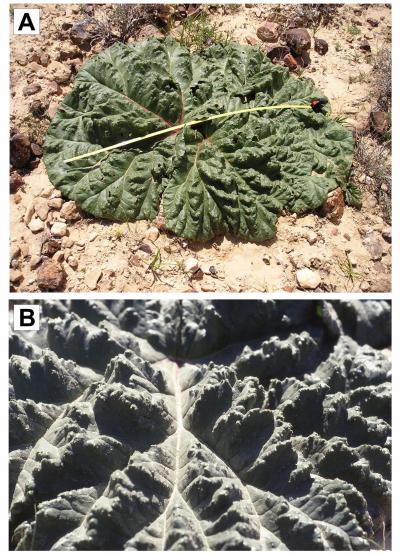
University of Haifa-Oranim researchers have managed to make out the “self-irrigating” mechanism of Rumex hymenosepalus, the desert rhubarb, which enables it to harvest 16 times the amount of water than otherwise expected for a plant in this region based on the quantities of rain in the desert - the first example of a self-irrigating plant worldwide.
The desert rhubarb grows in the mountains of Israel’s Negev desert, where average precipitation is particularly low (75 mm per year). Unlike most of the other desert plant species, which have small leaves so as to minimize moisture loss, this plant is unique in that its leaves are particularly large; each plant’s rosette of one to four leaves reaches a total diameter of up to one meter.
Dye-sensitized solar cells (DSSCs), expected to power Air Force unmanned aerial vehicles (UAVs) in the future because they are an optimum energy harvesting source that may lead to longer flight times without refueling, have gotten a boost by using a flexible film and a thin glass coating with transparent conductive electrodes.
The University of Washington's Multidisciplinary University Research Initiative (MURI) project team, with lead researcher Dr. Minoru Taya is working on the airborne solar cells and found that DSSCs made from organic materials, which use (dyes) and moth-eye film, are able to catch photons and convert them into synthesized electrons that can harvest high photon energy.


 Social Media Is A Faster Source For Unemployment Data Than Government
 Gestational Diabetes Up 36% In The Last Decade - But Black Women Are Healthiest
 Object-Based Processing: Numbers Confuse How We Perceive Spaces
 Males Are Genetically Wired To Beg Females For Food