
Banner
Social Media Is A Faster Source For Unemployment Data Than Government

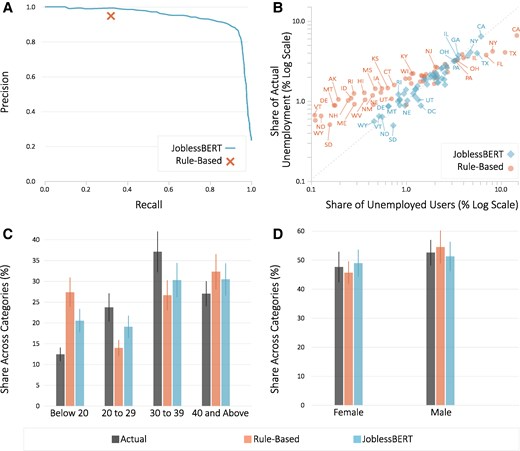
Government unemployment data today are what Nielsen TV ratings were decades ago - a flawed metric...

Gestational Diabetes Up 36% In The Last Decade - But Black Women Are Healthiest

Gestational diabetes, a form of glucose intolerance during pregnancy, occurs primarily in women...

Object-Based Processing: Numbers Confuse How We Perceive Spaces

Researchers recently studied the relationship between numerical information in our vision, and...

Males Are Genetically Wired To Beg Females For Food

Bees have the reputation of being incredibly organized and spending their days making sure our...

User picture.
News StaffRSS Feed of this column.

News Releases From All Over The World, Right To You... Read More »

Blogroll

Synthetic Genomics Inc. (SGI), a privately held company co-founded by Craig Ventner in the business of applying genomic-driven commercial solutions to challenges like energy and the environment, announced a multi-year research and development agreement with ExxonMobil Research and Engineering Company (EMRE) to develop next generation biofuels using photosynthetic algae. 

SGI will receive milestone payments for achievements in developing biofuel products. Total funding for SGI in research and development activities and milestone payments could amount to more than US$300 million with the potential for additional income from licensing to third parties. 

Scientists in Atlantic Canada say they have found a gene that may play a role in skin aging. Researchers were investigating the genetic cause of a rare disorder known as cutis laxa type 2 (CL2), which causes skin on the hands, feet and face to be loose and older looking, as well as growth and developmental delays including effects on the brain. In the process, researchers found some interesting correlations with the synthesis of proline, a chemical associated with skin and joint health.

Several maritime Canadian families with CL2 were identified by clinicians at the IWK Health Centre’s Maritime Medical Genetics service.

You want to live healthier and probably look better; that's a good start.  Diet popularity can either be a sign that something works or an indication that people believe in crazy stuff.   Either way, it can't hurt to spend 5 minutes reading an article on the Internet before you commit.

A site called Realbuzz.com says it has put popular dieting approaches to the test - giving you the pros, the cons and each one has been rated on how they satisfy hunger, their ease to follow, expense and most importantly - the impact they can have on your overall health.

Accera, Inc., a biotechnology company delivering therapies in central nervous system diseases, today announced further evidence for genetic interactions impacting the efficacy of the ketogenic compound AC-1202 (Axona(TM)) in Alzheimer’s disease.

New data from the company’s previously completed double-blind, placebo-controlled trial in patients with mild-to-moderate Alzheimer’s disease demonstrates an interaction between two genetic markers that strongly influence the therapeutic response in patients. Dr. Samuel Henderson, Executive Director of Research, will present these results at the 2009 International Conference on Alzheimer’s Disease (ICAD) sponsored by the Alzheimer’s Association.

It's not a secret to you if you have watched football for the last 40 years;  a guy once almost big enough to be a linebacker can't even be a safety today.   Elite athletes are getting bigger.

Specifically, while the average human has gained about 1.9 inches in height since 1900, new research showed that the fastest swimmers have grown 4.5 inches and the swiftest runners have grown 6.4 inches.

In a new analysis, Jordan Charles, an engineering student who graduated this spring, collected the heights and weights of the fastest swimmers (100 meters) and sprinters (100 meters) for world record winners since 1900. He then correlated the size growth of these athletes with their winning times.

Some people are smarter than others.   Even in a multicultural world where no one is better and everyone is equally ordinary, we secretly still know that some people are smarter (politically correct disclaimer -  others are just differently intelligent) than other people - but why that is has been a target of neuroscience for as long as it has existed as a discipline.

In a new article in Current Directions in Psychological Science, Eduardo Mercado III from the University at Buffalo, The State University of New York, describes how certain aspects of brain structure and function help determine how easily we learn new things, and how learning capacity contributes to individual differences in intelligence.







