Banner
Social Media Is A Faster Source For Unemployment Data Than Government

Government unemployment data today are what Nielsen TV ratings were decades ago - a flawed metric...
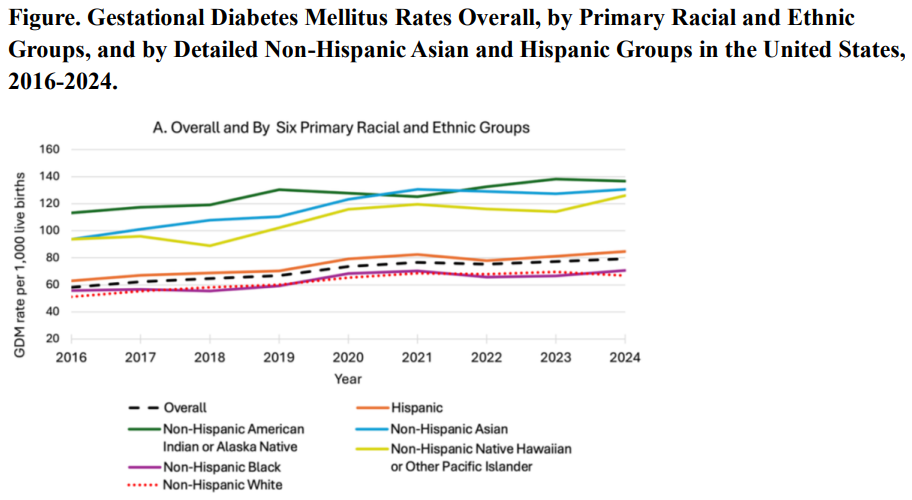
Gestational Diabetes Up 36% In The Last Decade - But Black Women Are Healthiest

Gestational diabetes, a form of glucose intolerance during pregnancy, occurs primarily in women...

Object-Based Processing: Numbers Confuse How We Perceive Spaces

Researchers recently studied the relationship between numerical information in our vision, and...

Males Are Genetically Wired To Beg Females For Food

Bees have the reputation of being incredibly organized and spending their days making sure our...

User picture.
News StaffRSS Feed of this column.

News Releases From All Over The World, Right To You... Read More »

Blogroll

Australia's top models are going to be on the main stage in Cairns this week but don't get too excited.   They're only here to show new ways to understand climate change, improve air safety and enhance agricultural sustainability - the small stuff unless you care about life as we know it.  Fortunately, these numerical models understand those things much better than actual supermodels.

The gathering is the IMACS/MODSIM Congress and will attract more than 650 experts in modelling and simulation from Australia and overseas to the Cairns Convention Centre from July 13-17, 2009.
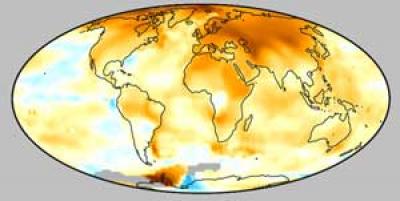
Climate science is tricky business because the atmosphere and Mother Earth are an eloborate, complex system no one understands.   So how much Earth's climate will warm due to carbon emissions is open to speculation but a new study this week suggests scientists' best predictions about global warming are likely incorrect.  Which means they could be high ... but they could also be really low.

The study in Nature Geoscience says that climate models explain only about half of the heating that occurred during a well-documented period of rapid global warming in Earth's ancient past.
It will enrage our fellow Californians, who regard the wholesomeness and warmth of the in-home hearth as akin to fratricide, but when it comes down to it, people in the Third World, like the US is becoming economically, are going to respond to the stress of rising natural gas prices in ways that activists in cozy office buildings do not like.

How they heat their homes will be at the top of the list for everyone in the upper part of North America this winter - which means out-of-fashion alternative energy options, the kind our ancestors used; wood burning stoves. 
Cars that drive themselves?   Being cut up by some remote hand that never touches you?  It's not a Stephen King novel, it's the latest in robotics and it's coming to a Senate floor near you.

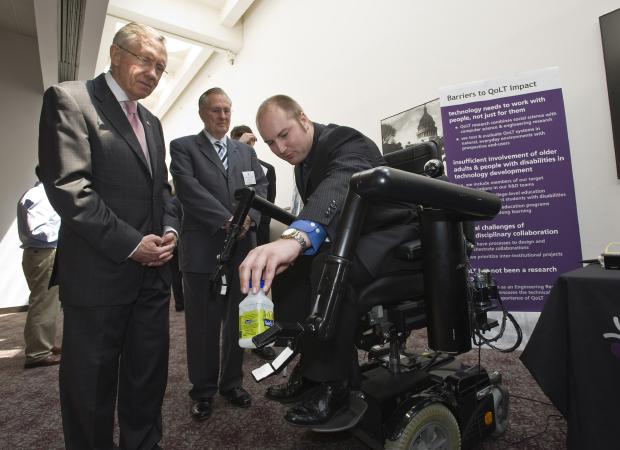
Last week the National Science Foundation (NSF) presented took over the Hart Senate Office Building and had a luncheon briefing for Senate members and staff on cyber-physical systems (CPS).
Nicolaus Copernicus (1473-1543) discovered that the Earth orbits the Sun, thus paving the way for our modern view of the world.  It took a few hundred years for religion to apologize for the reception his discovery got but luckily the  the International Union of Pure and Applied Chemistry (IUPAC) only took a dozen years after the discovery of element 112 to honor him.

Element 112 was discovered at the GSI Helmholtzzentrum für Schwerionenforschung (Center for Heavy Ion Research) in Darmstadt.
Ancient nomadic hominids moved from place to place but often how has been subject to speculation.   Now researchers think they have one answer, using the dental fossils of animals eaten by Homo heidelbergensis.

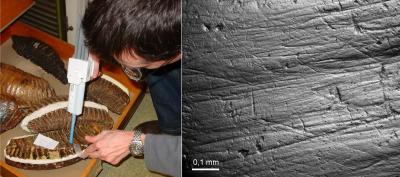
In the French cave of Arago, an international team of scientists headed by researchers from the Catalan Institute of Human Paleoecology and Social Evolution (IPHES) in Tarragona has analyzed the dental wear of herbivorous animals, the first time that an analytical method has allowed the establishment of the length of human occupations at archaeological sites. The key is the last food that these hominids consumed. 

This told them some details on the vegetation in the environment and the way of life of Homo heidelbergensis