Banner
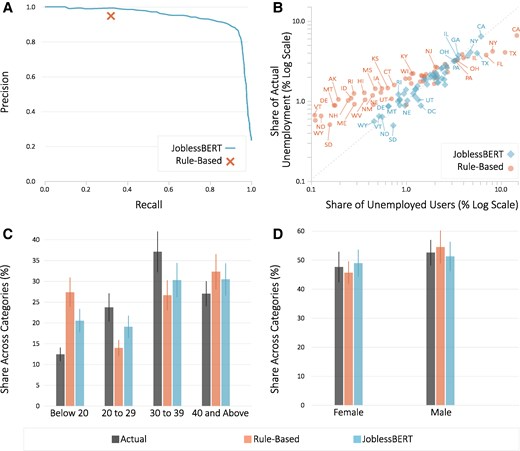
Social Media Is A Faster Source For Unemployment Data Than Government

Government unemployment data today are what Nielsen TV ratings were decades ago - a flawed metric...
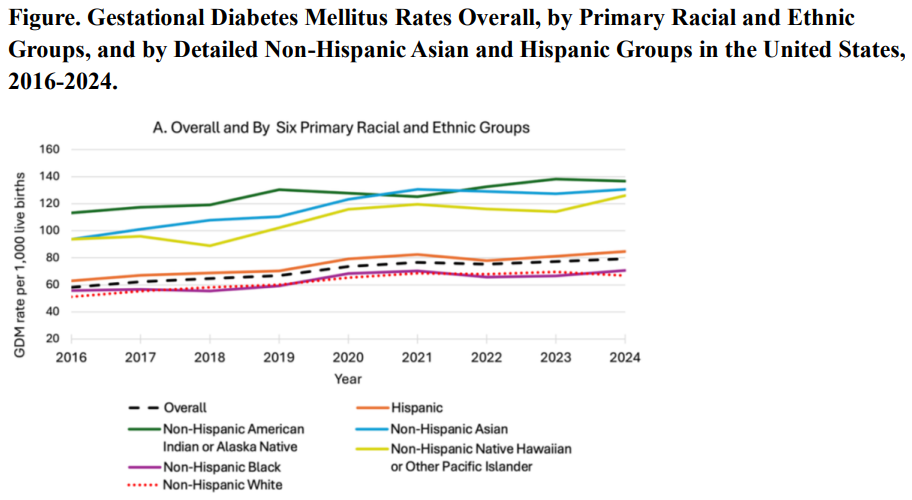
Gestational Diabetes Up 36% In The Last Decade - But Black Women Are Healthiest

Gestational diabetes, a form of glucose intolerance during pregnancy, occurs primarily in women...

Object-Based Processing: Numbers Confuse How We Perceive Spaces

Researchers recently studied the relationship between numerical information in our vision, and...

Males Are Genetically Wired To Beg Females For Food

Bees have the reputation of being incredibly organized and spending their days making sure our...

User picture.
News StaffRSS Feed of this column.

News Releases From All Over The World, Right To You... Read More »

Blogroll

A scientific panel revealed today that rising global demand for healthy seafood has exceeded wild capture fisheries' ability to provide all fish meals demanded by consumers. Aquaculture -- or the farming of seafood -- is helping to fill the gap between sustainable wild supplies and the public demand for seafood. Research unveiled at the AAAS Annual Meeting demonstrated the enormous potential for sustainable growth of healthy farmed seafood production, notably through advancements in feed efficiency and the ability to expand production in marine environments.

The notion that more information about the science of human-caused climate change will spur effective problem solving by American society is just flat wrong, according to a University of Colorado at Boulder climate policy analyst.

Even the 2007 Intergovernmental Panel on Climate Change report released Feb. 2, which painted a bleak global portrait of rising seas and temperatures due to human activity, is unlikely by itself to lead to meaningful mitigation or adaptation anytime soon, said Lisa Dilling of CU-Boulder’s Cooperative Institute for Research in Environmental Sciences. “Most people still don’t feel the immediacy of the problem,” she said.

 
A University of Queensland microbiologist is part of an international team that has identified a bacterial gene that may affect climate and weather.
 
Dr Phil Bond, from UQ's Advanced Wastewater Management Centre, and his former colleagues at the University of East Anglia in England, have found how a particular type of marine bacteria – Marinomonas – generates a compound that is a key component in global sulfur and carbon cycles.

“Marine algae can produce large amounts of a compound (dimethylsulfoniopropionate or DMSP) that when broken down by bacteria produces dimethyl sulfide (DMS),” Dr Bond said.

An international team of researchers from 19 countries has identified one gene and a previously unidentified region of another chromosome as the location of another gene that may contribute to a child's chances of having autism.

The findings, based on genetic samples from nearly 1,200 families with two or more children who have autism, were published today in Nature Genetics by more than 120 scientists from Europe and North America who make up the Autism Genome Project.

The project was launched in 2002 by scientists at 50 institutions to share data, samples and expertise in an effort to speed up the process of identifying susceptibility genes, those that heighten a child's risk of having the developmental disorder.

Though the cell membrane is a protective barrier, it also plays a role in letting some foreign material in — via ion channels that dot the cell’s surface. Now new research from the Nobel Prize-winning laboratory that first solved the atomic structure of several such channels shows that their function is controlled in part by a complex interaction between a channel’s voltage sensor and the cell membrane immediately adjacent to it.

The cell membrane is a specialized environment, home to a variety of proteins that enable the cell to interact with its environment. One specific family of proteins, voltage-gated channels, are especially important in conducting signals along and between nerve cells.

Hunting for traces of life on Mars calls for two radically different strategies, says Arizona State University professor Jack Farmer. Of the two, he says, with today’s exploration technology we can most easily look for evidence for past life, preserved as fossil "biosignatures" in old rocks.

Farmer is a professor of geological sciences in ASU’s School of Earth and Space Exploration, where he heads the astrobiology program. He is reporting on his work today (Feb. 16) at the annual meeting of the American Association for the Advancement of Science in San Francisco.

"Searching for extraterrestrial life must follow two alternative pathways, each requiring a different approach and tools," Farmer says. "If we're looking for living organisms, we are doing exobiology.