Banner
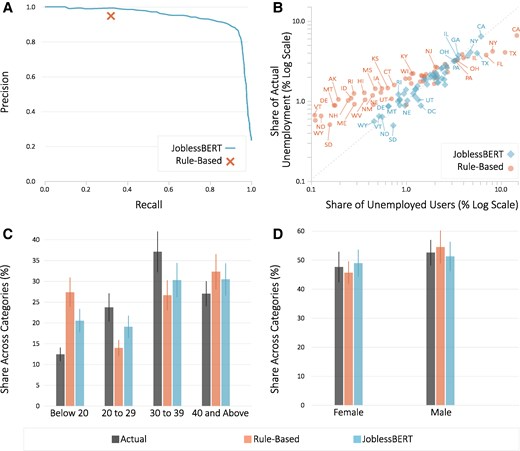
Social Media Is A Faster Source For Unemployment Data Than Government

Government unemployment data today are what Nielsen TV ratings were decades ago - a flawed metric...

Gestational Diabetes Up 36% In The Last Decade - But Black Women Are Healthiest

Gestational diabetes, a form of glucose intolerance during pregnancy, occurs primarily in women...
Object-Based Processing: Numbers Confuse How We Perceive Spaces

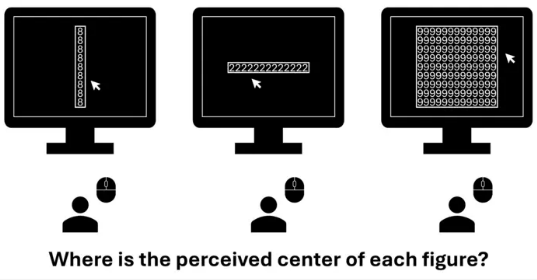
Researchers recently studied the relationship between numerical information in our vision, and...
Males Are Genetically Wired To Beg Females For Food

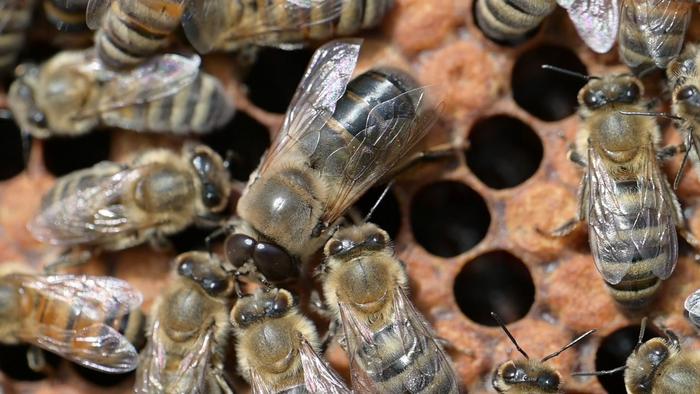
Bees have the reputation of being incredibly organized and spending their days making sure our...

User picture.
News StaffRSS Feed of this column.

News Releases From All Over The World, Right To You... Read More »

Blogroll

When glaciologist Lonnie Thompson returns to Peru's Qori Kalis glacier early this summer, he expects to find that half of the ice he saw during his visit there last year has vanished.

What troubles him the most is his recent observations that suggest that the entire glacier may likely be gone within the next five years, providing possibly the clearest evidence so far of global climate change.

The fact that the Qori Kalis glacier, high in the Andes Mountains , is only one of many ice tongues retreating on the Quelccaya Ice Cap, the largest body of ice in the tropics, provides strong evidence of the warming that appears to be underway worldwide.

Quickly now, which is a higher risk that you will get a disease: 1 in 100; 1 in 1,000; or 1 in 10? Choosing the correct answer depends on a person's numeracy – the ability to grasp and use math and probability concepts, according to a presentation at the annual meeting of the American Association for the Advancement of Science.

The scenario was part of a series of experiments with University of Oregon students. In this case, 96 percent correctly chose 1 in 10, a 10 percent chance. However, that response came from a more-educated, college-going crowd.

Scientists using NASA satellites have discovered an extensive network of waterways beneath a fast-moving Antarctic ice stream that provide clues as to how "leaks" in the system impact sea level and the world's largest ice sheet. Antarctica holds about 90 percent of the world's ice and 70 percent of the world's reservoir of fresh water.

With data from NASA satellites, a team of scientists led by research geophysicist Helen Fricker of the Scripps Institution of Oceanography, La Jolla, Calif., detected for the first time the subtle rise and fall of the surface of fast-moving ice streams as the lakes and channels nearly a half-mile of solid ice below filled and emptied.

Advances in digital electronic circuits have prompted the boost in functions and ever- smaller size of such popular consumer goods as digital cameras, MP3 players and digital televisions. But the same cannot be said of the older analog circuits in the same devices, which process natural sights and sounds in the real world. Because analog circuits haven't enjoyed a similar rate of progress, they are draining power and causing other bottlenecks in improved consumer electronic devices.

Now MIT engineers have devised new analog circuits they hope will change that. Their work was discussed at the International Solid State Circuits Conference (ISSCC) in San Francisco Feb.

Researchers at the University of Pennsylvania School of Veterinary Medicine have derived uniparental embryonic stem cells - created from a single donor's eggs or two sperm - and, for the first time, successfully used them to repopulate a damaged organ with healthy cells in adult mice. Their findings demonstrate that single-parent stem cells can proliferate normally in an adult organ and could provide a less controversial alternative to the therapeutic cloning of embryonic stem cells.

"Creating uniparental embryonic stem cells is actually much more efficient than generating embryonic stem cells by cloning," said K.

In the digital age, organizing a photo collection has gone from bad to worse. The saying used to be that a picture is worth a thousand words. Now the question arises: what are a thousand pictures worth?

"Anyone who has a digital camera has the problem that they have more photos than they can possibly navigate," says Steve Seitz, associate professor of computer science & engineering. "And it's always a problem to find the photo that you're looking for."


Photo Tourism places each photo where the photographer would have been standing. Here, one photo of Trevi Fountain in Rome is enlarged, while other photos appear as pyramids.