
Banner
Social Media Is A Faster Source For Unemployment Data Than Government

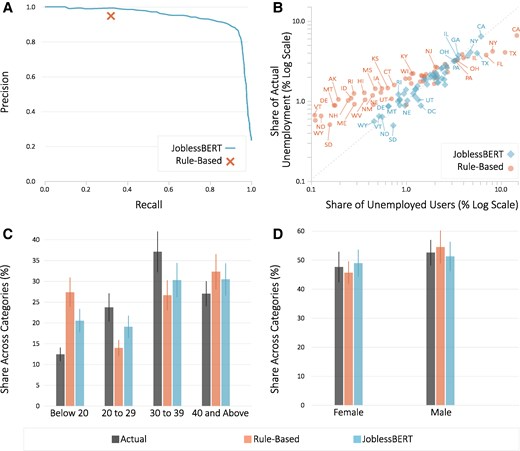
Government unemployment data today are what Nielsen TV ratings were decades ago - a flawed metric...

Gestational Diabetes Up 36% In The Last Decade - But Black Women Are Healthiest

Gestational diabetes, a form of glucose intolerance during pregnancy, occurs primarily in women...

Object-Based Processing: Numbers Confuse How We Perceive Spaces

Researchers recently studied the relationship between numerical information in our vision, and...

Males Are Genetically Wired To Beg Females For Food

Bees have the reputation of being incredibly organized and spending their days making sure our...

User picture.
News StaffRSS Feed of this column.

News Releases From All Over The World, Right To You... Read More »

Blogroll

How can defense or intelligence agencies safeguard the security of top-secret data protected by a computation device the size of a single molecule?

With cryptography approaching that sobering new era, scientists in Israel are reporting development of what they term the first molecular system capable of processing password entries. Abraham Shanzer and colleagues describe their "molecular keypad lock" in the Jan. 17 issue of the weekly Journal of the American Chemical Society.

Electronic keypad locks long have been fixtures on home security systems and other devices that require a password.

The longest-running search for radio signals from alien civilizations is getting a burst of new data from an upgraded Arecibo telescope, which means the SETI@home project needs more desktop computers to help crunch the data.

Since SETI@home launched eight years ago, the project based at the University of California, Berkeley's Space Sciences Laboratory has signed up more than 5 million interested volunteers and boasts the largest community of dedicated users of any Internet computing project: 170,000 devotees on 320,000 computers.

Yet, new and more sensitive receivers on the world's largest radio telescope in Arecibo, Puerto Rico, and better frequency coverage are generating 500 times more data for the project than before.

A breakthrough in understanding the way atoms move across cell membranes in the human body could pave the way for the development of new treatments for inflammatory diseases such as rheumatoid arthritis.

Scientists at the University of Leeds have identified a previously unknown natural mechanism that opens ion channels – proteins at the cell surface that act as doorways into and out of cells – through the naturally occurring protein thioredoxin.

Ion channels allow movement of ions - electrically charged atoms - across the cell membrane to carry out various functions such as pain transmission, timing of the heart beat, and regulation of blood glucose.

template node for creation of rss feed stories automatically by url

We haven't come that far, baby. In the 1970's male cartoon characters outnumbered female cartoon characters by a ratio of almost four to one. Research presented at the American Psychological Association's (APA) 105th Annual Convention in Chicago reveals that male cartoon characters still outnumber female cartoon characters almost four to one. Male characters are also still portrayed as dominate, powerful and aggressive. Female characters don't have any "character" at all.

Despite TV watchdogging, Cynthia Spicher, B.A., and psychologist Mary Hudak, Ph.D., from Allegheny College have found little change in the gender stereotypes that America's young minds are spending two to four hours a day viewing.

To see what progress has been made in portraying gender stereotypes in cartoon characters, Dr. Spicher and Dr. Hudak videotaped and categorized 118 cartoon characters from a single episode of each of the following Saturday morning cartoons: The Bugs Bunny/Tweety Show, Aladdin, Ninja Turtles, The Mask, Eek!stravaganza, Spiderman, Tick and Life with Louie. Characters were rated on sex, prominence, gender stereotyping, aggressive behaviors and occupational roles.




