Banner
Ousiometrics Analysis Says All Human Language Is Biased

A new tool drawing on billions of uses of more than 20,000 words and diverse real-world texts claims...

Wavelengths Of Light Are Why CO2 Cools The Upper Atmosphere But Warms Earth

There are concerns about projected warming on the Earth’s surface and in the lower atmosphere...

Here's Where Your Backyard Was 300 Million Years Ago

We may use terms like "grounded" and terra firma to mean stability and consistency but geology...

Convergent Evolution Cheat Sheet Now 120 Million Years Old

One tenet of natural selection is a random walk of genes but nature may be more predictable than...

User picture.
News StaffRSS Feed of this column.

News Releases From All Over The World, Right To You... Read More »

Blogroll

Epigenetics has been used and abused in many ways - can it tell researchers that an expectant mother had no electricity for a few days?

In January of 1998, what came to be called the North American Ice Storm of 1998 occurred. It knocked out power for days in cities and weeks in remote areas, impacting up to 4 million people. It was so worrisome that the government, concerned about panic among peaceful Canadians, deployed nearly 25 percent of its armed forces to keep peace in Quebec.

We know our bodies don't just change in size, which makes it an effective metric in a world in motion.

Psychologists have found that people tend to perceive their dominant hand as staying relatively the same size even when it's magnified, lending support to the idea that we use our hand as a constant perceptual "ruler" to measure the world around us.

To size up the world around us, we need to be able to translate the information that comes in through our eyes into units that are relevant to our everyday lives. The body is a particularly effective metric because it allows us to relate information about object size to actions that we're able to perform on or with the object.

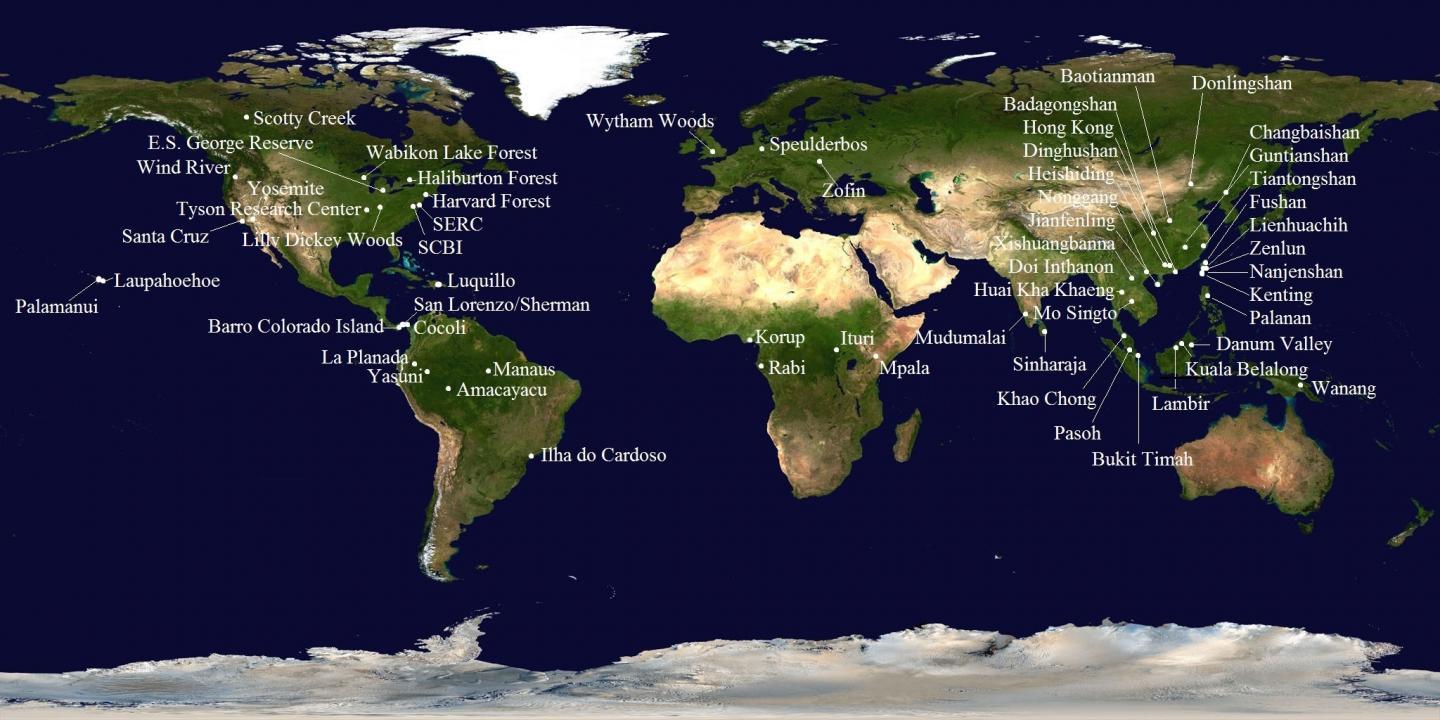
Permafrost thaw kills forests in Canada, while drought kills trees in India and Borneo. In the U.S., in Virginia, over-abundant deer eat trees before they reach maturity, while nitrogen pollution has changed soil chemistry in Panama. 

Continents apart, trees have many similar ways to die. Many of the changes occurring in forests worldwide are attributable to human impacts on climate, atmospheric chemistry, land use and animal populations - no surprise, writing papers lamenting humanity is why many conservation groups exist. And hyperbolic cultural pandering has led to calls for a new geologic period in Earth's history—the Anthropocene, the Age of Humans. 

Tourette syndrome is a developmental disorder characterized by involuntary, repetitive, and stereotyped movements or utterances.

New evidence explains how those with Tourette syndrome in childhood often manage to gain control over those tics.

In individuals with the condition, a portion of the brain involved in planning and executing movements shows an unusual increase compared to the average brain in the production of a primary inhibitory neurotransmitter known as GABA. 

Artifacts from a 325,000-year-old site in Armenia finds that human technological innovation occurred intermittently throughout the Old World, rather than spreading from a single point of origin (usually hypothesized as Africa), as previously thought. 

Electricity and magnetism rule our digital world but they are really 19th century advancements still being optimized in the 21st.

In our current scheme, semiconductors process electrical information while magnetic materials enable long-term data storage but research team has discovered a way to fuse these two distinct properties in a single material.