Banner
Ousiometrics Analysis Says All Human Language Is Biased

A new tool drawing on billions of uses of more than 20,000 words and diverse real-world texts claims...

Wavelengths Of Light Are Why CO2 Cools The Upper Atmosphere But Warms Earth

There are concerns about projected warming on the Earth’s surface and in the lower atmosphere...

Here's Where Your Backyard Was 300 Million Years Ago

We may use terms like "grounded" and terra firma to mean stability and consistency but geology...

Convergent Evolution Cheat Sheet Now 120 Million Years Old

One tenet of natural selection is a random walk of genes but nature may be more predictable than...

User picture.
News StaffRSS Feed of this column.

News Releases From All Over The World, Right To You... Read More »

Blogroll

A method based on computer vision algorithms similar to those used in facial recognition systems combined with visualization of only the diagnostically most relevant areas can mean a big breakthrough in malaria diagnostics, according to a new paper. Tablet computers can be utilized in viewing the images.

In this new method, a thin layer of blood smeared on a microscope slide is first digitized. The algorithm analyzes more than 50,000 red blood cells per sample and ranks them according to the probability of infection. Then the program creates a panel containing images of more than a hundred most likely infected cells and presents that panel to the user. The final diagnosis is done by a health-care professional based on the visualized images. 

A ubiquitous skin fungus linked to dandruff, eczema and other itchy, flaky maladies in humans has now been tracked to even further global reaches—including Hawaiian coral reefs and the extreme environments of arctic soils and deep sea vents.

A review in the scientific journal PLOS Pathogens considers the diversity, ecology, and distribution of the fungi of the genus Malassezia in light of new insights gained from screening environmental sequencing datasets from around the world.

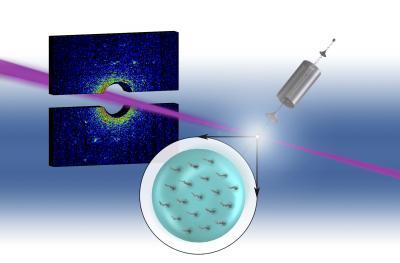
Scientists have mapped quantum tornadoes that swirl within tiny droplets of liquid helium, which confirms that helium nanodroplets are in fact the smallest possible superfluidic objects and opens new avenues to study quantum rotation.

Superfluid helium has long captured scientist's imagination since its discovery in the 1930s. Unlike normal fluids, superfluids have no viscosity, a feature that leads to strange and sometimes unexpected properties such as crawling up the walls of containers or dripping through barriers that contained the liquid before it transitioned to a superfluid.

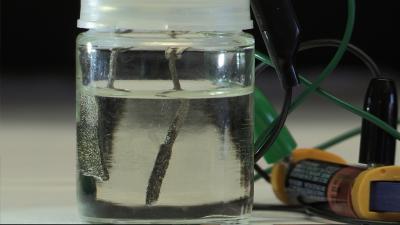
Next year, American consumers will finally be able to purchase fuel cell cars and they are zero-emissions vehicles but, like current electric cars, not really, since the cars will run on hydrogen made from natural gas.

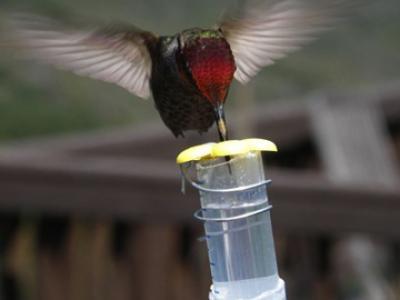
If you capture a hummingbird on high-speed video and slow it down, their wings thrum like helicopter blades as they hover near food. Their hearts beat 20 times a second and their tongues dart 17 times a second to slurp from a feeding station.

Researchers at
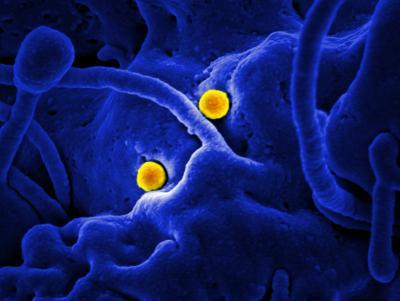
the NIH National Institute of Allergy and Infectious Diseases scientists have found that Middle East respiratory syndrome coronavirus (MERS-CoV) infection in marmosets closely mimics the severe pneumonia experienced by people infected with MERS-CoV, giving researchers the best animal model yet for testing potential treatments. 

They used marmosets after predicting in computer models that the animals could be infected with MERS-CoV based on the binding properties of the virus.