

Banner
Object-Based Processing: Numbers Confuse How We Perceive Spaces

Researchers recently studied the relationship between numerical information in our vision, and...

Males Are Genetically Wired To Beg Females For Food

Bees have the reputation of being incredibly organized and spending their days making sure our...

The Scorched Cherry Twig And Other Christmas Miracles Get A Science Look

Bleeding hosts and stigmatizations are the best-known medieval miracles but less known ones, like ...
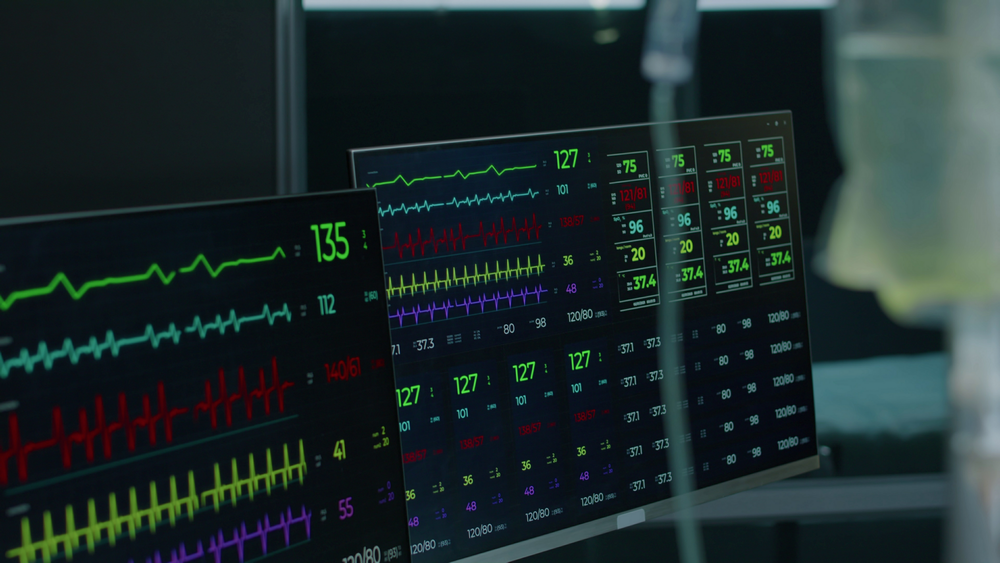
$0.50 Pantoprazole For Stomach Bleeding In ICU Patients Could Save Families Thousands Of Dollars

The inexpensive medication pantoprazole prevents potentially serious stomach bleeding in critically...

User picture.
News StaffRSS Feed of this column.

News Releases From All Over The World, Right To You... Read More »

Blogroll

The Qinling-Dabie orogenic complex, part of a large east-west mountain range in the heart of China, plays a key role in helping scientists understand the formation and breakup of the supercontinent Rodinia, according to a new paper. 

A recent increase in polar mesospheric clouds - diffuse collections of water ice crystals in the mesosphere near the poles at altitudes of about 50 miles - could be due to a recent increase in space traffic, a new paper in Geophysical Research Letterssuggests. 

The number and brightness of polar mesospheric ice clouds is expected to decrease when the incoming flux of solar ultraviolet radiation increases. Increases in solar radiation both heat and dry out the atmosphere slightly, leading to a decrease in ice cloud formation. 

Tropical Storm Sandy had the good fortune to hit New York City and the home of American media publishing during a presidential election. It thus became a Super Storm and a political rallying cry.

From 1975 on, the global surface ocean had shown a pronounced, though wavering, warming trend. Starting in 2004, however, that warming seemed to stall. Researchers measuring the Earth's total energy budget - the balance of sunlight streaming in compared to the amount of light and heat leaving from the top of the atmosphere - saw that the planet was still holding on to more heat than it was letting out. 

But with that energy not going into warming the surface ocean, a traditionally important energy sink, scientists weren't sure where it went. It became known as a case of "missing heat." 

A new paper says that exposure to a banned neonicotinoid insecticide causes changes to the genes of the honeybee. The paper was written to support the recent decision taken by the European Commission to temporarily ban three neonicotinoids amid concerns that they could be linked to bee deaths.

Honeybees pollinate one-third of the food that we eat and the experiment looked at changes in the activity of honeybee genes linked to one of the recently banned neonicotinoids, imidacloprid.

‘Jumping genes’ found in most living organisms don’t ultimately kill off their hosts, which is a long-standing scientific mystery. 

A new paper reveals how the movement and duplication of transposons is regulated, which prevents a genomic meltdown and instead enables transposons to live in harmony with their hosts - including humans.





