Banner
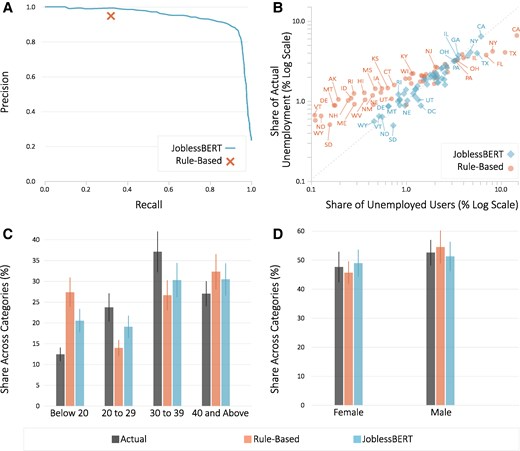
Social Media Is A Faster Source For Unemployment Data Than Government

Government unemployment data today are what Nielsen TV ratings were decades ago - a flawed metric...

Gestational Diabetes Up 36% In The Last Decade - But Black Women Are Healthiest

Gestational diabetes, a form of glucose intolerance during pregnancy, occurs primarily in women...
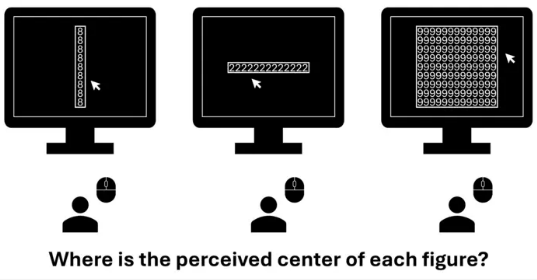
Object-Based Processing: Numbers Confuse How We Perceive Spaces

Researchers recently studied the relationship between numerical information in our vision, and...
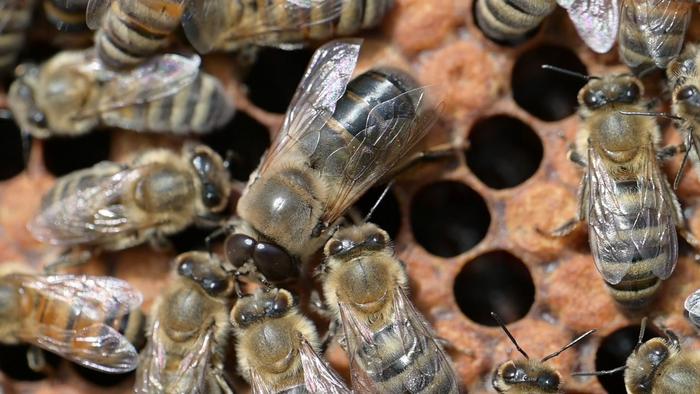
Males Are Genetically Wired To Beg Females For Food

Bees have the reputation of being incredibly organized and spending their days making sure our...

User picture.
News StaffRSS Feed of this column.

News Releases From All Over The World, Right To You... Read More »

Blogroll

A new paper in Molecular Pharmacology describes how 'reverse pharmacology', enabled by Heptares Therapeutics StaR(R) technology, can be applied to and accelerate GPCR-based drug discovery.

The paper utilized the study of isolated GPCRs locked in conformations that correspond to agonist or antagonist pharmacology, and the elucidation of their respective 3D structures. These StaRs and structures can be used to select and design compounds with specific pharmacologies, such as inverse agonist, partial agonist or full agonist, based on their ability to bind differentially to the agonist and antagonist StaRs. For example a full agonist will preferentially bind to the agonist StaR. 

The Lazarus Project team says they have been able to recover cell nuclei of the extinct gastric-brooding frog, Rheobatrachus silus,
from tissues collected in the 1970s and kept for 40 years in a conventional deep freezer. 

The genome of
Rheobatrachus silus, extinct since 1983, has been revived and reactivated by a team of scientists using
somatic cell nuclear transfer
to implant a "dead" cell nucleus into a fresh egg from another frog species.
 

Rheobatrachus silus is famous for swallowing its eggs, brooded its young in its stomach and giving birth through its mouth. The "de-extinction" project aims to bring the frog back to life.
 

The 2010 BP Deepwater Horizon Oil spill dumped more than 200 million gallons of oil into the Gulf of Mexico yet government assessments have been unable to account for all of it.

Microbes likely processed most of the oil within months of the spill, but not all of it. A new hypothesis suggests the oil acted as a catalyst for plankton and other surface materials to clump together and fall to the sea floor in a massive sedimentation event - what they have termed a "dirty blizzard."

On Jupiter, cloudless patches are so rare that the larger visible ones get the special name 'hot spots.'

How do these clearings form and why they are they only found near the planet's equator?

It's a mystery, by Jove, but using images from the Cassini spacecraft, scientists have found new evidence that hot spots in Jupiter's atmosphere are created by a Rossby wave, a pattern also seen in Earth's atmosphere and oceans. The team found the wave responsible for the hot spots glides up and down through layers of the atmosphere like a carousel horse on a merry-go-round.

How does the human brain 'decodes' letters on a page to read a word?

Psychologists are trying to help neuroscientists unravel the subtle thinking mechanisms involved in reading, which could provide solutions for helping people who find it difficult to read, like dyslexics.

In order to read successfully, readers need not only to identify the letters in words, but also to accurately code the positions of those letters, so that they can distinguish words like CAT and ACT. At the same time, however, it's clear that raeders can dael wtih wodrs in wihch not all teh leettrs aer in thier corerct psotiions.

A team of international scientist has made the most detailed examination yet of the atmosphere of a Jupiter-size like planet beyond our solar system.