
Banner
Social Media Is A Faster Source For Unemployment Data Than Government

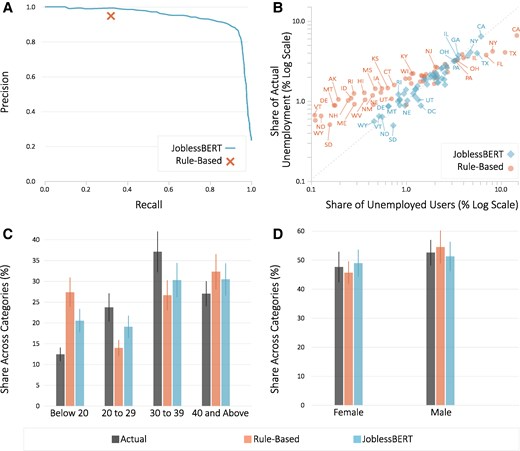
Government unemployment data today are what Nielsen TV ratings were decades ago - a flawed metric...

Gestational Diabetes Up 36% In The Last Decade - But Black Women Are Healthiest

Gestational diabetes, a form of glucose intolerance during pregnancy, occurs primarily in women...
Object-Based Processing: Numbers Confuse How We Perceive Spaces

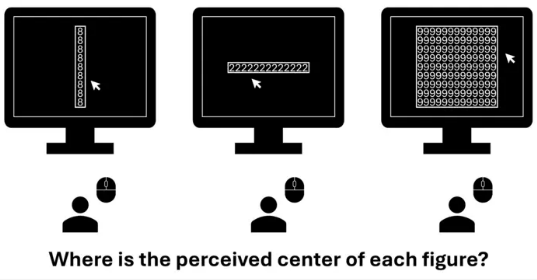
Researchers recently studied the relationship between numerical information in our vision, and...
Males Are Genetically Wired To Beg Females For Food

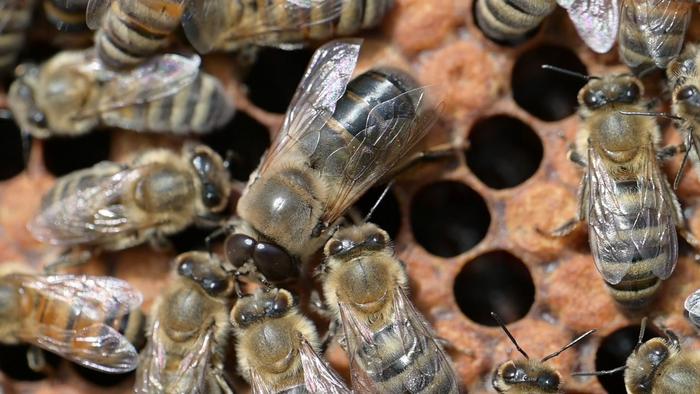
Bees have the reputation of being incredibly organized and spending their days making sure our...

User picture.
News StaffRSS Feed of this column.

News Releases From All Over The World, Right To You... Read More »

Blogroll

Studies by the U.S. Department of Agriculture (USDA)  Agroecosystems Management Research Unit in Lincoln, Nebraska  are shedding some light on the microbes that dwell in cattle manure—what they are, where they thrive, where they struggle, and where they can end up.  

In one project, ARS microbiologist Lisa Durso used fecal samples from six beef cattle to identify a core set of bovine gastrointestinal bacterial groups common to both beef and dairy cattle. She also observed a number of bacteria in the beef cattle that had not been reported in dairy cows, and identified a diverse assortment of bacteria from the six individual animals, even though all six consumed the same diet and were the same breed, gender and age.

In "The Descent of Man" (1871), while contemplating how humans learned to speak, Charles Darwin speculated that language might have had its origins in singing, which "might have given rise to words expressive of various complex emotions."

Since then, numerous researchers have believed that that Darwin was on the right path and a new group says the balance of evidence now suggests that human language is a grafting of two communication forms found elsewhere in the animal kingdom: first, the elaborate songs of birds, and second, the more utilitarian, information-bearing types of expression seen in a diversity of other animals.

Every year in Germany, approximately 280,000 people suffer a myocardial infarction; more than 52,000 die as a result. Due to an occluded vessel, parts of the heart muscle no longer have sufficient circulation and the tissue dies off. These regions are not replaced by new heart muscle cells but instead by scar tissue – this generally causes the pump function of the heart to decrease following an infarction.  

Scientists have tested a method in mice allowing the morphological and functional sequelae of a myocardial infarction to be reduced and
with which scar tissue can be reduced and cardiac output increased.
 

Deficit thinking is the belief by elites that the public is simply unaware of or unable to understand science and that lack of knowledge prevents the right policy decision. It rarely works as a strategy.

Scholars at Umeå University in Sweden analyzed public opposition to dam removal,  an increasingly common practice as old splash dams and small hydropower dams have become obsolete, and found that disagreements are not based on knowledge deficiency but are instead a case of different understandings and valuation of the environment and the functions it provides. 

Solar geo-engineering is one proposed approach to mitigating the effects of climate change - the idea being to deflect some of the sun's incoming radiation. 

Ignoring the technology issues, in a world where countries can't even agree they contribute to greenhouse gases, the political uncertainties and geopolitical questions about who would be in charge of solar geo-engineering activity and its goals are daunting. A UN of climate change is the worst of all possible worlds. 

Researchers have described a new technique that might one day reveal in higher detail than ever before the composition and characteristics of the deep Earth. There's just one catch: it can't exist.

Instead of being part of the natural world we know, where we have gravity, the weak and strong nuclear forces and electromagnetism  the new technique would require a fifth, hypothetical force of nature - a long-range spin-spin interaction.   The building blocks of atoms —electrons, protons, and neutrons — separated over vast distances could still "feel" each other's presence.




