

Banner
Synchrotron Could Shed Light On Exotic Dark Photons

There are many hypothetical particles proposed to explain dark matter and one idea to explore how...

The Pain Scale Is Broken But This May Fix It

Chronic pain is reported by over 20 percent of the global population but there is no scientific...
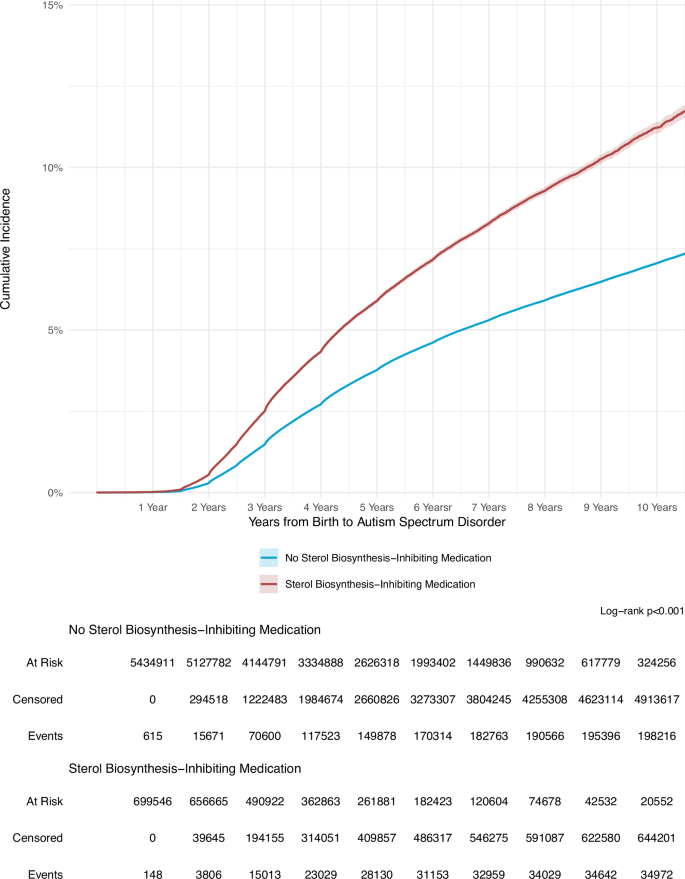
Study Links Antidepressants, Beta-blockers and Statins To Increased Autism Risk

An analysis of 6.14 million maternal-child health records  has linked prescription medications...

Pilot Study: Fibromyalgia Fatigue Improved By TENS Therapy

Fibromyalgia is the term for a poorly-understood condition where people experience pain and fatigue...

User picture.
News StaffRSS Feed of this column.

News Releases From All Over The World, Right To You... Read More »

Blogroll

With holiday shopping season in full swing, everyone's looking for the perfect gift.  But will it make you happy, or just retailers?

Maybe both. A paper in Social Psychological and Personality Science says money can buy happiness, for people who like to shop. In a self-reported survey of happiness, material purchases, from sweaters to skateboards, provide more frequent happiness over time, whereas things like a trip to the zoo (experiential purchases) only provide happiness on individual occasions.

Perovskites are materials used in batteries, fuel cells, and electronic components, and occur in nature as minerals. Despite their important role in technology, little is known about the reactivity of their surfaces. How do water molecules behave when they attach to a perovskite surface? Normally only the outermost atoms at the surface influence this behavior, but on perovskites the deeper layers are important, too.

Professor Ulrike Diebold's team at TU Wien (Vienna) have answered this long-standing question using scanning tunneling microscopes and computer simulations. 

Scientists from Imperial College London have identified for the first time two clusters of genes linked to human intelligence.

Called M1 and M3, these so-called gene networks appear to influence cognitive function - which includes memory, attention, processing speed and reasoning.

Crucially, the scientists have discovered that these two networks - which each contain hundreds of genes - are likely to be under the control of master regulator switches. The researchers are now keen to identify these switches and explore whether it might be feasible to manipulate them. The research is at a very early stage, but the scientists would ultimately like to investigate whether it is possible to use this knowledge of gene networks to boost cognitive function.

At this time of year it is common to see food drives for the less fortunate - and then we see reports saying that low-income people are disproportionately obese and can't control themselves and need to be taxed more heavily in order to eat less.

How can it be both? Welcome to modern American food policy.

Academics writing in Marketing Science want poor people to spend more on food and analyzed six years of sales data from over 1,700 supermarkets across the U.S. to make the case that poor people will behave as elites want if the price of food is changed. 

Though we like to think we are more enlightened, advanced or progressive than in the past, it really isn't so.

We aren't all that different from 2,000 years ago - kids were kids, parents worried the new generation would doom society, and people fought over religion and politics. Or did religion bring nations together? It depends on who you ask. A new anthropology paper says that in Mexico of 700 B.C., religion drove people apart, a lot like Islam today does with everyone outside Islam.
Humans haven't learned much in more than 2,000 years when it comes to religion and politics.

Using new images that show unprecedented detail, scientists have found that material rotating around a very young protostar probably has dragged in and twisted magnetic fields from the larger area surrounding the star. The discovery, made with the National Science Foundation's Karl G. Jansky Very Large Array (VLA) radio telescope, has important implications for how dusty disks -- the raw material for planet formation -- grow around young stars.



