Banner
Synchrotron Could Shed Light On Exotic Dark Photons

There are many hypothetical particles proposed to explain dark matter and one idea to explore how...

The Pain Scale Is Broken But This May Fix It

Chronic pain is reported by over 20 percent of the global population but there is no scientific...
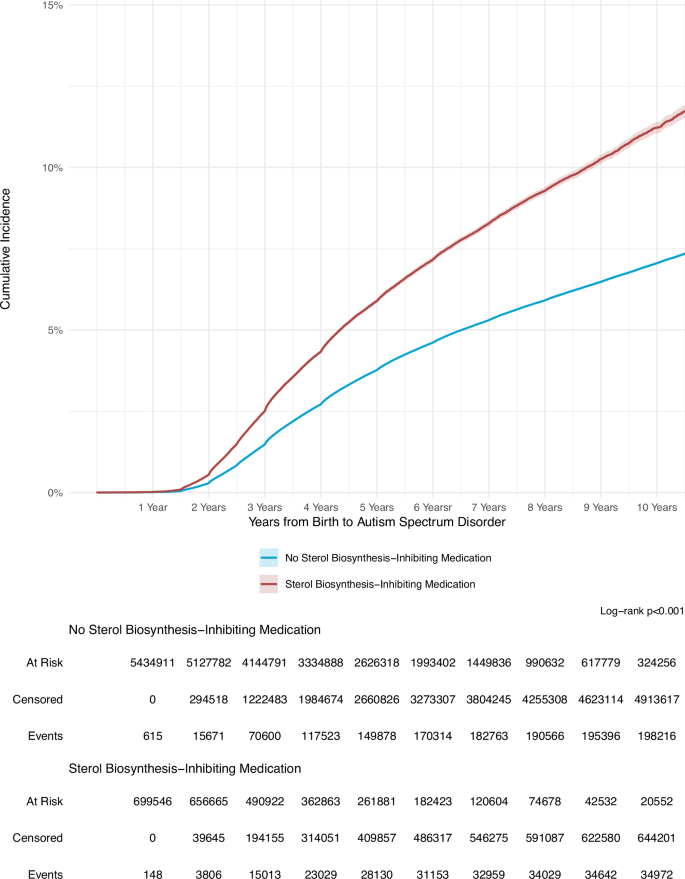
Study Links Antidepressants, Beta-blockers and Statins To Increased Autism Risk

An analysis of 6.14 million maternal-child health records  has linked prescription medications...

Pilot Study: Fibromyalgia Fatigue Improved By TENS Therapy

Fibromyalgia is the term for a poorly-understood condition where people experience pain and fatigue...

User picture.
News StaffRSS Feed of this column.

News Releases From All Over The World, Right To You... Read More »

Blogroll

Scientists from James Cook University have discovered two critically endangered species of sea snakes they thought were extinct. They were basically hiding in plain sight on Ashmore Reef in the Timor Sea, they just hadn't been since in over 15 years.

A Western Australia Parks and Wildlife Officer, Grant Griffin, sent a photo of the snakes in for identification.

 "We were blown away, these potentially extinct snakes were there in plain sight, living on one of Australia's natural icons, Ningaloo Reef," says lead author Blanche D'Anastasi from the ARC Centre of Excellence for Coral Reef Studies at JCU. "What is even more exciting is that they were courting, suggesting that they are members of a breeding population." 

We think of small talk as a way to pass the time or kill an awkward silence but a group of evolutionary psychologists are suggesting that these idle conversations could be a social-bonding tool passed down through evolution - well, in their press release they write "passed down from primates", which shows why you should be wary of psychologists discussing science.

It has been long-established that mental health and behavioral problems such as alcohol and drug abuse are risk factors that push teens to smoke. A new study finds that less destructive kids will opt for e-cigarettes instead of cancer-causing cigarettes.

That's a win for the future of public health, where smoking is linked to numerous maladies.

 In recent years, smoking has declined in middle and high school students, but the use of electronic cigarettes in this group tripled from 2013 to 2014, according to the Centers for Disease Control and Prevention. The hope is that they are using them to wean off cigarettes and will not cause a nicotine addiction that pushes young people into smoking. 

Birds use sophisticated changes to the structure of their feathers, not dyes and pigments, to create multi-colored plumage, and that is why they never go gray. 

Using X-ray scattering at the ESRF facility in France to examine the blue and white feathers of the Blue Jay, researchers from the University of Sheffield found that birds demonstrate a surprising level of control and sophistication in producing colors -  it is able to change the color of its feathers along the equivalent of a single human hair using a tunable nanostructure.

A team of academic cancer specialists has a way to lower drug discovery costs without politicians killing off one of the few remaining non-service industries in America: do less research.

Currently, early cancer drug studies involve extra biopsies solely for the purpose of trying to understand the pharmacodynamics -- what the drug does to the tumor -- they are often mandatory in government-sponsored phase 1 clinical trials because the belief is that computer and cellular models won't be accurate enough. This obviously increases the time and costs of development and a team says that this costly process has had no impact on subsequent drug development or how physicians use these new drugs to treat future patients.

Two newly-developed driverless cars systems can identify a user's location and orientation in places where GPS does not function, and identify the various components of a road scene in real time on a regular camera or smartphone, performing the same job as sensors costing tens of thousands of dollars. 

Although the systems cannot currently control a driverless car, the ability to make a machine 'see' and accurately identify where it is and what it's looking at is a vital part of developing autonomous vehicles and robotics.