Banner
Here's Where Your Backyard Was 300 Million Years Ago

We may use terms like "grounded" and terra firma to mean stability and consistency but geology...

Convergent Evolution Cheat Sheet Now 120 Million Years Old

One tenet of natural selection is a random walk of genes but nature may be more predictable than...

Synchrotron Could Shed Light On Exotic Dark Photons

There are many hypothetical particles proposed to explain dark matter and one idea to explore how...

The Pain Scale Is Broken But This May Fix It

Chronic pain is reported by over 20 percent of the global population but there is no scientific...

User picture.
News StaffRSS Feed of this column.

News Releases From All Over The World, Right To You... Read More »

Blogroll

Almost 10 years ago, we created the Science 2.0 movement, which was geared toward modernizing science collaboration, publication, communication and participation. And then...not much changed. Science is, at its heart, competitive and there is no benefit for most scientists in collaborating. The person who puts something all together at the end will win a Nobel Prize and everyone else will get nothing.

On the smaller scale, everyone who wants government funding is competing for it, so collaboration will only help another lab avoid expensive mistakes or get to a result sooner. Science 2.0 was greeted with enthusiasm...for someone else, anyway.

PROVIDENCE, R.I. [Brown University] -- Animals from tiny worms to human beings have a love-hate relationship with fats and lipids. Cholesterol is a famous example of how they are both essential for health and often have a role in death. A new study reveals another way that may be true. Researchers, working in nematodes and mice, found that a naturally occurring protein responsible for transporting fats like cholesterol around the body also hinders essential functions in cells that increase life span.

Rational use of medicines remains to be one of the most challenging problems in health systems worldwide. Kazan Federal University researchers conducted a practical study to assess the impact of introducing evidence-based principles to the practice of medicine procurement in order to manage budget expenditures on medicines of a multidisciplinary health facility for the period of 2011-2014.

Researchers long have known that some portion of the risk of developing cancer is hereditary and that inherited genetic errors are very important in some tumors but much less so in others.

In a new analysis, researchers have shed light on these hereditary elements across 12 cancer types -- showing a surprising inherited component to stomach cancer and providing some needed clarity on the consequences of certain types of mutations in well-known breast cancer susceptibility genes, BRCA1 and BRCA2.

The study, from Washington University School of Medicine in St. Louis, appears Dec. 22 in the journal Nature Communications.

Borrowing insights from techniques used to image cancer, Stanford scientists have devised a new method for generating "training images" that can be used to fine-tune models of uncertainty about underground physical processes and structures.

Having an accurate picture of the planet's subsurface is crucial for rational decision-making across a wide variety of activities, including environmental cleanup, oil and natural gas well-drilling, and the underground sequestration of greenhouse gases that contribute to climate change.

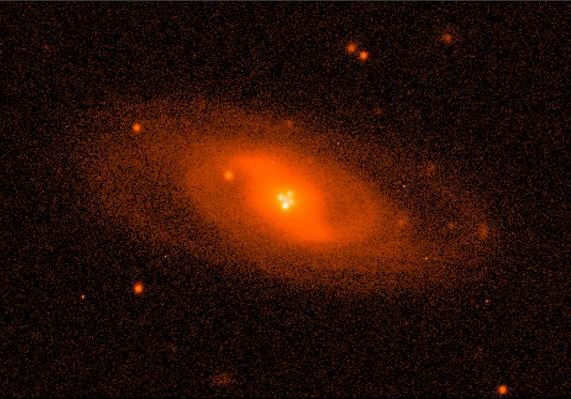
Astrophysicists have obtained precise measurements for an object orbiting a black hole five billion light years away - and the innermost region of a disc of matter in orbital motion around a supermassive black hole tucked inside the quasar known as Einstein’s Cross (Q2237-0305).

This constitutes the most precise set of measurements achieved to date for such a small and distant object, and was made possible thanks to years of monitoring as part of the OGLE and GLITP gravitational microlensing projects, which have had their lenses trained on this quasar for 12 and 9 years, respectively. Typically, astronomers can only detect bright objects that emit a lot of light or large objects that block background light.