Banner
Synchrotron Could Shed Light On Exotic Dark Photons

There are many hypothetical particles proposed to explain dark matter and one idea to explore how...

The Pain Scale Is Broken But This May Fix It

Chronic pain is reported by over 20 percent of the global population but there is no scientific...
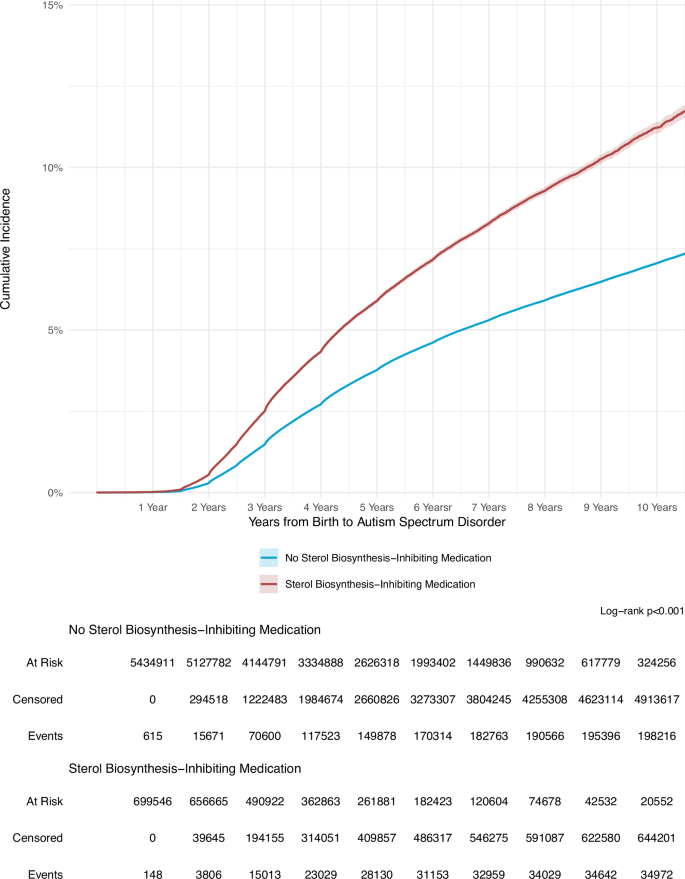
Study Links Antidepressants, Beta-blockers and Statins To Increased Autism Risk

An analysis of 6.14 million maternal-child health records  has linked prescription medications...

Pilot Study: Fibromyalgia Fatigue Improved By TENS Therapy

Fibromyalgia is the term for a poorly-understood condition where people experience pain and fatigue...

User picture.
News StaffRSS Feed of this column.

News Releases From All Over The World, Right To You... Read More »

Blogroll

Pioneering new research has shed new light on the causes behind an 'ice-age' that took place on Earth around 170 million years ago - evidence of a large and abrupt cooling of the Earth's temperature during the Jurassic Period, which lasted millions of years.

The scientists found that the cooling coincided with a large-scale volcanic event - called the North Sea Dome - which restricted the flow of ocean water and the associated heat that it carried from the equator towards the North Pole region.

Researchers have found that the water supply of the Colorado River basin, one of the most important sources for water in the southwestern United States, is influenced more by wet-dry periods than by human use, which has been fairly stable during the past few decades.

The study, led by The University of Texas at Austin, took the most comprehensive look to date at the state of a water source that serves 40 million people in seven states. The researchers used 30 years of local water monitoring records and more than a decade of data collected from the NASA satellite system GRACE to reconstruct changes in the basin's water storage since the 1980s.

A team of Virginia Tech researchers have discovered fossils of kinorhynch worms - commonly known as mud dragons - dating back more than 530 million years.

The historic find - made in South China - fills a huge gap in the known fossil record of kinorhynchs, small invertebrate animals that are related to arthropods, featuring exoskeletons and segmented bodies, but not jointed legs.

The first specimen was unearthed in rocks in Nanjiang, China, in 2013 and more fossils were found later that year and in 2014.

A team of Virginia Tech researchers have discovered fossils of kinorhynch worms - commonly known as mud dragons - dating back more than 530 million years.

The historic find - made in South China - fills a huge gap in the known fossil record of kinorhynchs, small invertebrate animals that are related to arthropods, featuring exoskeletons and segmented bodies, but not jointed legs.

The first specimen was unearthed in rocks in Nanjiang, China, in 2013 and more fossils were found later that year and in 2014.

A pair of socks embedded with miniaturized microbial fuel cells and fueled with urine pumped by the wearer's footsteps has powered a wireless transmitter to send a signal to a PC., the first self-sufficient system powered by a wearable energy generator based on microbial fuel cell technology. 

The birth rate is declining in all industrialised countries, and socioeconomic factors and women's age are not solely to blame. Male reproductive health and environmental factors are also significant, as concluded in a new scientific review article. The article was recently published in the prestigious American journal Physiological Reviews.

Behind the article are fertility researchers from Denmark, the US and Finland. The researchers studied a number of factors related to fertility, and one of the main conclusions of their study was that poor semen quality contributed to increases in infertility and the use of assisted reproductive technology.