

Banner
Synchrotron Could Shed Light On Exotic Dark Photons

There are many hypothetical particles proposed to explain dark matter and one idea to explore how...

The Pain Scale Is Broken But This May Fix It

Chronic pain is reported by over 20 percent of the global population but there is no scientific...
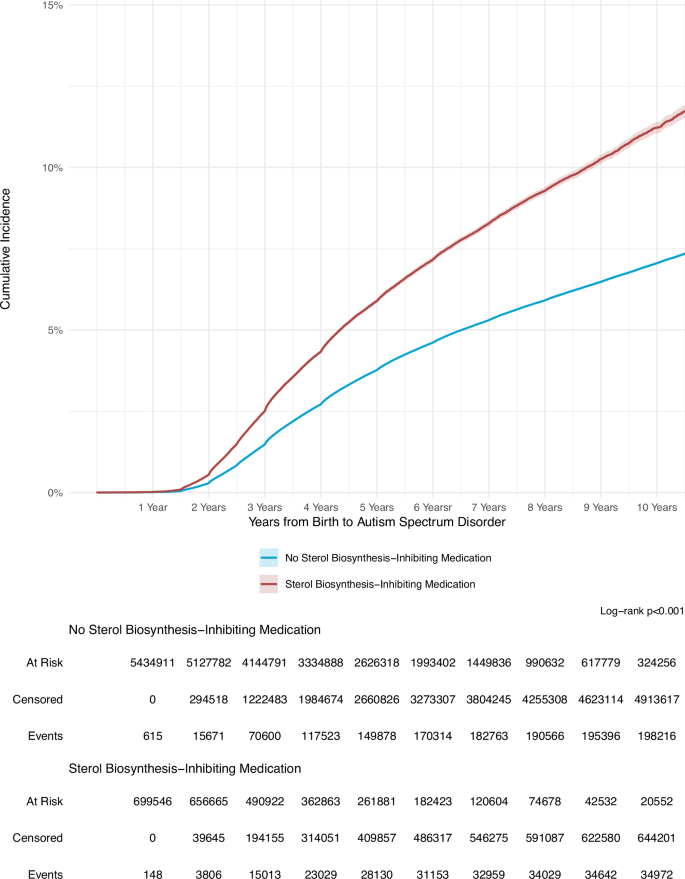
Study Links Antidepressants, Beta-blockers and Statins To Increased Autism Risk

An analysis of 6.14 million maternal-child health records  has linked prescription medications...

Pilot Study: Fibromyalgia Fatigue Improved By TENS Therapy

Fibromyalgia is the term for a poorly-understood condition where people experience pain and fatigue...

User picture.
News StaffRSS Feed of this column.

News Releases From All Over The World, Right To You... Read More »

Blogroll

OTTAWA, Canada - December 8, 2015 - Scientists from the Children's Hospital of Eastern Ontario (CHEO) Research Institute participated in several peer-reviewed articles that published today in the International Journal of Obesity Supplements. The series (including 16 original contributions) was prepared by the International Study of Childhood Obesity, Lifestyle and the Environment (ISCOLE) research group, a global collective of leading obesity research experts from 12 countries located on five continents.

(Boston ) -- In the majority of cases, hip x-rays are not reliable for diagnosing hip osteoarthritis (OA), and can delay the treatment of this debilitating disease.

These findings are the first to evaluate the diagnostic performance of an x-ray in patients with clinical signs and symptoms of classic OA. The study appears in the British Medical Journal.

People are less willing to rely on their knowledge and say they know something when they have access to the Internet, suggesting that our connection to the web is affecting how we think.

Professor Evan F. Risko, of the Department of Psychology at the University of Waterloo, led a recent study where the team asked about 100 participants a series of general-knowledge questions, such as naming the capital of France. Participants indicated if they knew the answer or not. For half of the study, participants had access to the Internet. They had to look up the answer when they responded that they did not know the answer. In the other half of the study, participants did not have access to the Internet.

It used to be that poor people did not have enough food, and sometimes we are still told that they don't, but instead it is the case that poor people are far more likely to belief, and then the claim was that poor people had plenty of food, but it was the wrong kind.

This gave rise to the notion of "food deserts", areas in dense urban areas where large grocery stores are too expensive or regulations are too onerous to stay in business and instead only small bodegas can survive. Get rid of the food deserts and poor people would be less obese, but a new paper in PLOS Medicine disputes the notion that making another change without any evidence will cure obesity. 

Adjusting a specific deep-brain circuit's firing frequency immediately and dramatically alters rats' forebrain activity and alertness levels,  which could eventually take deep brain stimulation to a whole new level.

Deep brain stimulation may one day have potential for restoring consciousness in minimally conscious patients and countering other cases of impaired consciousness. The findings also highlight the importance of determining optimal stimulation frequencies for DBS devices used across a wide range of brain disorders and demonstrate a method for making those determinations. 

Astronomers using the Atacama Large Millimeter/submillimeter Array (ALMA) have discovered the most tenuous molecular gas ever observed. They detected the absorption of radio waves by gas clouds in front of bright radio sources. This radio shadow revealed the composition and conditions of diffuse gas in the Milky Way galaxy.



