Fake Banner
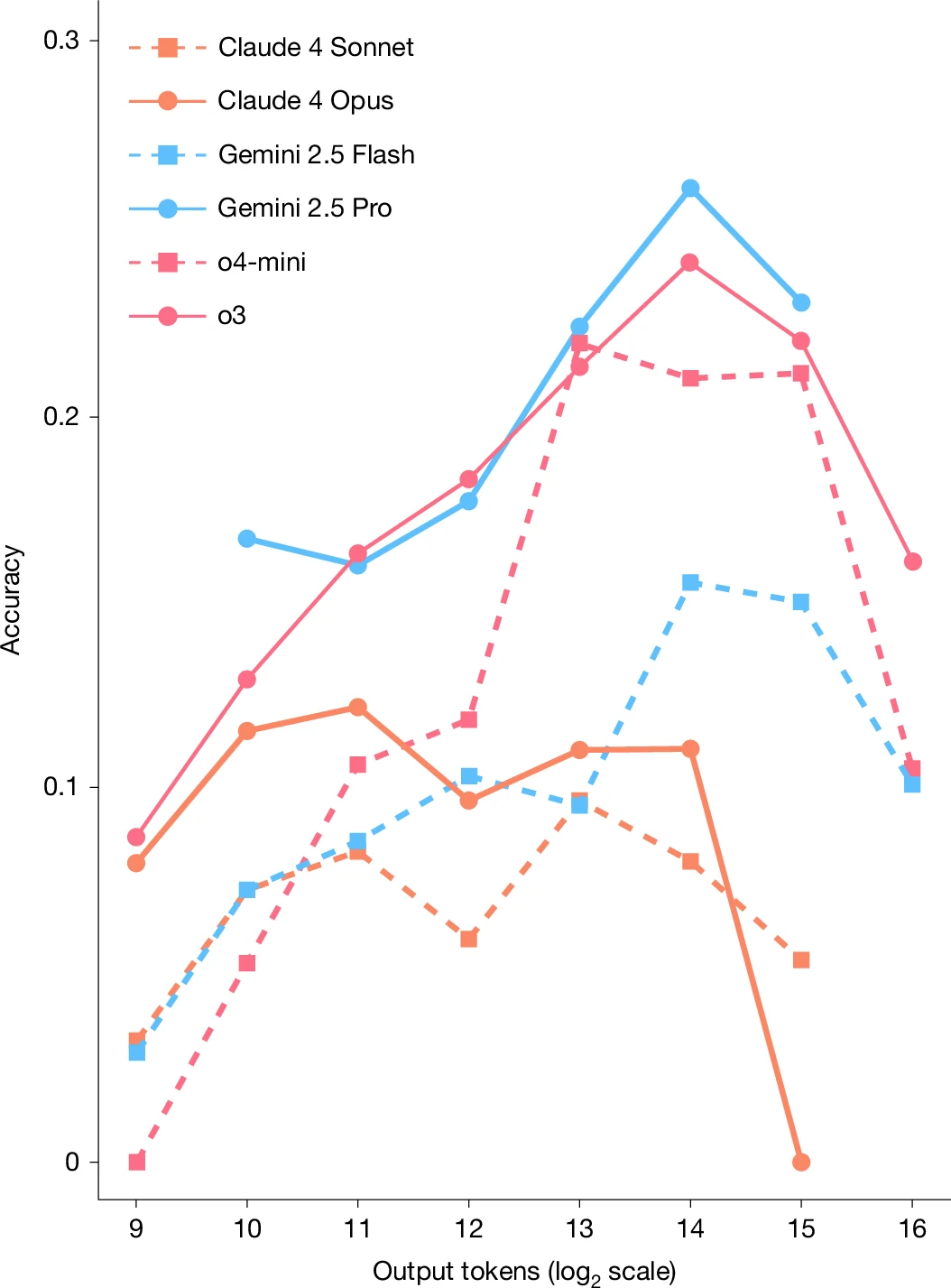
What AI Can't Do: Humanity’s Last Exam

By this time 26 years ago, the "Dot-Com Bubble" was ready to burst. People who wanted to raise...

Does NBA Income Inequality Impact Team Performance?

A new paper says that players where a few superstars get the money leads to less cooperation and...

Dogs And Coffee: Finally, Epidemiology You Can Trust

In 2026, it is easy to feel intellectually knocked around by all of the health claims you read...

Chloe Kim And Eileen Gu In Media As Anti-Asian Narrative

Olympians Chloe Kim and Eileen Gu are both Americans but have Asian descent. Yet Kim competed for...

User picture.
picture for Tommaso Dorigopicture for picture for Fred Phillipspicture for Hontas Farmerpicture for Atreyee Bhattacharyapicture for Patrick Lockerby
Hank CampbellRSS Feed of this column.

I founded Science 2.0® in 2006 and since then it has become the world's largest independent science communications site, with over 300,000,000 direct readers and reach approaching one billion. Read More »

Blogroll
I should be able to get this Hollywood movie made in two paragraphs.  

*****

A likable rogue-ish historian ( Hank Campbell, only in tweed, we might describe him, Harrison Ford being a little long in the tooth for action films these days) is poring over antique tomes, including an original draft copy of  On the Origin of Species by Means of Natural Selection, or The Preservation of Favoured Races in the Struggle for Life when he notices a very faint trace of eraser markings on the title page.    He does some kind of magic chemical stuff (whatever - it's a movie) and discovers it is a number.    
In 2004 a University of Chicago researcher discovered something every evolutionary biologist knew had to exist - a missing link between land animals and fishes.
Dumping tires in the water to create an artificial reef sounds either inspired or crazy.  It turned out to be crazy but there was a scientific hypothesis to it.  You just had to buy into their chain of logic.

There was also a lesson.   Not everything needs to be done in a large experimental setting but the justification to go ahead and do it is always cost and the protecting the environment right now.   'You care about the environment, right?'   I can't think of a single time a question has been phrased that way that someone hasn't tried to sell me something.  And the cost savings are always framed to be immediately practical, though in the case of the artificial reef made of tires, the cost to clean up was 5000 times as much as it was supposed to save.
Morale has plummeted at the National Science Foundation, it seems, due to governmental oversight and interference from above.    The Senate Finance Committee didn't like a report they got from the NSF and are going to do something about it.

What, that sum'bitch Bush came back to haunt scientists and personally rewrite reports and ask why employees aren't doing their jobs instead of doing talk show appearances about how much he stinks?
Name it and the milk will come, say scientists at Newcastle University.  It's not "Field of Dreams" it's Milk of Dreams.   Or whatever analogy you want to use for a correlation-causation fantasy that leads to a conclusion that a cow with a name produces more milk than one without.

Drs Catherine Douglas and Peter Rowlinson say they have shown in their study in Anthrozoos ("A Multidisciplinary Journal of The Interactions of People and Animals"!!) that by giving a cow a name and treating her as an individual farmers can increase their annual milk yield  - by over 60 gallons.
Do you know the name of the first computer game?   I confess I didn't and I learned programming on a Univac 1100/62 so I am a lot closer to the origination date of computer games than most people who will read this.

I assumed it was a kind of punchcard-loaded word game, like a 1960s Leather Goddesses of Phobos only without the divine genius of Dostoevsky that game possessed, but the history of video games is much more elaborate than that.