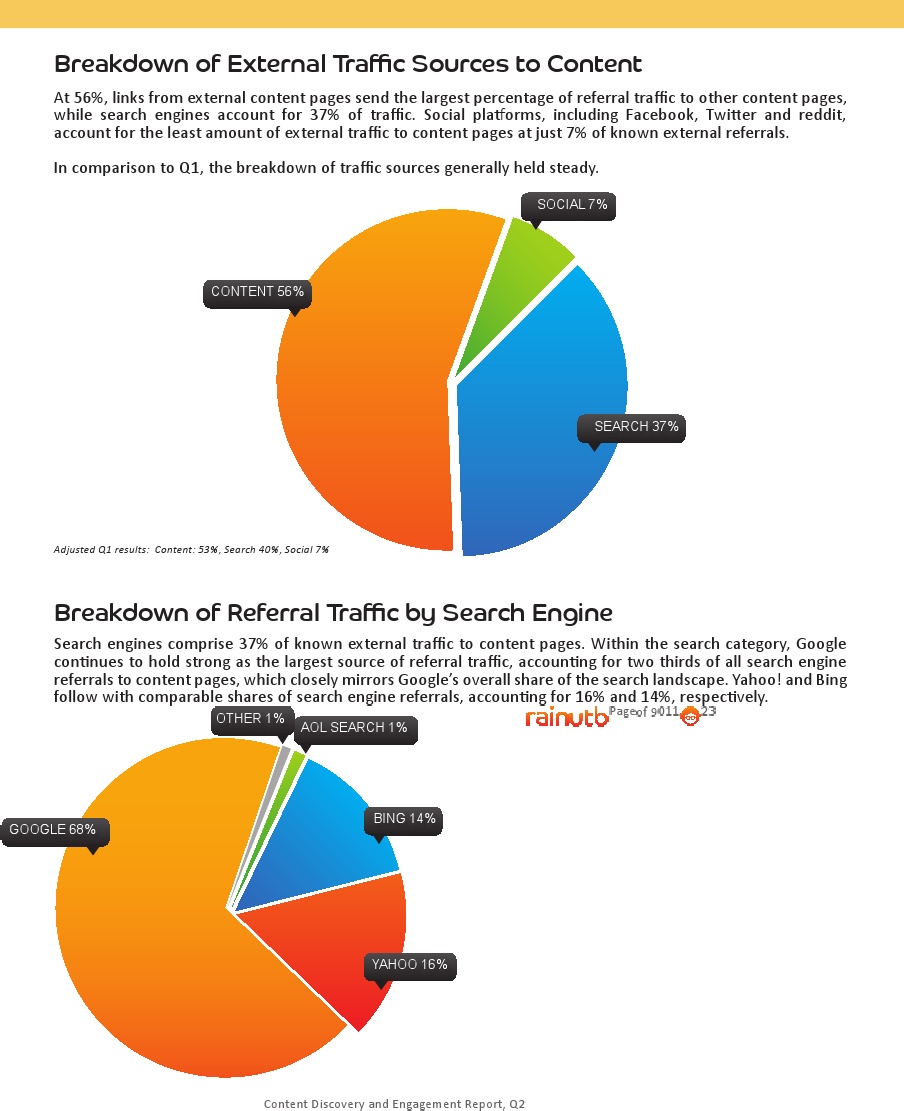
Over time, a variety of people have asked me where they should get the word out that they are writing on Science 2.0 and I am happy to tell them - but they are surprised by the answer. Social media darlings like Twitter and Facebook will accomplish very little beyond being another place to follow comments. Old technology is what matters in getting eyeballs to read your work, and that means a place like
Stumbleupon.com,
Reddit.com,
Digg.com or
Slashdot.org.
You may not know this, but Twitter is actually not that great. The website itself is clunky. Add-ons are what made it successful. Sometimes Twitter has acquired them, like with TweetDeck, and sometimes they have created their own once the market has shown them to be popular.
The photo sharing website TwitPic started in 2008 as a way to share photos easily on Twitter. Life was good, Twitter became popular. Then Twitter announced its own photo-sharing services in June, with the added caveat that creators would own the rights to their photos so they can't be redistributed without permission. That makes Twitpic unessential, the same way Tweetdeck made TinyURL.com unessential.
If you're a fan of "Big Trouble In Little China" (and if you are not, either go rent it and then come back or go read "People" like you should be doing instead of visiting Science 2.0)(1) next to "Chinese people got a lotta Hells"(2) this famous exchange likely sticks in your mind. As they descend into a metaphorical netherworld on their quest (see: anything by Joseph Campbell or Bulfinch's Mythology, if you are more conservative in your reading) the following exchange takes place:
Jack Burton: That is not water.
Egg Shen: Black blood of the earth.
Jack Burton: Do you mean oil?
Egg Shen: I mean black blood of the earth.
Science 2.0 was founded because, contrary to the beliefs of some scientists and some journalists, the public is really, really smart. And they know a lot of science, they just frame it through politics more than they used to because scientists and journalists are less diverse politically than they once were.
The public doesn't trust journalists and, in addition, scientists don't trust journalists. The solution was obviously to make the scientists and the science audience the journalists. Communication was one of my four key pillars in Science 2.0 five years ago and remains the most important today.
Greater virtual realism is always shown in television shows like "Star Trek: The Next Generation" as people who act out an alternate life as a farmer or solve mysteries in the 1800s, and that may happen, but long before that any technology like that will be used by young people to shoot each other.
A recent NY Times article echoes what I said last week in a meeting about a Science 2.0 television pilot - incredibly literate people who know a lot about science can't name a scientist.
It's certainly true. Adult science literacy has tripled since I was an adult, science scores have gone up for American kids every year for the last decade and the American science audience alone is 65 million people.


 Happy Twelfth Night - Or Divorce Day, Depending On How Your 2026 Is Going
 Blood Pressure Medication Adherence May Not Be Cost, It May Be Annoyance At Defensive Medicine
 On January 5th, Don't Get Divorced Because Of Hallmark Movies
 Does Stress Make Holidate Sex More Likely?