Banner
Air India Flight 171 - Flawed EE Bay Water Ingress Theory

Air India Flight 171 - Flawed EE Bay Water Ingress TheoryRichard Godfrey, in many videos on the...
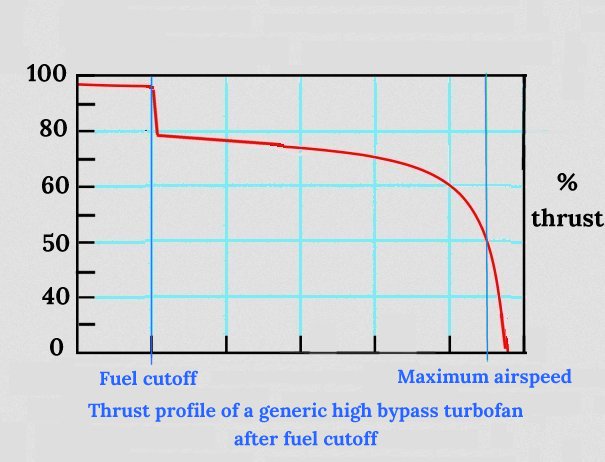
Air India Flight 171 Accident Summary - Key Findings

Air India Flight 171 Accident Summary - Key FindingsThe purpose of an air accident report is to...

Air India Flight 171 - Ask The experts

Air India Flight 171 - Ask The expertsAn open letter to H. Lawrence Culp, Jr., Chairman and Chief...

Air India Flight 171 - The Vital Seconds

Air India Flight 171 - The Vital SecondsThe Timeline - Vital Seconds.This timeline is constructed...

User picture.
picture for Hank Campbellpicture for Tommaso Dorigopicture for Fred Phillipspicture for Hontas Farmerpicture for Robert H Olleypicture for Helen Barratt
Patrick LockerbyRSS Feed of this column.

Retired engineer, 79 years young. Computer builder and programmer. Linguist specialising in technical translation. Interested in every human endeavour except the scrooge theory of accountancy. Interested... Read More »

Blogroll
A Science Of Human Language - Part #4


In Part #1
of this series, I suggested that a grammar heavily based in syntax was not sufficiently scientific as a general theory of how language functions.

Part #2  was an overview of how linguistic error-handling processes can add to the reliability and predictability of communication using human language.
The Bookworm And The Encyclopedias - The Solution


Last Monday I posed a simple math puzzle:


A set of 10 encyclopedias is sitting on a bookshelf in left-to-right numerical order.


Each single volume contains 1,000 pages.    


A bookworm eats its way directly and linearly through them in a straight line.


It starts on page 1 of volume 1.


It ends on page 1,000  of volume 10.


Question:    Not counting any covers, flysheets, etc., how many pages does the bookworm eat ?
A Science Of Human Language - Part #3

In Part #1
of this series, I suggested that a grammar heavily based in syntax was not sufficiently scientific as a general theory of how language functions.

Part #2 was an overview of how linguistic error-handling processes can add to the reliability and predictability of communication using human language.
A Science Of Human Language - Part #2


Quistic Grammar : A New Universal Grammar

In
Part #1 of this series, I suggested that a grammar heavily based in syntax was not sufficiently scientific as a general theory of how language functions.  In developing the current theory I shall try to demonstrate that various observations about human language can be tied together into an inclusive theory of how language functions.  The first, and to my mind most important observation about human language is its redundancy, its apparent inefficiency in the use of the resources of sounds and symbols.

A Science Of Human Language - Part #1


Quistic Grammar : A New Universal Grammar

In this series of articles I hope to build, on a sure foundation, a theory which explains language as a means by which evolution can encode information of value to the survival of a species so that it may be transmitted between individuals without the use of genes.  The core of the theory suggests that language, in order to transmit information most effectively, encodes that information as 'packets of ideas' which form the answers to simple questions.


Introductory Remarks
The Brain's Linguistic Auto-Pilot


We tend to be not very good at proof-reading and 'proof-hearing' our own words.  It takes mental training and a great deal of concentration even to proof-read other peoples' words, or to notice common slips of speech.  This, I suggest, is because our brain holds a linguistic auto-pilot which is so good at error-correction that we are blissfully unaware of most typos and slurs of speech.


The Jabberwock Effect