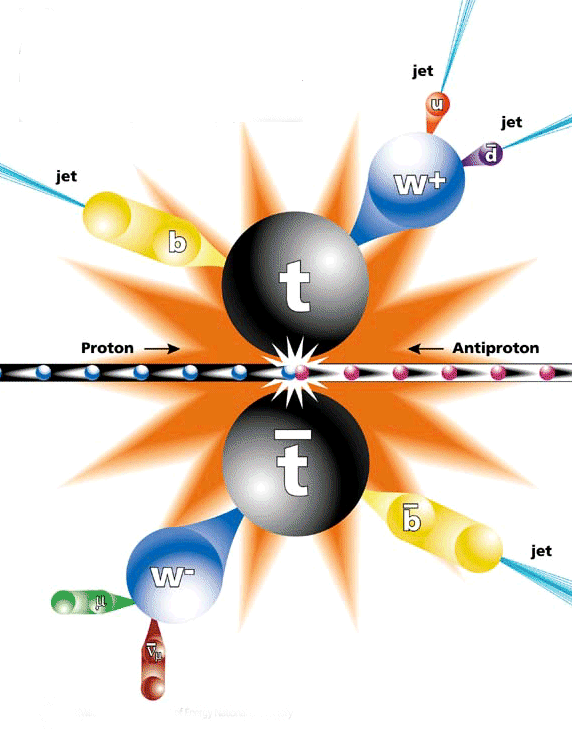
A new result by the CMS collaboration has been produced today on top quark physics. For those of you who only get triggered by the search of new particles or new forces, the study of "yesterday's signals", such as top quarks, is boring and uninformative; but high-energy physics is a rich field of research, and we extend our understanding of subnuclear physics no less by getting to know how exactly top quarks get produced in proton-proton collisions, than we do by placing limits on ephemeral particles (SUSY ones, e.g.).
So I salute the new measurement as an important advance. Using over one inverse femtobarn of data collected in 2011 (about a hundred trillion proton-proton collisions), CMS was able to study top quark pairs in great detail.
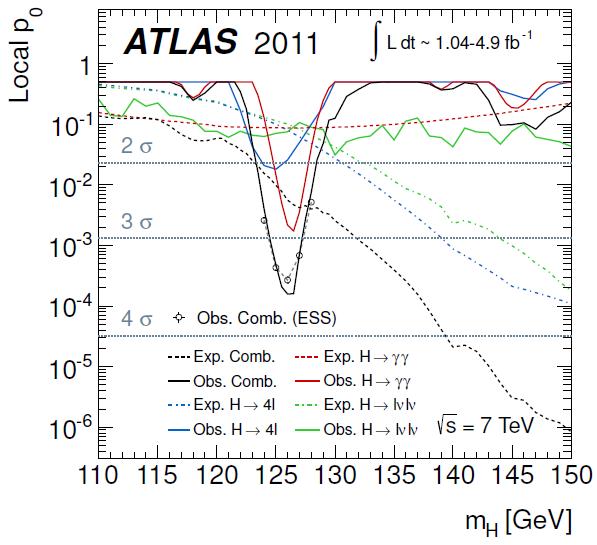
You have seen it already two months ago, but those were "preliminary" results. Now both CMS and ATLAS have produced full-fledged documents (
CMS here,
ATLAS here) describing their respective combinations of different Higgs boson searches, using data collected in 2011 by the two experimental apparata at the CERN Large Hadron Collider.
Last week I spent a few interesting days in the pleasant winter setting of Engelberg, a mountain location in the Swiss alps. There I attended the CHIPP 2012 winter school, an event organized by Vincenzo Chiochia from University of Zurich and Gabriella Pazstor from University of Geneva. They invited me to give a three-hour mini-course in Statistics for data analysis in High-Energy Physics, something which was a new experience for me. It took me the best part of the last couple of months to get prepared, but I was glad I did. In the end, the material I put together could have been used profitfully for five or six hours of lecture, but by skipping some of the topics I could get to the end without using a silly speed.
The CMS Collaboration has just
released the results of a deep study of their sample of lead-lead collisions, produced at a center-of-mass energy of 2.76 TeV per nucleon by the Large Hadron Collider.
The
CHIPP 2012 winter school of particle physics is over, and so is the
50th winter meeting on nuclear physics. The two events had three things in common: they were both held in renowned locations for winter sports in the Alps (Engelberg, Switzerland, and Bormio, Italy); they both ran from January 22nd to 27th; and I attended both as a lecturer.
This week's edition of the CMS Times features a
short piece by A.Rao,
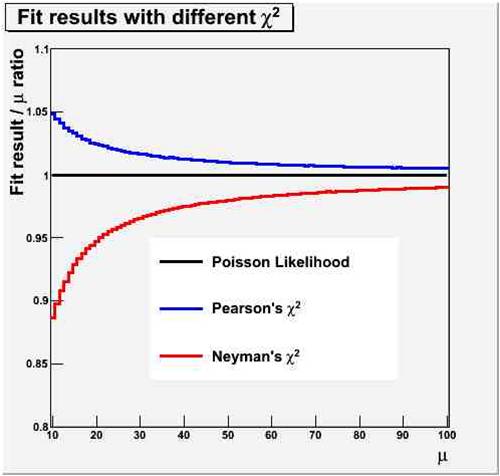
where some points are made on the issue of correct statistical analysis of high-energy physics data.


 Enrico Stomeo - A Lifelong Passion For Meteor Studies
 Surviving Queues: 1 - At The Airport
 Choosing Your Bets: The Selection Bias