Fake Banner
Enrico Stomeo - A Lifelong Passion For Meteor Studies

I was reached this evening by the news of the passing of a dear friend, Enrico Stomeo. Enrico was...

Surviving Queues: 1 - At The Airport

Nobody likes to wait in line. Whether you are sitting in your car waiting to reach the toll booths...

Choosing Your Bets: The Selection Bias

As some of the long-time readers of this blog know, in this column I have occasionally discussed...

Have A Master In Science, Want A Post-Doc Position Directly?

Do you have a master in Science, and want to start a Post-Doc position directly? You can have it...

User picture.
picture for Hank Campbellpicture for Heidi Hendersonpicture for Patrick Lockerbypicture for Bente Lilja Byepicture for Sascha Vongehrpicture for Johannes Koelman
Tommaso DorigoRSS Feed of this column.

Tommaso Dorigo is an experimental particle physicist, who works for the INFN at the University of Padova, and collaborates with the CMS and the SWGO experiments. He is the president of the Read More »

Blogroll
As everybody knows, next Tuesday we will be treated with a CERN webcast of the analysis results on the Higgs boson searches by ATLAS and CMS. I imagine many of you will want to tune in, but fear you will not grasp much given the typically technical jargon that physicists use to communicate the details of their analyses.

So I thought I would provide here a very short glossary of terms you are likely to hear, and which you might have a hard time understanding correctly. Let me see if I can do a decent job.

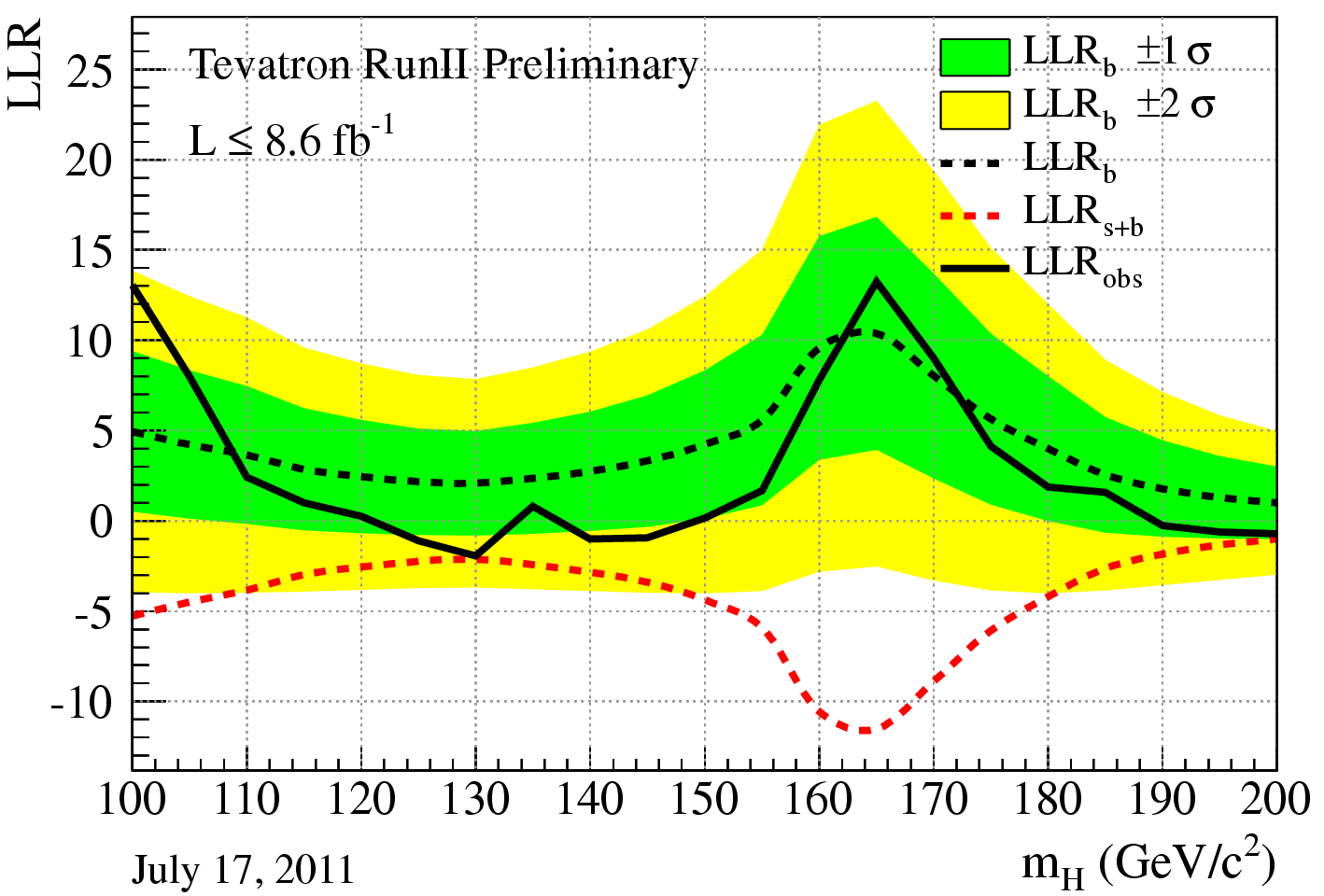
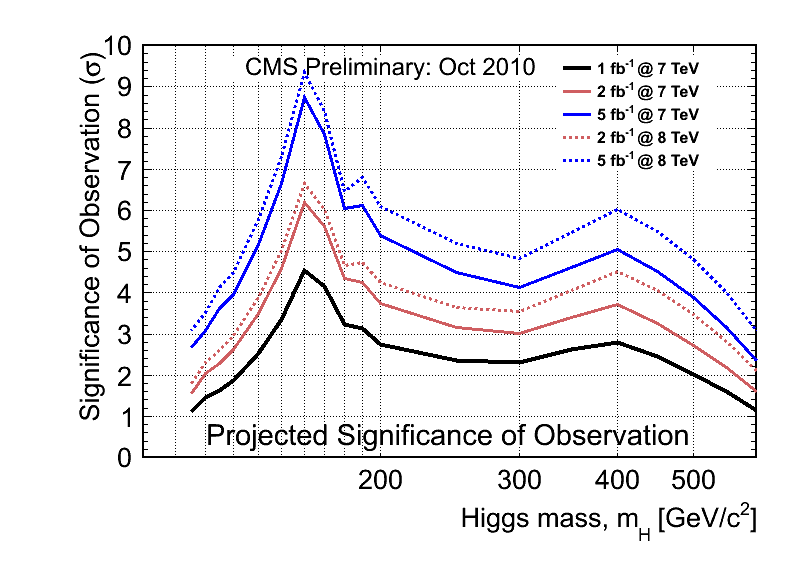
It is by now public that Rolf Heuer, the Director General of CERN, in announcing for December 13th two back-to-back talks of the CMS and ATLAS experiments on their Higgs search results with 2011 data, warned that the results might not be conclusive yet. Besides, nobody really could expect them to be, since the sensitivity expected by both ATLAS and CMS in the still not excluded region of the Higgs mass, with 5/fb of data per experiment and 7 TeV running conditions, ranges from 2 to 4 standard deviations in the rosiest circumstances.
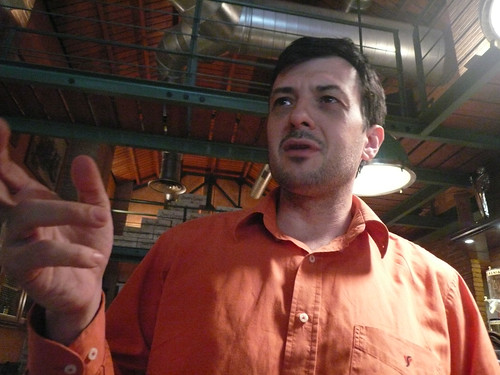
The text below was graciously written for this blog by Alejandro Rivero (below),  a friend who has contributed to this blog other times in the past. His theoretical ideas are off the mainstream, but in a way which makes them interesting to me. I hope some of you will appreciate reading about the whole thing in summary here - Alejandro has a few papers out which you may want to read if you are specifically interested in the matter.

Update: I am keeping out of this, but you may well be interested in reading what Gibbs, Woit, and Motl have to say about recent leaks on the ATLAS and CMS results. So I hope I won't be crucified for three general links now!

Update 2: And it is now public that a seminar at CERN will be given by ATLAS and CMS on December 13th. So the wait is almost over, officially...

I have not written in a while - a full week. This is uncharacteristic enough that I owe you some sort of explanation.
Sadly, this morning Milla Baldo Ceolin passed away.

Milla was a volcanic physicist, and a fantastic professor. I had the pleasure of following her course of "Fisica Superiore" in the late eighties, and I remember her brilliant lessons, insightful and mind-broadening.

Milla was born in 1924, and graduated in Physics in 1951. In 1963 she was the first woman to become a professor in the University of Padova. Her research encompasses fifty years of subnuclear physics, and is especially centered on weak interactions. But in Padova, especially in the last two or three decades, her name was especially associated with neutrinos, the phenomenal particles at whose study her research was mostly aimed.
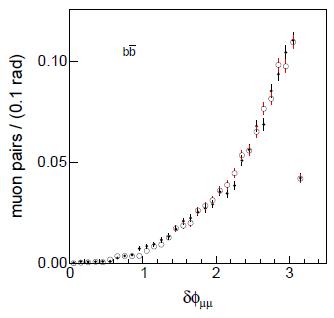
Do you remember the multi-muon anomaly in CDF ? The matter was discussed with quite some detail in a series of posts in this blog (back then at wordpress). In a nutshell, CDF could not explain their sample of events containing two muons, when these particles had a very large impact parameter (the impact parameter is the minimum distance of a trajectory from the interaction point: a large value indicates that the particle was produced elsewhere).