On these hot days of August one is led to remember the lyrics of Elton John's 1972 hit "Rocket Man": "and all that science I don't understand... It's just my job five days a week". Indeed, being a scientist should not be considered a mission, something you work at 24 hours a day, seven days a week. We do have our lives and attend to them... more or less.
Exotic baryons, what are they ? But first of all, what is a baryon ? Well, it depends whom you ask the question to. In the context of the static quark model, a baryon is a particle composed of a triplet of quarks, as opposed to a meson, which is a particle composed of a quark-antiquark pair. But the quark model is fifty years old, and nowadays we know better: baryons and mesons do not just contain a triplet or a duo of quarks; they are in fact a soup of quarks and gluons. What is still true is that their intrinsic properties are distinguished by the _valence_ quarks they contain.
Meteorites - stones that fall on Earth from space - are quite rare, but not so much as to make their possession impossible. In fact I know a few collectors of these strange bits of matter; and I find the very strange-looking stones quite fascinating. I myself own a small piece of tectite fallen somewhere in South Africa a few decades ago; but it is just an odd bit in a larger collection of minerals and crystals that formed on Earth (yes, I find those even more fascinating; but that's just me).
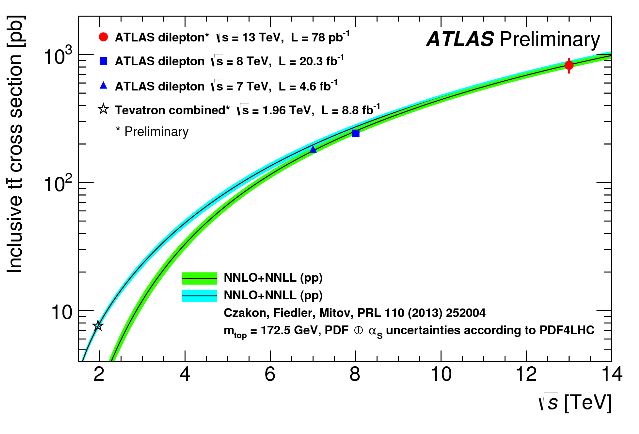
The 13 TeV data from LHC collisions taken this summer is quickly going through analysis programs and being used for new physics results, and everybody is wondering whether there are surprises in store... Of course that will require some more time to be ascertained.
For the time being, I can offer a couple of very inspiring pictures. CMS recorded a spectacular event featuring two extremely high-energy jets in the first 40 inverse picobarns of data that was collected and reconstructed by the experiment with all detector component properly working.
Are you a post-lauream student in Physics, interested in pursuing a career in particle physics, and maybe with interest in advanced machine learning applications, with an eye to a great job after your PhD ? Then this posting is for you.
Well, as some of you
may have heard, the restart of the LHC has not been as smooth as we had hoped. In a machine as complex as this the chance that something gets in the way of a well-followed schedule is quite significant. So there have been slight delays, but the important thing is that the data at 13 TeV centre-of-mass energy are coming, and the first results are being extracted from them.


 Enrico Stomeo - A Lifelong Passion For Meteor Studies
 Surviving Queues: 1 - At The Airport
 Choosing Your Bets: The Selection Bias