15 years ago, the name "Aidan" was barely a blip on the radar of Americans with new babies, ranking a lowly 324th on the Social Security Administration's list of popular baby names.
Then a popular character with that name was on the television show "Sex and the City" and though fathers dreaded that their child was going to have the same name as some other child of a mother who watched the show, it happened all across America anyway. Since then, that name has been in the top 20.
A brilliant-green sea slug can live for months at a time "feeding" on sunlight like a plant and now scientists have the first direct evidence that its chromosomes have some genes that come from the algae it eats.
Those genes help sustain photosynthetic processes inside the slug that provide it with all the food it needs.
Importantly, this is one of the only known examples of functional gene transfer from one multicellular species to another, which is the goal of gene therapy to correct genetically based diseases in humans.

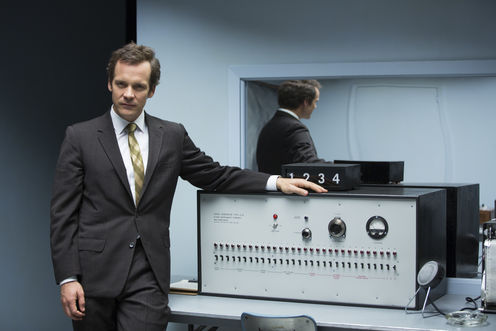
Peter Sarsgaard stars as the psychologist Stanley Milgram in the new film "The Experimenter". BB Film Productions
By Kathryn Millard, Macquarie University
Why have the landmark psychology experiments of the post-war era proved so enduring? Designed as dramas about human behavior, experimenters drew on theatrical techniques and tailored their results for cinema – results that, though skewed, have become embedded in the collective subconscious.
An insulin-regulating hormone that had only been postulated to exist has been discovered.
The hormone, called limostatin after the Greek goddess of starvation, Limos, tamps down circulating insulin levels during recovery from fasting or starvation. In this way, it ensures that precious nutrients remain in the blood long enough to rebuild starving tissues, rather than being rapidly squirreled away into less-accessible fat cells.
The researchers first discovered limostatin in fruit flies but then quickly identified a protein with a similar function in humans.
In 1993, Senator Daniel Patrick Moynihan gave us "defining deviancy down", a clever bit of alliteration based on the work of sociologist Emile Durkheim from his defining work of 1895. Durkheim wrote that crime is normal, it is going to happen, but by defining what is deviant, a community decides what is not and creates a reasonable standard for living together.

My wife bought me a “
selfie-stick” (sometimes called
Wand of Narcissus), which is ironic since I so rarely actually take selfies. But, once I took a look at its simplicity of design, I couldn’t leave well enough alone and decided to create the “Super Selfie-Stick.”
At first I tried attaching a camera mount on the end of a golf ball retriever.
 By Joel N. Shurkin, Inside Science
(Inside Science) - In nature — the rule goes — everything is connected to everything else, so it is possible that when you combine two methods of preventing a deadly disease, bad things can happen.
The rate of global warming that had been predicted in the 1990s did not come to pass. In the 21st century, warming has been significantly slower than all the models had predicted, leading to claims that the models contained systematic errors.
Not so, according to a new analysis, it is just random variation. Jochem Marotzke, Director at the Max Planck Institute for Meteorology in Hamburg, and Piers M. Forster, a professor at the University of Leeds in the UK, did a statistical analysis and found that the models do not generally overestimate man-made climate change and so global warming is still highly likely to reach critical proportions by the end of the century if CO2 emissions are not reduced.
Inhibiting the action of a particular enzyme called polymerase theta, or PolQ, dramatically slows the growth of tumor cells tied to BRCA1 and BRCA2 genetic mutations which, in turn, are closely tied to breast and ovarian cancers, according to a new paper.