Scientific research sometimes requires the use of animals. It’s a fact. And as long as that is the case, we need to do everything in our power to minimize the distress for laboratory animals.

This is not just for the sake of the animals, but also for the sake of science itself. We know that the quality of life of an animal can actually affect its physiology and, thereby, the research data.

But unfortunately, the standards of animal care vary greatly across countries and even across research institutes. The time has come to overhaul this system and replace it with globally enforced rules.

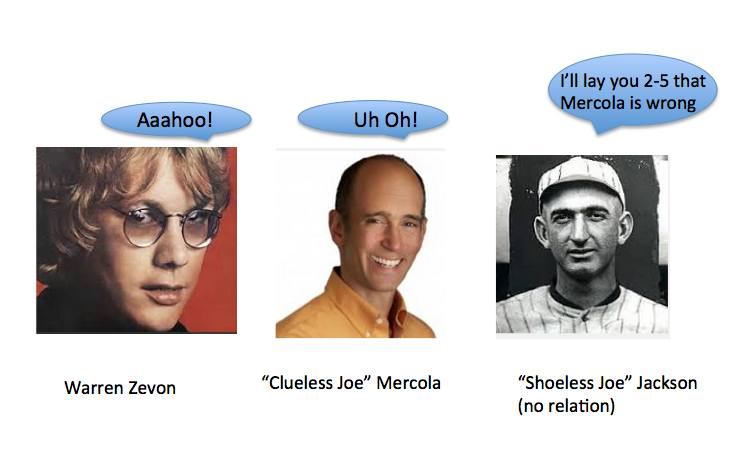
“I saw a werewolf with a Chinese menu in his hand,

Walkin' through the streets of Soho in the rain,

He was lookin' for the place called Lee Ho Fooks,

Gonna get a big dish of beef chow mein.”

Aaahoo! …."

Warren Zevon, 1978


What if I told you that half of the studies published in scientific journals today – the ones upon which news coverage of medical advances is often based – won’t hold up under scrutiny? You might say I had gone mad. No one would ever tolerate that kind of waste in a field as important – and expensive, to the tune of roughly US$30 billion in federal spending per year – as biomedical research, right? After all, this is the crucial work that hunts for explanations for diseases so they can better be treated or even cured.

Researchers studying wild banded mongooses in Uganda have discovered that these small mammals have either cooperative or selfish personalities which last for their entire lifetime.

The researchers investigated the selfish behavior of mongoose mate-guarding - where dominant males guard particular females - and the cooperative behavior of 'babysitting' and 'escorting' the young.

They found that cooperative mongooses that helped out with offspring care did so consistently over their whole lifetime but those that put in little effort never increased their workload.

Similar consistent behavior was found in mongooses that selfishly guarded mates for their entire life.

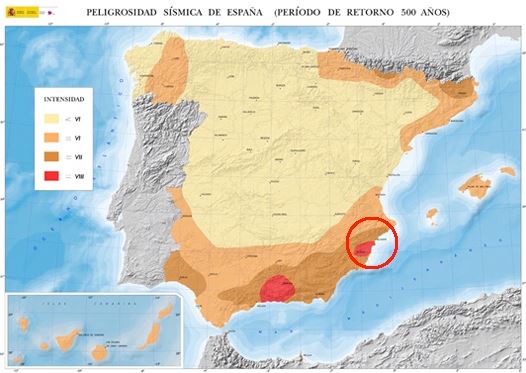
Antonio Aledo, Professor of Sociology at the University of Alicante, warns that "because of real estate speculation and the management of public budgets based on income from the real estate business, seismic risk has been forgotten."

As an example, he used the town of Torrevieja, where one of the biggest earthquakes in the province of Alicante took place in 1829 with more than 389 dead and 209 wounded. And things would not be much better now.

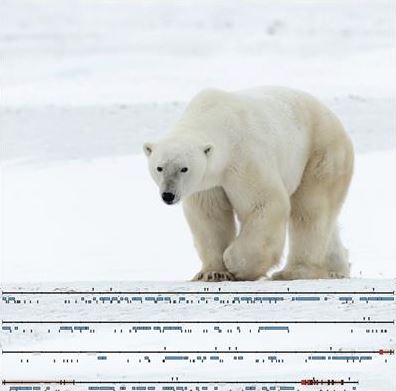
Scientists have reconstructed part of the male chromosome in polar bears. They were able to assign 1.9 million base pairs specifically to the polar bear Y chromosome and show that more than 100,000 years ago, the male polar bear lineages split and developed in two separate genetic groups.

The polar bear is the world’s largest land-dwelling predator and is hard to miss. Nevertheless, it is difficult to study the evolution this arctic resident: Polar bears live and die on the frozen sea, and their remains are seldom found.

“In order to gain insights into the evolutionary development of Ursus maritimus, we use genetics instead of fossils,” explains Prof. Axel Janke of the Senckenberg Research Institute for Biodiversity and Climate in Frankfurt.

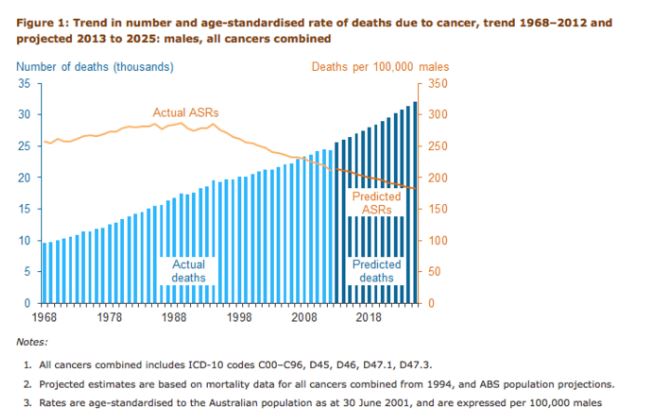
The rate of Australians dying from cancer is on a steady, downhill trajectory, thanks to powerful advances made in prevention, diagnosis and treatment of the disease. New data from the Australian Institute of Health and Welfare shows a promising outlook for those diagnosed with cancer.

Deaths from all cancers combined fell from 199 per 100,000 people in 1968, to 167 per 100,000 in 2012 - a decline of 2.6 deaths per 100,000 people per year.

“This confirms that we are steadily making improvements in most cancers, in terms of survival,” said Professor Timothy Hughes, Cancer Theme Leader at SAHMRI.

“And it’s coming from better prevention, better screening and better therapy.”

The Battle of Agincourt, a major English victory in the Hundred Years' War, will have its 600th anniversary on October 25th, 2015, but they had actually landed in August.

How big was the fleet that carried the army? Henry V’s naval fleet, used to transport troops, was much smaller than previously thought, according to a historian. 
In Mexico, breast cancer has been adequately controlled, and is no longer considered a risk of death when it’s diagnosed.

The disease is more common among women in the capital and the northern states, and is first in incidence of malignant neoplasms in females. It represents 11.34 percent of all cancer cases, and the increase is negligible. But in the United States the increase is five percent per year.
Well, as some of you may have heard, the restart of the LHC has not been as smooth as we had hoped. In a machine as complex as this the chance that something gets in the way of a well-followed schedule is quite significant. So there have been slight delays, but the important thing is that the data at 13 TeV centre-of-mass energy are coming, and the first results are being extracted from them.