By all accounts, my friend Lori has a fabulous sense of style. Plus, she really knows how to find a bargain. The outfits she assembles from Goodwill and vintage clothing shops continue to defy expectation – and imitation. Years ago, when we both lived in Boston, I snuck glances at the pages she flagged in her fashion magazines. Now, whenever I catch her during her visits home to the Bay Area, I file away shopping tips while we fill each other in on our lives.
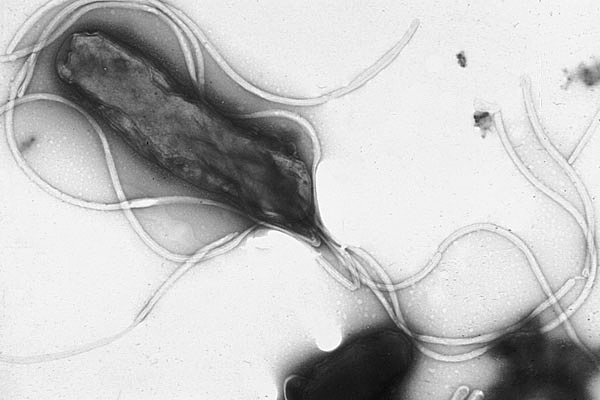
Helicobacter is a good example in our changing understanding of the role of microbes and the human body environment. Some may recall that this particular bacteria was introduced to the public in a rather striking experiment where it was suspected of causing stomach ulcers and gastritis. Dr. Barry Marshall drank a petri dish containing cultured Helicobacter Pylori and within days developed gastritis. This demonstrated a firm connection between bacteria and gastritis/stomach ulcers as well as the role of using antibiotics to treat this condition.
Helicobacter is presumed to be present in about 50% of the world's population upper gastrointestinal tract, while fully 80% of individuals harboring this organism are asymptomatic.
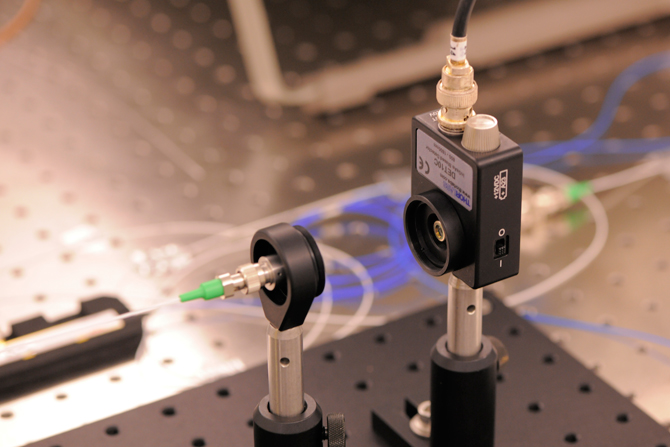
If one beam travels a fixed length and another travels an extra distance or in some other slightly different way, the two light beams overlap and interfere when they meet up, creating an interference pattern that scientists inspect to obtain highly precise measurements.
It's football season so along with cheers and yelling you will hear a more dangerous sound; the sharp crack of helmet-to-helmet collisions. Hard collisions can lead to player concussions but the physics of how the impact of a helmet hit transfers to the brain is not yet well understood.
A research team has created a simplified experimental model of the brain and skull inside a helmet during a helmet-to-helmet collision. The model illustrates how the fast vibrational motion of the hit translates into a sloshing motion of the brain inside the skull.
I am about to go to an informal
workshop on naturalism and its implications, organized by cosmologist Sean Carroll. The list of participants is impressive, including Pat Churchland, Jerry Coyne, Richard Dawkins, Dan Dennett, Rebecca Goldstein, Alex Rosenberg, Don Ross and Steven Weinberg.
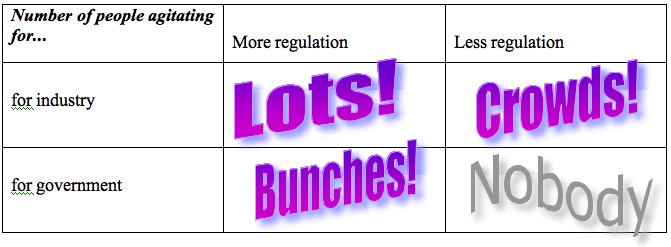
Three reasons why government can look less efficient than it really is:
1. Cherry-picking in privatization. Let’s suppose we could rank government agencies or services in descending order of productivity: 1, 2, 3, and so on, with agency 1 being the most efficient and productive. As a reality check, let’s note that such a ranking is indeed possible, in a rough way.
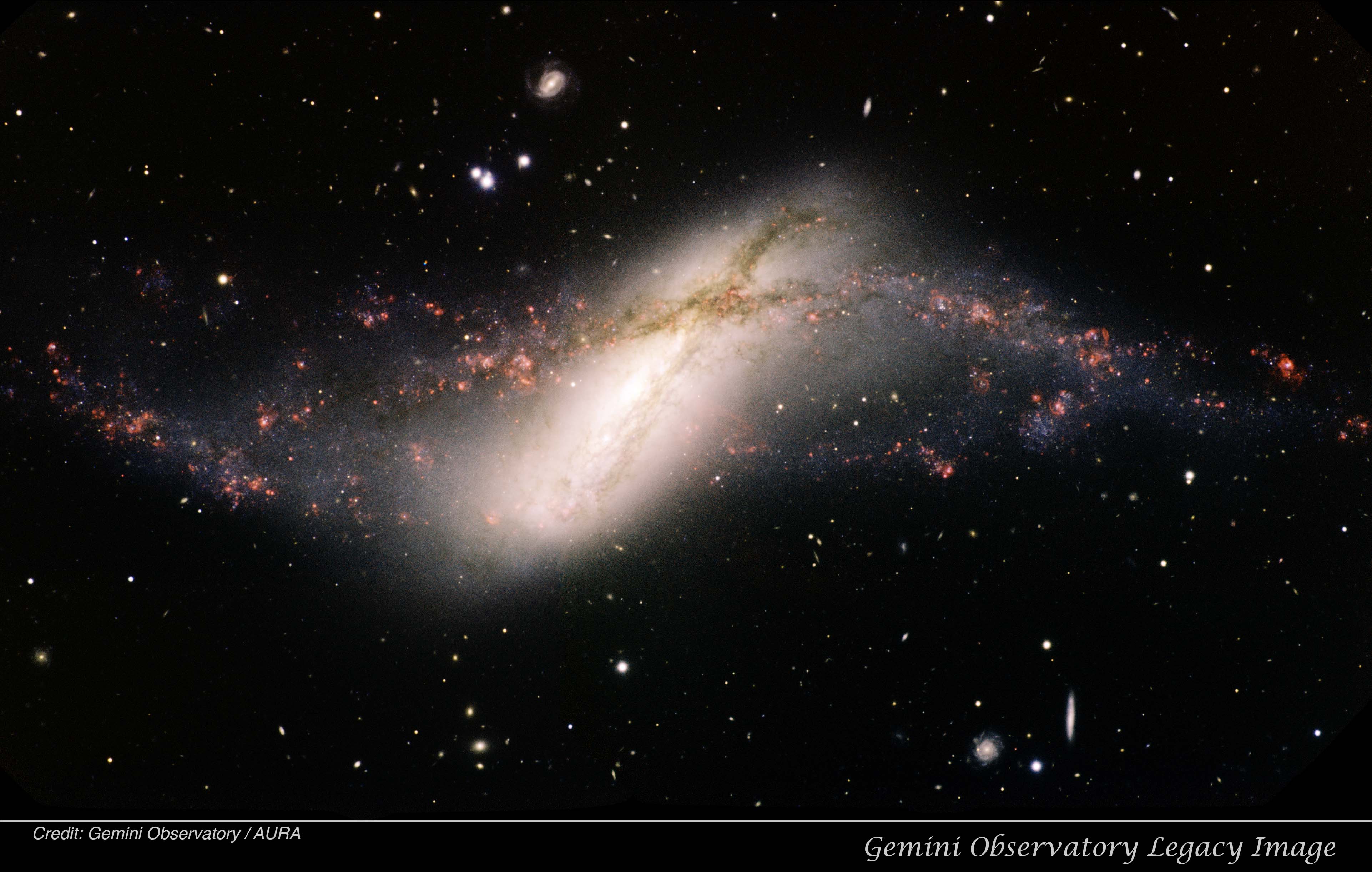
A Gemini Legacy image has captured the colorful and dramatic tale of a life-and-death struggle between two galaxies interacting. All the action appears in a single frame, with the stunning polar-ring galaxy NGC 660 as the focus of attention.
Tropical Storm Maria is moving away from Japan and strong wind shear is pushing its rainfall east of the storm's center, with no areas of heavy rain remaining in the tropical cyclone. The low-level center of the storm is now exposed and a wind shear greater than 30 knots (34.5 mph) continues to further weaken the storm.
Physicists at the Relativistic Heavy Ion Collider (RHIC) recently observed first glimpses of a possible boundary separating ordinary nuclear matter, composed of protons and neutrons we know today, from the odd, seething soup of their constituent quarks and gluons that permeated the early universe some 14 billion years ago.
The RHIC physicists have been creating and studying this primordial quark-gluon plasma (QGP) for a while but the data they presented at the Quark Matter 2012 international conference from systematic studies varied the energy and types of colliding ions to create this new form of matter under a broad range of initial conditions, allowing the experimenters to unravel its properties.
An international research effort has resulted in an integrated physical, genetic and functional sequence assembly of the barley genome, which could lead to higher yields, improved pest- and disease-resistance and enhanced nutritional value of crops.