




The number of people with one or more of the adverse complications of obesity, including type 2 diabetes and heart disease is rapidly increasing.

Drugs designed to treat obesity have shown limited efficacy and have been associated with serious side effects, largely because we have limited understanding of the effects of obesity on our natural mechanisms of body weight control.

For example, while great strides have been made in our understanding of how the brain controls our desire to feed, as well as the processes underlying the balancing of energy intake and expenditure, little is known about how the are altered by obesity. Two independent groups of researchers have now generated data that begin to address this issue.

The main observation here is that rationalization on the social level is rationalization on the personal level performed by macro-systems (social systems from our point of view). Scientism is the ultimate religion. Calling this a dangerous anti-science position is natural and expected at this point in evolution.
“Malicious,” “diatribe,” and “preposterous” are words recently thrown at me. (How remarkable that I lived nearly 60 years before drawing this kind of vitriol. Maybe I haven’t been assertive enough!) When a scientific question has political implications, people have trouble separating the science from the politics. Anyway, it started like this…

Daniel Sarewitz of Arizona State University wrote an astonishingly obtuse article in Slate (December, 2010) titled “Most scientists in this country are Democrats. That's a problem.” Sarewitz cited a 2009 Pew Research Center finding that 6 percent of U.S. scientists are Republicans and 55 percent are Democrats. He took off from there.

Just as you thought it was over for 2011, and you proceeded to hung the Higgs mass plots on the christmas tree as a wish for stronger signals next year, ATLAS comes out with a new particle discovery. That's what I like of particle physics - there's always so much going on that the excitement is never really over.
Ohm For Christmas

The ohm is the unit of electrical resistance.  It is named in honor of the genius of Georg Ohm, who figured out that the flow of electricity in materials from a 'hot' source might just resemble the flow of heat from a hot source.  Ever since we started measuring electrical resistance in ohms, electricians and engineers have been making up atrocious puns based on that term.  I decided not to make an exception here.
Science for the win!
NASA is featuring the first high-resolution images of asteroid Vesta as taken by the DAWN spacecraft during a low-altitude orbit. The images show a very interesting surface, battered with old and more recent craters, plus "textures such as small grooves and lineaments that are reminiscent of the structures seen in low-resolution data from the higher-altitude orbits. Also, this fine scale highlights small outcrops of bright and dark material." (from the NASA piece).

Los Alamos National Laboratory's top 10 science stories of 2011 include alternative energy research, world record magnetic fields, disease tracking, the study of Mars, climate change, fuel cells, solar wind, and magnetic reconnection. 

Mars Habitability 

Three Los Alamos technologies are aboard the Mars Science Laboratory mission's Curiosity rover, set to touch down on the surface of the Red Planet this coming August. Los Alamos radio-isotope batteries are providing power and heat to Curiosity, which is the largest rover vehicle ever deployed to Mars. These power sources will help drive the 10 scientific instruments on board the vehicle.

What is a paltry $195 billion in real cost versus $1 trillion in potential savings? Fans of 'jobs created or saved' fuzzy economics will love a report by the Joint Center For Political and Economic Studies, which says that six new Environmental Protection Agency (EPA) air quality regulations, which will cost about $195 billion over the next 20 years, will save well over $1 trillion. 

I italicize $1 trillion because it works best if you use a Dr. Evil voice to read it so I wanted to give you a visual hook. Like him, it may take some trial and error to figure out what number will have enough impact to mobilize people into action so, like these numbers, just make them up until you get the desired effect.
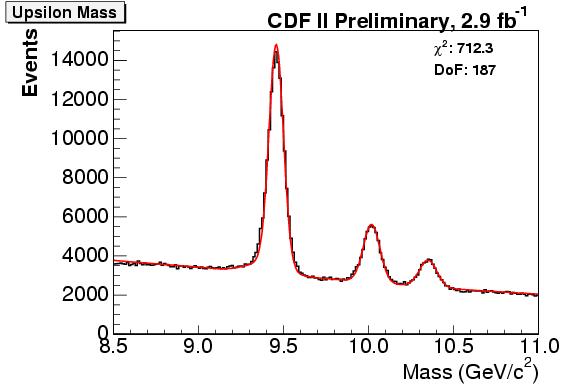
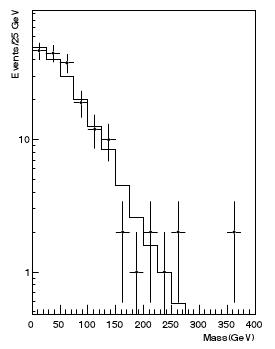
Have you ever looked at a histogram with the data displayed as counts per bin in the form of points with error bars, and wondered whether those fluctuations and departures from the underlying hypothesized model (usually overimposed as a continuous line or histogram) were really significant or worth ignoring ?


