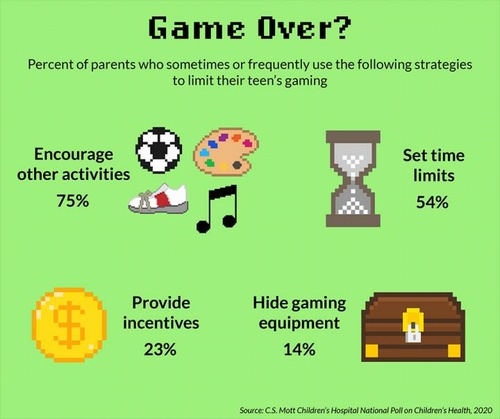





A new survey found that 86 percent of parents believe teens spend too much time gaming. The C.S. Mott Children's Hospital National Poll on Children's Health. also finds differences in gender. Twice as many parents say their teen boy plays video games every day compared to parents of teen girls. Teen boys are also more likely to spend three or more hours gaming.

Surveyed parents believe gaming often gets in the way of other aspects of their teen's life, such as family activities and interactions (46 percent), sleep (44 percent), homework (34 percent), friendship with non-gaming peers (33 percent) and extracurricular activities (31 percent).
Microsoft has declared they will become carbon neutral regarding their energy usage by 2030. While their details were sparse, they included electric cars, which still create emissions because 81 percent of electricity is generated using fossil fuels, and charging themselves an internal carbon tax which they would then use to invest. 

Waiting for the weekend can often seem unbearable, a whole seven days between Saturdays. Having seven days in a week has been the case for a very long time, and so people don’t often stop to ask why.

Most of our time reckoning is due to the movements of the planets, Moon and stars. Our day is equal to one full rotation of the Earth around its axis. Our year is a rotation of the Earth around the Sun, which takes 364 and ¼ days, which is why we add an extra day in February every four years, for a leap year.

The Obama administration mandated that the U.S. Department of Agriculture tell schools to add more fruits, vegetables, and other vegetarian fare and USDA did as it was told.

They had data showing it would just lead to a lot of food waste, and it did, but it is often better to let the other side undo things than to take on your boss and have to find new work in a bad economy and USDA rode it out.

Now it is going away. Yet it is a small victory. It will be replaced by some other new fad project.
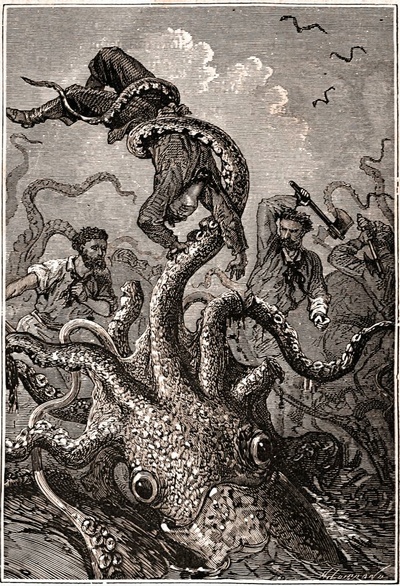
Sailors have told tales of giant tentacled sea monsters for millennia. In ancient times, it was the Kraken. In more recent work, Jules Verne delighted and terrified the public while reading 20,000 Leagues Under The Sea.

The monstrous Architeuthis dux, the giant squid, must have been terrifying to ancient mariners. They were the size of modern school buses, never a good thing when you are in a wooden trireme, with eyes as big as dinner plates and tentacles that can snatch prey 10 yards away.

During an evolutionary scale when most creatures got smaller, how did this squid get so big?
Publication of its full genome sequence may give us clues.
Since math is a language, there is no reason blind people can't learn it, but math and science textbooks in Braille require an enormous effort to produce. That means much higher cost for a small market, which means it can only be done by nonprofits on one economic end of the scale, or wealthy book companies on the other end, who want to offset their guilt at charging college students $200 for a book that should be $20 on Amazon.
Microsoft, Google, and Amazon are trying to out-compete each other in ways to wrap themselves in the flag of environmental sustainability, but some of the ways they want to do it are laughable. Amazon's Jeff Bezos wants to do his part to stop global warming and his plan is running a million small business owners in India into extinction; which is why a giant chunk of the country booed when the newest White Savior from a rich country got off his private jet.

The third "Machine Learning for Jets" workshop is ongoing these days at the Kimmel centre of New York University, a nice venue overlooking Washington Square park in downtown Manhattan. I came to attend it and remain up-to-date with the most advanced new algorithms that are been used for research in collider physics, as I have done last year. The workshop is really well organized and all talks are quite interesting, so this is definitely a good time investment for me.

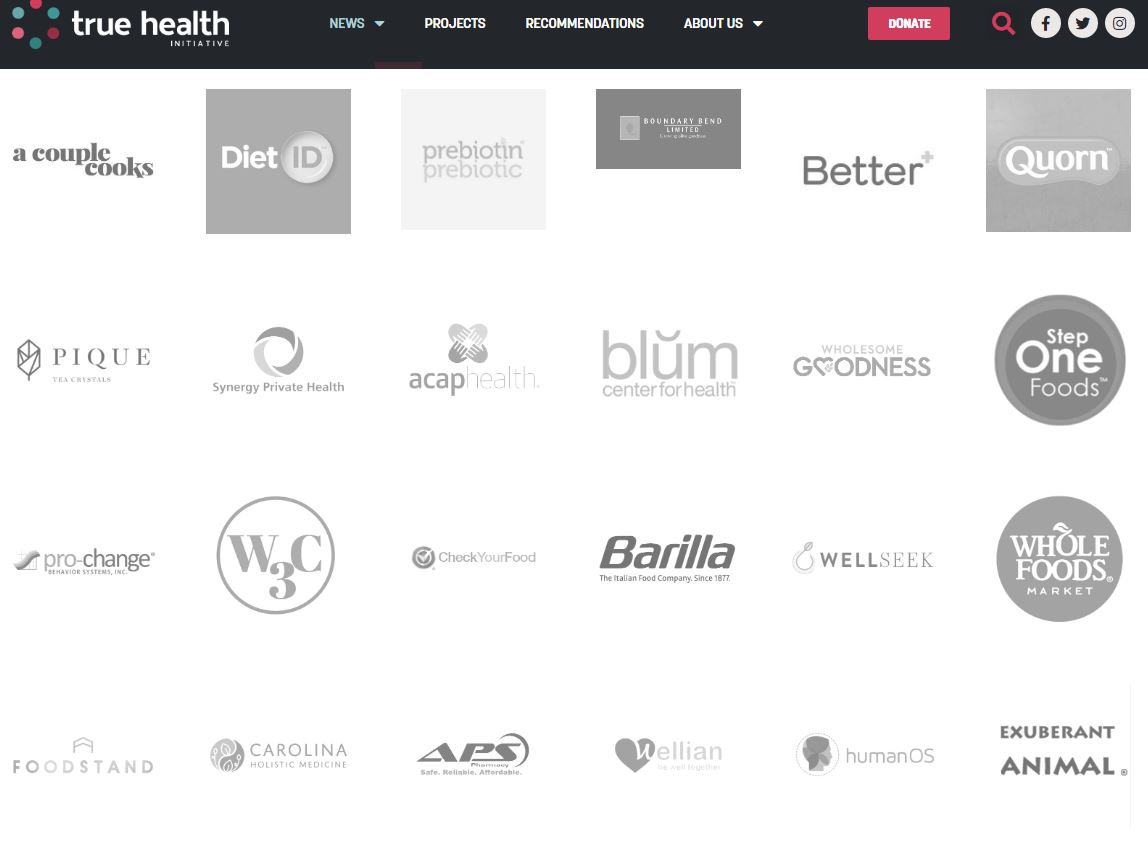
The True Health Initiative (THI) describes itself as a nonprofit devoted to “fighting fake facts and combating false doubts to create a world free of preventable diseases, using the time-honored, evidence-based, fundamentals of lifestyle and medicine.” 

That sounds like a terrific place to be, Science 2.0 does the exact same thing.

Except we actually do that. We are not instead selling a belief system promoted by scholars here. And that is what True Health Initiative does, despite the legitimate-sounding name.

When will I die?

This question has endured across cultures and civilisations. It has given rise to a plethora of religions and spiritual paths over thousands of years, and more recently, some highly amusing apps.

But this question now prompts a different response, as technology slowly brings us closer to accurately predicting the answer.

Predicting the lifespan of people, or their “Personal Life Expectancy” (PLE) would greatly alter our lives.

On one hand, it may have benefits for policy making, and help optimise an individual’s health, or the services they receive.


