Proving myself wrong in record time (see comments on my first post, where I claimed I wouldn't be discussing squid recipes), today's squid is served with chiles, lime, and herbs.
Why?
The coincidence was just too good to pass up. Another commenter suggested that squid popularity these days isn't just a
flash in the pan--and then a recipe blog in the Village Voice
by that very name posts a squid dish!
I've been trying to figure out why "transhumanists" and their predictions irritate me so much. Perhaps it's seeing humanity reduced to a simplistic engineering problem to be solved. Or maybe it's the love affair that appears to be happening between them and technology. Or maybe it's the fact that they all sound like psychics, except that their subject is the human race instead of an individual. Back in July,
Massimo Pigliucci addressed some of the problems with
transhumanism, however it seems that this is a rather persistent idea.
Antioxidants cause cancer. Or at least that is the headline you may read in some less reputable sources of science news, reporting
this study out this week in Nature. Before you go rushing off to toss out your Teavana supercharged antioxidant green tea and your expensive GNC herbal supplements, let's take a closer look at what the research shows. (Well, to be frank, you can go throw out those supplements, and only keep your tea if you enjoy drinking it.)
A couple of years ago, I talked about some of the search terms that people have used when they’ve found my blog pages. In the comments, Donna was amazed at the information that’s available to the web sites you visit.
My response to Donna’s comment discussed some stuff that’s available, but there are other issues too.
Stanford scientists say they will reinvent digital photography with the introduction of an 'open-source' digital camera.
If the technology catches on, camera performance will be no longer be limited by the software that comes pre-installed by the manufacturer because virtually all of the features of the Stanford camera – focus, exposure, shutter speed, flash, etc – are at the command of software that can be created by inspired programmers anywhere. "The premise of the project is to build a camera that is open source," said computer science professor Marc Levoy.
Tangential Science: it's not necessarily science, but it's still funny.
1. Science of Karma
Can there be science to 'Karma'? Likely not, since Karma is, by definition, an Eastern religious concept that has been colloquiallized into a philosophical one. In the East (considered globally since Hindus, Jains, Sikhs and Buddhists all lay claim to it), Karma is basically cause and effect, which is all very Newtonian, and it is echoed in Western religions with the 'as you sow, so also shall you reap' idea ... except at least in the West you are only screwed over once by what you do and actions have consequences over multiple lifetimes.
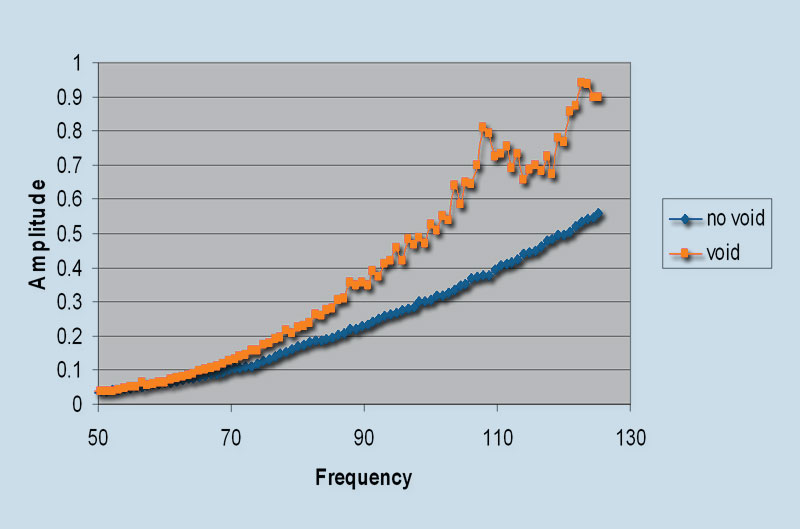
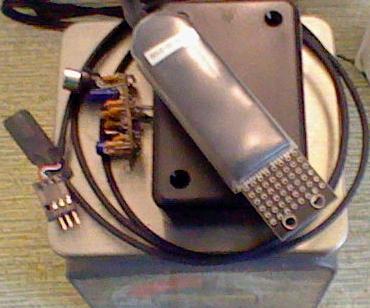
Idaho National Laboratory engineer Phillip West holds a curious metallic device about as wide as a steering wheel. It looks a bit like a flat, stoic face, with two large circular holes for eyes, protruding cylindrical ears and a long, disc-ended snout.
"Are we ready?" he asks, then kneels and nestles the snout gently into the dirt. West flips a switch on one of the machine's handles, and for the next eight seconds a rising tide of sound waves, strong enough to shake your shoes, floods the earth underfoot.
Do you ever wonder how many harmful mutations you carry in your genome? Even if you've never worried about how much of a mutant you are, geneticists have spent a lot of time thinking about this issue. They are interested in a) how much genetic variation is out there, and b) how much of that is potentially harmful and connected to disease? This month's issue of Genome Research has some new research on an individual's personal mutational load.
Should early 20th century researcher Paul Kammerer be credited as the founder of epigenetics? It would certainly be a dramatic change from current perceptions of his work.
Kammerer, a leading proponent of the
Lamarckian theory of evolution, achieved global prominence in the 1920's by arguing that acquired traits could be passed down through generations and, in his most controversial experiment, forced land dweller midwife toads to live in water. Their offspring preferred to live and mate in water and by the third generation he noted that they began to develop black nuptial pads on their forelimbs, a feature common to water dwelling species.
A TubeSat picosatellite lifts 200 grams of payload. That's about 7 ounces. Looked at one way, that's less than half a can of soda. But it's enough to lift an entire Nintendo DS game handheld into orbit. 200 grams can be a lot of electronics.
When I committed to this project, I didn't yet have the specific electronics in mind. I've built mini guitar amps and guitar sound processors that come in well under 7 ounces. I assumed I could kit-bash stuff and create my own schematics for the final assembly. What I didn't expect was that there would be a company that already builds everything I need.