Many children born outside of marriage are born to parents in unstable relationships and often live apart from their fathers.
New research from the Journal of Marriage and Family says that children born outside of marriage are less likely to be visited by their father when the mother becomes involved in a new romantic relationship. Fathers of illegitimate children are likely to not visit their child at all if the child’s mother forms a new relationship early in the child’s life, especially if the new couple lives together and the new partner becomes involved in childrearing activities.
Scientists say they have discovered a unique 'DNA signature' in human sperm, which may act as a key that unlocks an egg's fertility and triggers new life.
Drs David Miller and David Iles from the University of Leeds, in collaboration with Dr Martin Brinkworth at the University of Bradford, say they have found that sperm writes a DNA signature that can only be recognized by an egg from the same species. This enables fertilization and may even explain how a species develops its own unique genetic identity.
Without the right 'key', successful fertilization either cannot occur, or if it does, development will not proceed normally. Notably, disturbances in human sperm DNA packaging are known to cause male infertility and pregnancy failures.
A new class of antibody drugs may help in treatment of childhood eye diseases but specialists need to be alert for the possibility of serious side effects, according to an editorial in the August Journal of American Association for Pediatric Ophthalmology and Strabismus (AAPOS).
In the editorial, Dr. Robert L. Avery discusses issues related to the use of antibodies against vascular endothelial growth factor (VEGF) in pediatric ophthalmology.
Call it irreversibility, call it
time's arrow, call it the second law of thermodynamics. Fact is that everything evolves in such a way that things get more messy. Disorder rises.
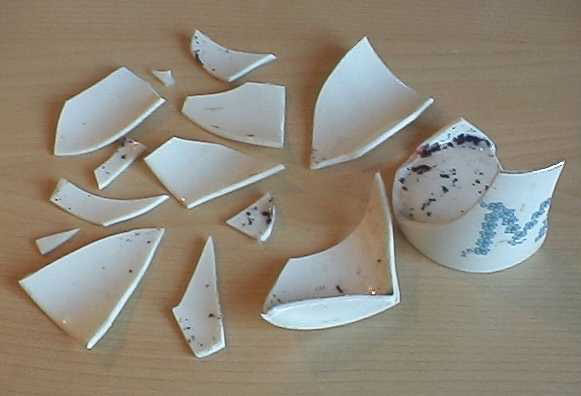
Entropy increases. We do not observe the opposite happening. Heat flows from from hot to cold, not the other way around. Fluids mix but don't unmix. Shattered pieces of crystal don't reassemble into a vase.
Don't chew someone else's food if you have HIV or AIDS? Sure, that sounds like common sense but lots of things that seem like common sense to some are abstract to others - try explaining geodesics, Euclidean geometry and spacetime to people who just need a gas station and want to know the quickest route.
But science does studies so common sense can be science rather than urban myth so researchers have verified cases in which HIV was almost certainly transmitted from mothers to children through pre-chewed food.
Your mother, despite lacking an expensive lab studying
phytochemicals or a PhD (well, for most of us anyway) told you that carrots would help you see better.
And she was right, but purple carrots here and there may be even better for you because they have
anthocyanins.
But carrots are not the only way to go, it turns out. New research suggests that a diet high in omega-3 fatty acids may help prevent one of the leading causes of legal blindness among the elderly.
The Voynich Manuscript part 6 : The Other BabylonWhen I first saw images from the Voynich manuscript, I was interested in the unusual script. As a linguist, my first thoughts were about the possible underlying language. As I have repeatedly stated since
part #1 of this series, it is futile to try to decode an unknown script without first accumulating as much background information as possible. All clues must be examined in order to create a sort of mental Venn diagram: a set of overlapping areas at the intersection of which the major clues to the puzzle are all found.
I recently got back the referee's comments on my mad scientist speech, submitted to the Journal for Villains (JV).
Abstract
Ha ha!1 They2 said3 it couldn't[could not] be done!4
1colloquial
2who? specify, cite previous work
3'wrote' [list citations]
4'accomplished'? give budget and timeframe exceeded
Positron Emission Tomography (PET) was invented at the Mallinckrodt Institute of Radiology at Washington University in the mid 1970s and was used as a research tool in neurology, cardiology, and oncology (1).
It has been developed as a tool for imaging and quantification of cellular and molecular processes in vivo and made an important role in staging diseases and monitoring response to treatment (2).
In comparison to anatomic imaging modalities, PET produces images of biochemical and physiologic processes in tissues that help distinguishing benign and malignant lesions when CT and MRI cannot (1,3) .
Schistosoma haematobium (S. haematobium) is a parasitic flatworm that infects millions of people, mostly in the developing world, and is associated with high incidence of bladder cancer although why is not clear.
Two works by Portuguese researchers just out in The Journal of Experimental Pathology (1) and the International Journal of Parasitology (2) reveal that cells infected in laboratory with S. haematobium, acquire cancer-like characteristics and, when injected into mice develop into tumours. The research identifies as well the host molecules linked to the carcinogenic changes, suggesting that these could be used as therapeutic targets to prevent bladder cancer.