






XEUS, which stands for X-ray Evolving Universe Spectroscopy, aims to study the fundamental laws of the Universe. With unprecedented sensitivity to the hot, million-degree universe, XEUS will explore key areas of contemporary astrophysics: growth of supermassive black holes, cosmic feedback and galaxy evolution, evolution of large-scale structures, extreme gravity and matter under extreme conditions, the dynamical evolution of cosmic plasmas and cosmic chemistry.

Professor Martin Turner of the University of Leicester is also Chair of the XEUS International Steering committee.

Britain could throw away a lead in biopesticides because of outmoded styles of regulation, researchers at a University of Warwick conference have warned today.

Biopesticides – Green pest control using natural predators such as insects, fungi and bacteria – are the subject of a conference for scientists and industry experts at the University of Warwick this week ‘Biopesticides, the Regulatory Challenge’.

Professor Wyn Grant has led a three-year project with researchers at Warwick HRI looking at biological alternatives to chemical pesticides. He said: “Globally the biopesticides market is worth $268m. The European market has doubled in size in recent years, but the EU can only meet 45 percent of the demand for biopesticides.

With inspiration from bacteria and butterflies, researchers at Stockholm University have developed a new method that shows how nanomaterials can be produced in the future. In an article in the prestigious journal Proceedings of the National Academy of Sciences, Professor Lennart Bergström shows how a glass bottle and a simple hobby magnet can be used to produce and arrange extremely small cubes of iron oxide in a perfectly checkered pattern.

The new method can give magnetic films with superior information storage capacity," says Lennart Bergström.

To produce nanoparticles with a defined form and size and at the same time organize them in well-ordered structures is one of the few realistic ways of producing tomorrow’s nanomaterials on an industrial scale.

New research in carbon nanotechnology could give those in the line of fire materials which can bounce bullets without a trace of damage. Add in some moral certainty, a Commodore Amiga for the special effects and pithy one liners and we could have Robocop.

A research paper published in the Institute of Physics’ Nanotechnology details how engineers from the Centre for Advanced Materials Technology at the University of Sydney have found a way to use the elasticity of carbon nanotubes to not only stop bullets penetrating material but actually rebound their force.

The brain might work more like an assembly line when recognizing objects, with a hierarchy of brain regions separately absorbing and processing information before a person realizes what they are seeing, according to new research conducted at the University of Pittsburgh and published in the Journal of Neuroscience.

Led by Mark Wheeler, a psychology professor in Pitt’s School of Arts and Sciences, the research is a step toward mapping the human decision-making process. This study used an innovative technique and analysis to show that human decision-making is a collaboration of brain regions performing individual functions.

Hairy roots are a type of tumor that forms on plants infected by the soil bacterium Agrobacterium rhizogenes. By inserting a specific gene into the bacterium, researchers can integrate that gene into the host plant's DNA. Eventually, the host develops a system of fuzzy-looking roots near the site of the infection. These so-called "hairy roots" are transgenic, meaning they contain the genes of both the host plant and the bacterium.

Scientists believe they can create hairy roots that churn out the product of inserted genes with a stability and productivity not possible with most other plant cell cultures. San '78, Rice's E.D.

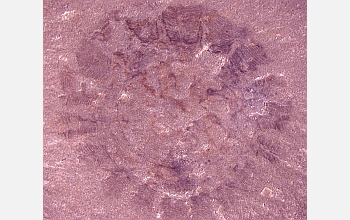
Scientists have described the oldest definitive jellyfish ever found, using recently discovered "fossil snapshots" found in rocks more than 500 million years old.

The jellyfish are unique because they push the known occurrence of jellyfish back from 300 million to 505 million years.

"This study clearly shows what paleontologists have long suspected--that jellyfish have a history that's much older than their known fossil record," said Patrick Herendeen, program director in the National Science Foundation (NSF)'s division of environmental biology, which funded the research through the Assembing the Tree of Life (AToL) program, along with NSF's division of earth sciences. "Adding some 200 million years to the age of jellyfish is quite a jump.

In a new study, mice with brain injuries experienced enhanced memory -- similar to the level found in healthy mice -- up to three months after receiving a stem cell treatment. Scientists believe the stem cells secreted proteins called neurotrophins that protected vulnerable cells from death and rescued memory. This creates hope that a drug to boost production of these proteins could be developed to restore the ability to remember in patients with neuronal loss.

“Our research provides clear evidence that stem cells can reverse memory loss,” said Frank LaFerla, professor of neurobiology and behavior at UCI.

A discovery about the genetics of coat color in dogs could help explain why humans come in different weights and vary in our abilities to cope with stress, a team led by researchers from the Stanford University School of Medicine reports.

The study, published in the Nov. 2 issue of Science, answers a longtime mystery: What determines coat color in dogs? While researchers have known since the 1900s that most mammals share the same genetic mechanism to determine coat color, by the 1950s they began to suspect that dogs were different.

Now after swabbing the inner cheeks of hundreds of dogs and analyzing the DNA in the resulting samples, a team led by genetics professor Greg Barsh, MD, PhD, has nailed the gene.

A new study in the journal Atmospheric Environment by researchers at USC and the California Air Resources Board found that the average Los Angeles driver spends about six percent (1.5 hours) of his or her day on the road, yet that period of time accounts for 33 to 45 percent of total exposure to diesel and ultrafine particles (UFP). On freeways, diesel-fueled trucks are the source of the highest concentrations of harmful pollutants.

High air exchange rates that occur when a vehicle is moving make roadways a major source of exposure. Ultrafine particles are of particular concern because, unlike larger particles, they can penetrate cell walls and disperse throughout the body, Fruin says.

