






Hopes are rising for one of the world’s rarest birds after the discovery of the largest flock seen for more than 100 years.

More than 3,000 critically endangered sociable lapwings have been found in the Ceylanpinar district of south-eastern Turkey after a satellite tag was fitted to one of the birds migrating from breeding grounds in Kazakhstan.

The tracked lapwing had flown more than 2,000 miles from its nesting site, where numbers of the species have plunged following the collapse of Soviet farming. The bird flew north of the Caspian Sea, then down through the Caucasus and south into Turkey.


Sociable Lapwings can now be a lot more sociable.

Responding to media reports of recent studies that emphasized the dangers of angioplasty in women compared to men, Dr. Alexandra J. Lansky, MD, Director of the Angiographic Core Laboratory and the Women's Cardiovascular Health Initiative at the Cardiovascular Research Foundation, said that the comparison to men overshadows the true benefit to women of early intervention.

“We should be comparing interventional strategies in women to other therapies in women, in order to determine whether or not they are beneficial. The comparison to men is largely irrelevant,” says Lansky.

“Recent news reports suggest that women do not fare as well as men following angioplasty.

Retinoblastoma arises in the retina—the multi-layered, membrane lining the back of the eye that responds to light by generating nerve impulses that are carried into the brain by the optic nerve. Researchers have found that certain mutations enable specific cells in the retina to multiply and cause eye cancer, a finding that suggests deliberate genetic manipulations might coax an injured brain to repair itself

Investigators at St. Jude Children's Research Hospital have identified the cell that gives rise to the eye cancer retinoblastoma, disproving a long-standing principle of nerve growth and development. The finding suggests for the first time that it may one day be possible for scientists to induce fully developed neurons to multiply and coax the injured brain to repair itself.

Sugars made by plants are rapidly used by microbes living in their roots, according to new research by Professor Peter Young of the Department of Biology at York and Dr Philippe Vandenkoornhuyse of the University of Rennes, creating a short cut in the carbon cycle that is vital to life on earth.

The green leaves of plants use the energy of sunlight to make sugar by combining water with carbon dioxide from the atmosphere. This sugar fuels the plant’s growth, but scientists in the University’s Department of Biology discovered that some of it goes straight to the roots to feed a surprising variety of microbes.

In the carbon cycle, plants remove carbon dioxide (a greenhouse gas) from the atmosphere.

Shiny amber jewelry and a mucky Florida swamp have given scientists a window into an ancient ecosystem that could be anywhere from 15 million to 130 million years old.

Scientists at the University of Florida and the Museum of Natural History in Berlin made the landmark discovery that prehistoric aquatic critters such as beetles and small crustaceans unwittingly swim into resin flowing down into the water from pine-like trees.

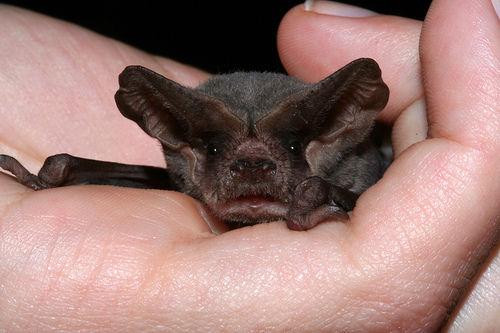
Bats are the most vocal mammals other than humans, and understanding how they communicate during their nocturnal outings could lead to better treatments for human speech disorders, say researchers at Texas A&M University.

Thousands of bats native to Central Texas fly overhead each night singing songs of complex syllables – but at frequencies too high for humans to hear.

Texas A&M researcher Michael Smotherman is trying to understand how Mexican Freetail bats organize syllables into songs and how their communication is linked to the brain.


Mexican Freetail Bat up close. Credit: J.E. Brandt

Research released today reveals the first ever index to pinpoint Britain's biggest energy-saving influencers. With 169 people in their social networks Britons are already acting as advisers to 10 people on energy-related issues. The report shows that just if just 0.59% of the population, i.e. one person in 200 (equivalent to the population of Manchester), tells every single person in their network what they have done to save energy, the entire UK population could be reached.

The influencer index splits the public into four types - it shows that women are leading the way, as they make up over half (53%) of the most influential group ('Community Changers').

Help with assigning gender could one day be at hand for intersex individuals whose genital phenotypes and sex chromosomes don't match, thanks to the discovery of a stable sex hormone signature in our cells.

Researchers have shown for the first time that testosterone leaves an irreversible molecular signature in cells that may provide a far more sophisticated way to look at sex than just ascertaining the presence of the Y chromosome. A team of researchers from the US and Germany were able to pinpoint the role of testosterone by comparing individuals with complete androgen insensitivity syndrome (CAIS) to people without CAIS. The findings provide a platform for future work that may lead to improved counselling for those whose gender is ambiguous.

Your height in adult life significantly affects your quality of life, with short people reporting worse physical and mental health than people of normal height. The study shows that adult height is linked to how good a person thinks their health is. Short people judge their state of health to be significantly lower than their normal height peers do.

The data for this study came from the 2003 Health Survey for England, carried out by the UK Department of Health(1). In this survey, participants filled out a health-related quality of life (HRQoL) questionnaire and a nurse measured their height. Researchers, led by Senior Health Economist Torsten Christensen at Novo Nordisk A/S in Denmark, used this data to assess the relationship between height and HRQoL.

While showing impressive growth prenatally, the human brain is not completed at birth. There is considerable brain growth during childhood with dynamic changes taking place in the human brain throughout life, probably for adaptation to our environments.

Evidence is accumulating that brain structure is under considerable genetic influence [Peper et al., 2007]. Puberty, the transitional phase from childhood into adulthood, involves changes in brain morphology that may be essential to optimal adult functioning. Around the onset of puberty gray matter volume starts to decrease, while white matter volume is still increasing [Giedd et al., 1999].


