




Have you ever wondered why you inherited your mother’s smile but not your father’s height? Researchers at the Universities of Leeds and Dundee are one step closer to unravelling how nature combines both maternal and paternal DNA to create genetically unique offspring.

In a world first, Leeds researchers Professor Simon Phillips, Dr Stephen Carr and Dr Jonathan Hadden, together with Professor David Lilley at Dundee, have mapped the 3 dimensional structure of an enzyme responsible for splitting DNA strands – a process at the heart of human individuality.

The discovery of the T7 endonuclease 1 enzyme’s structure was made by using x-ray crystallography techniques.

A hot topic during the 2008 elections will be proposals for national health care.

Australia’s coral reefs, particularly the Great Barrier Reef, are national icons, of great economic, social, and aesthetic value. Tourism on the Great Barrier Reef alone contributes approximately $5 billion annually to the Australia’s economy. Income from recreational and commercial fishing on tropical reefs contributes a further $400 million annually. Consequently, science-based management of coral reefs is a national priority.

Globally, the welfare of 500 million people is closely linked to the goods and services provided by coral reef biodiversity.

The world’s oceans are becoming more acid, with potentially devastating consequences for corals and the marine organisms that build reefs and provide much of the Earth’s breathable oxygen.

Honey is enjoying new advocates as a wound-healing solution amid rising concerns about antibiotic resistance and a renewed interest in natural healing.

50 million years ago the Indian sub-continent collided with the enormous Eurasian continent with a velocity of about 20 cm/year. With such a high velocity India was the fastest of the former parts of Gondwanaland, according to a report by a team of scientists from the GeoForschungsZentrum Potsdam (GFZ, Germany’s National Lab for Geosciences) and the National Geophysical Research Institute, India, in the 18th October 2007 edition of the Science Magazine "Nature".

Due to this collision at such high velocities the largest mountain belt on Earth, the Himalayas, was formed, as was the massive Tibetan Plateau.

Stretching has many beneficial qualities but if you are doing it to prevent later muscle soreness, it probably isn't working, a team of Cochrane Researchers has found.

Many people stretch before starting to exercise, and some stretch again at the end of a period of exertion. The aim may be to prevent injury, to promote higher performance, or to limit the chances of feeling stiff in the days after the exercise.

Two researchers set out to assess whether stretching could reduce stiffness. They identified 10 relevant trials, each of which involved between 10 and 30 people. Nine of the studies had been carried out in laboratory situations and stretching varied from between 40 seconds and 10 minutes.

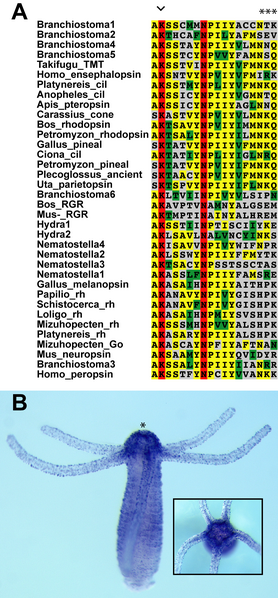
By peering deep into evolutionary history, scientists at the University of California, Santa Barbara have discovered the origins of photosensitivity in animals.

The scientists studied the aquatic animal Hydra, a member of Cnidaria, which are animals that have existed for hundreds of millions of years. The authors are the first scientists to look at light-receptive genes in cnidarians, an ancient class of animals that includes corals, jellyfish, and sea anemones.

“Not only are we the first to analyze these vision genes (opsins) in these early animals, but because we don’t find them in earlier evolving animals like sponges, we can put a date on the evolution of light sensitivity in animals,” said David C. Plachetzki, first author and a graduate student at UC Santa Barbara.


Congratulations to Al Gore for winning the Nobel Peace Prize.  Congratulations to the United Nations Intergovernmental Panel on Climate Change for sharing in that prize. There could be no better recipients for the Peace Prize than the man who, more than anyone else has raised the awareness of global warming, and for the international body of scientists that, finally, lifted the dialogue about global warming out of the world of opinion and into the world of science. 

Women with menstrual cramps are often offered either non steroidal anti-inflammatory drugs or oral contraceptives. Some women find that this treatment does not work or they can not take the drugs or they would prefer a non-drug alternative.

Chinese herbal medicine (CHM) has been used for centuries in China, being used in public hospitals to treat unexplained cramps that occur during menstruation (primary dysmenorhoea). A team of Cochrane Researchers has found evidence that CHM may provide one possible form of treatment.

This evidence came from studying 39 randomised controlled trials that together involved 3,475 women. CHM gave significant improvements in pain relief when compared to pharmaceutical drugs. It also reduced overall symptoms.

Any movie buff knows that garlic spooks vampires and thus keeps you from losing blood.

Less well known is that eating garlic may keep your blood pressure at safe levels also.

A new study from the University of Alabama at Birmingham (UAB) shows this protective effect is closely linked to how much hydrogen sulfide (H2S) is produced from garlic compounds interacting with red blood cells.

The UAB researchers found this interaction triggered red blood cells to release H2S, which then led to the relaxation of blood vessels. Fresh garlic was used at a concentration equal to eating two cloves.


