



The genome analysis of this tiny green alga has uncovered hundreds of genes that are uniquely associated with carbon dioxide capture and generation of biomass.

Among the 15,000-plus genes revealed in the study are those that encode the structure and function of the specialized organelle that houses the photosynthetic apparatus, the chloroplast, which is responsible for converting light to chemical energy. The genome also provides a glimpse back through time to the last common ancestor of plants and animals.

Red wine is known to have multiple health benefits. Researchers at the University of Missouri-Columbia have found that red wine may also protect humans from common food-borne diseases, even E. coli.

Researchers Azlin Mustapha, associate professor of food science in the College of Agriculture and doctoral student Atreyee Das are conducting on-going studies examining the inhibitory effects of red wines and grape juice against pathogens and probiotic bacteria, which naturally reside in the intestinal tract and can be beneficial in combating, among other things, high cholesterol and tumors.

New research funded by the Economic and Social Research Council (ESRC) examines the motivations and practices of consumers and producers involved in ‘alternative food’ networks like organic vegetable boxes, community gardens and farm animal adoption and says consumers tended to increase their consumption of fruit and vegetables, and improve their cooking skills and knowledge about food.

The research also found some evidence of a ‘graduation effect’, whereby involvement in an alternative food scheme encouraged consumers to change their consumption behaviours in relation to other goods, such as household products and clothes.

Although the majority of consumers use alternative food sources alongside supermarkets, they often felt that the quality of supermarket food was inferior.

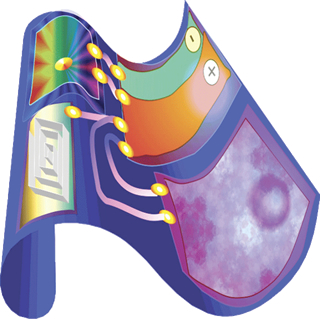
Ilia Ivanov and Dave Geohegan of Oak Ridge National Laboratory's Nanomaterials Synthesis and Properties Group have been collaborating with John Simpson of the Superhydrophobic Materials Group and Cheol Park and Joycelyn Harrison of the National Institute of Aerospace in NASA's Langley Research Center to produce a Flexible, Integrated, Lightweight, Multifunctional skin, called FILMskin, for next-generation prosthetic hands and arms.

I saw a few articles discussing an upcoming convergence between robot and human culture based on research by Netherlands student David Levy, who completed his PhD on the subject of human-robot relationships. Using the Artificial Intelligence ( A.I. if you are new to, well, everything ) curve laid out by Levy, humans and robots would be inter-marrying by 2050. Inter-marrying means sex and, of course, I am a specialist in the science of sex.

A report to be published in an upcoming issue of the World Health Organisation (WHO) Bulletin will call for urgent attention to the politically sensitive issue of border control, and the need for coherent and robust national plans in the face of a catastrophic flu pandemic .

The report comes after the recent confirmation of person-to-person transmission of a strain of avian influenza A (HN51) in Northern Sumatra: although the outbreak was contained by voluntary quarantine and rapid administration of antiviral medication, scientists admitted that the world had ‘dodged a bullet’ and ‘may not be so lucky next time.

“Governments need to work with their neighbours, sharing best practices and strategic thinking openly.

There's always talk about economic improvements for developing nations; fair trade agreements, living wages and a global economy. Often lost in those discussions is the idea that improving health is also an important part of economic and societal change.

The new challenge for the international community, writes Barry R. Bloom, Dean of the Harvard School of Public Health, in a new subsection of the Proceedings of the National Academy of Sciences (PNAS) called Sustainable Health, “goes beyond how to contribute to pilot programs in health that provide drugs, vaccines and preventive or health care services” to how to do so in a way that engages the local and national populations and enables the programs to expand to a nationwide scale that is sustainable over time.

Verbs evolve and homogenize at a rate inversely proportional to their prevalence in the English language, according to a formula developed by Harvard University mathematicians who've invoked evolutionary principles to study our language over the past 1,200 years, from "Beowulf" to "Canterbury Tales" to "Harry Potter."

Writing this week in the journal Nature, Erez Lieberman, Jean-Baptiste Michel, and colleagues in Harvard's Program for Evolutionary Dynamics, led by Martin A. Nowak, conceive of linguistic development as an essentially evolutionary scheme: Just as genes and organisms undergo natural selection, words -- specifically, irregular verbs that do not take an "-ed" ending in the past tense -- are subject to powerful pressure to "regularize" as the language develops.

In Sweden the welfare system allows for generous maternity leave, long spells of sickness absence with almost full compensation and opportunities to work part time.

The result: women on long term sick leave outnumber men two to one, reveals research published in the online open access journal BMC Public Health. Factors associated with taking long term sick leave among women in study were a self-reported lack of competence for work tasks, high physical and mental demands at work and not enough flexibility or influence over their working lives.

93% of women on sick leave wished to return to work. Although the number of sick leave days claimed ranged from 90 to 381, almost three quarters believed they would return to work within two years.

The majority of non-medical anabolic-androgenic steroid (AAS) users are not cheating athletes or risk-taking teenagers, according to a recent survey published in the Journal of the International Society of Sports Nutrition.

Instead, the typical male user is about 30 years old, well-educated, and earning an above-average income in a white-collar occupation. The majority did not use steroids during adolescence and were not motivated by athletic competition or sports performance.

The study, containing the largest sample to date, was coordinated by Jason Cohen, Psy.D. candidate, using a web-based survey of nearly 2,000 US males.

