




An international team has opened a virtual bazaar, called PAZAR, which allows biologists to share information about gene regulation through individually managed 'boutiques' (data collections). According to research published in the online open access journal, Genome Biology, customers can access data without any charge from any boutique or extract information from the 'superstores' that aggregate data of similar types.

In deciphering the human genome sequence, researchers hope to understand the when and where of gene expression because this could speed development of novel cancer therapies or stem cell treatments for degenerative disease, and explain complex diseases such as diabetes.

Adolescents have grown taller and put on weight over the last thirty years, but the problem of underweight teens may be worse, a study in the online open access journal BMC Public Health suggests.

An analysis of the height, weight, and body-mass index of teenagers during 1966-1969 and 1995-1997 in Norway demonstrates a shift towards taller and heavier teenagers, but also hints that there are more underweight adolescents.

Health researchers commonly use body mass index (BMI), calculated as weight in kilograms divided by the height in meters squared, in weight-related health studies. Sigrid Bjørnelv of the Norwegian University of Science and Technology and colleagues write that changes in these measurements across society over periods of time often reflect changes in nutrition.

Bronchopulmonary Dysplasia (BPD) occurs in 20-40% of infants born below 2.5 lbs. and before 28 weeks of gestation, and means babies still need supplemental oxygen at 36 weeks postmenstrual age. It is the second leading cause of death among infants born within this gestational age and is characterised by inflammation and scarring in the lungs.

Diagnosing a risk of fatal lung disorders may be possible by analysing the umbilical cords of premature babies, according to research published in the online open access journal Genome Biology.

We are all familiar with raindrops on our wind screens. The small ones stay in place while the big ones roll down the window. This is because surface tension holds the small drops onto the screen until they get to a size where the force of gravity is greater than the surface tension.

We are all familiar with raindrops on our wind screens. The small ones stay in place while the big ones roll down the window.

“Survival of the fittest” has popularly described evolution for more than a century, but a new study published in the Royal Society journal Biology Letters provides further evidence that random genetic mutations over millions of years may also play a powerful role.

Florida and California scientists are the first to link the evolution of proteins — the organic compounds that determine the structure and function of living things — to a species’ metabolic rate.

An Earth-like planet is likely forming 424 light-years away in a star system called HD 113766, say astronomers using NASA's Spitzer Space Telescope.

Scientists have discovered a huge belt of warm dust – enough to build a Mars-size planet or larger – swirling around a distant star that is just slightly more massive than our sun. The dust belt, which they suspect is clumping together into planets, is located in the middle of the system's terrestrial habitable zone. This is the region around a star where liquid water could exist on any rocky planets that might form. Earth is located in the middle of our sun's terrestrial habitable zone.

At approximately 10 million years old, the star is also at just the right age for forming rocky planets.

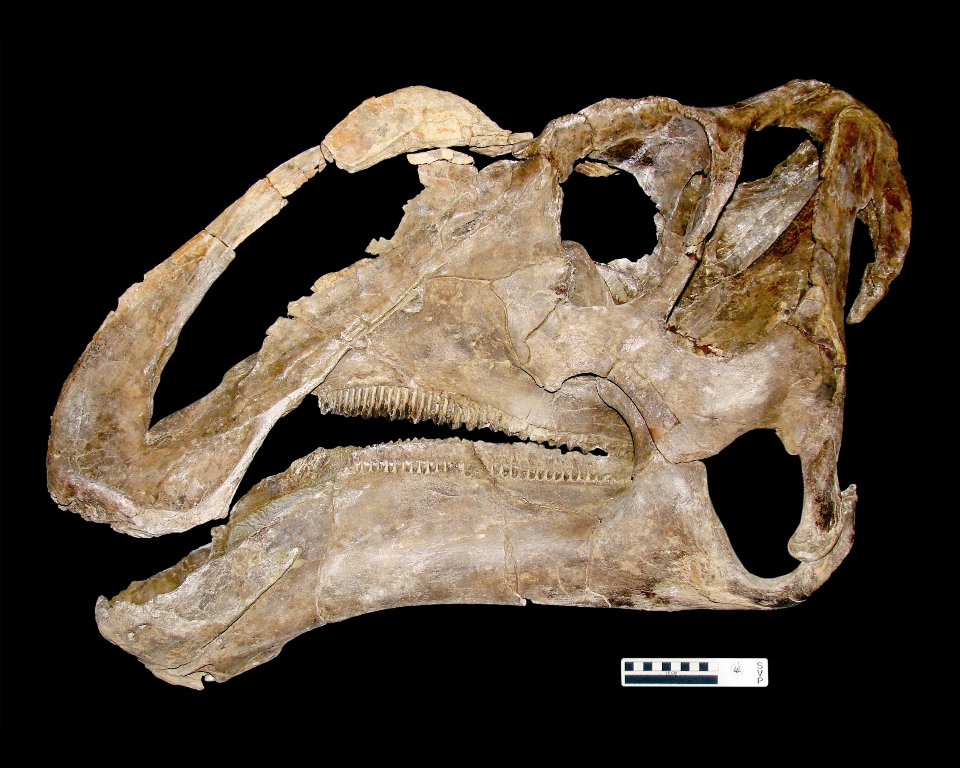
The newest dinosaur species to emerge from Grand Staircase-Escalante National Monument had some serious bite, according to researchers from the Utah Museum of Natural History (UNMH) at the University of Utah. “It was one of the most robust duck-billed dinosaurs ever,” said lead author Terry Gates. “It was a monster.”

Researchers from the Utah museum, the national monument and California’s Raymond M. Alf Museum of Palaeontology unearthed fossils of this ancient plant-eater from the rocks of the Kaiparowits Formation. Researchers announced the name of the creature – Gryposaurus monumentensis.

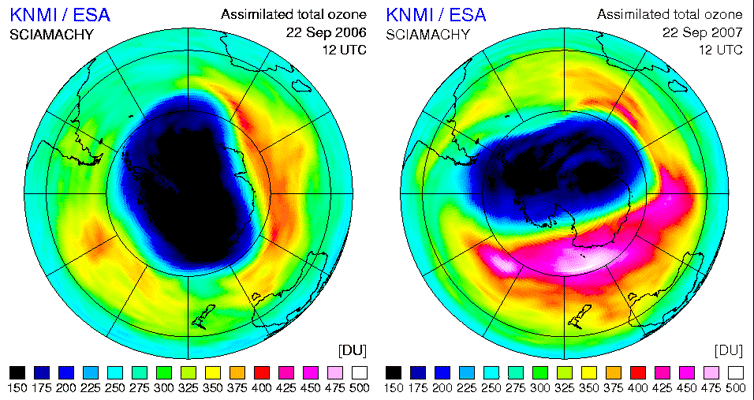
The ozone hole over Antarctica has shrunk 30 percent as compared to last year's record size. According to measurements, this year’s ozone loss peaked at 27.7 million tons, compared to the 2006 record ozone loss of 40 million tons.

Ozone is a protective layer found about 15 miles above us, mostly in the stratospheric stratum of the atmosphere that acts as a sunlight filter shielding life on Earth from harmful ultraviolet rays. Over the last decade the ozone layer has thinned by about 0.3% per year on a global scale, increasing the risk of skin cancer, cataracts and harm to marine life.

Researchers at UCLA have developed a model that could help engineers and scientists speed up the development of hydrogen-fueled vehicles by identifying promising hydrogen-storage materials and predicting favored thermodynamic chemical reactions through which hydrogen can be reversibly stored and extracted.

The new method, published in Advanced Materials, was developed by Alireza Akbarzadeh, a UCLA postdoctoral researcher in the department of materials science and engineering; Vidvuds Ozolins, UCLA associate professor of materials science and engineering; and Christopher Wolverton, professor of materials science and engineering at Northwestern University in Illinois.

Einstein's Theory Of General Relativity has been under assault for the better part of a century. No one can really prove it wrong but it's commonly assumed to be wrong.


