




While the visual regions of the brain have been intensively mapped, many important regions for auditory processing remain terra incognita. Now, researchers have identified the region responsible for a key auditory process—perceiving “sound space,” the location of sounds. The findings settle a controversy in earlier studies that failed to establish the auditory region, called the planum temporale, as responsible for perceiving auditory space.

Leon Y. Deouell and colleagues published their findings in the September 20, 2007 issue of the journal Neuron, published by Cell Press.

Studies by other researchers had shown that the planum temporale was activated when people were asked to perform tasks in which they located sounds in space.

Research by Portuguese scientists - Ema Alves, Teresa Summavielle, Félix Carvalho and colleagues from the University of Porto and the Porto Polytechnic Institute - reveals how ecstasy can compromise the neurons in the brain by damaging their mitochondria – the structures responsible for energy production in the cell - causing the equivalent to a “power-cut” on the affected neurons. By showing how ecstasy can directly compromise such a crucial cellular process the research might help an eventual resolution of the two decade-long debate over whether or not ecstasy use is dangerous.

MDMA (the main component of ecstasy) leads to the production and accumulation of serotonin, a feel-good chemical, which is behind the pleasant effects of the drug.

Retrieving material for composting from open dumps across the developing world could reduce the environmental impact of growing mountains of waste, according to researchers in India.

People in the developing world are encouraged to compost garden waste or dispose of it in "green" garbage bins for collection and processing. In the developing world, the problems are very different. Open dumps are prevalent and have a poor environmental record, according to environmental engineer Kurian Joseph and colleagues at Anna University in Chennai, India.

Joseph's team is proposing landfill mining as a viable means of rehabilitating these open dumps.

A workshop organized by European Action on Global Life Sciences (EAGLES ) issued a report on the Chinese consumption and production of meat and it states that meat consumption in China is expected to reach 73 kilo per person per year in 2020 compared with just over 26 kg in 2004. Nearly triple.

This increase in meat consumption means that the environmental impact of the Chinese population will skyrocket if the rapid growth continues.

Your mother called it 'settling.' Crosby, Stills, Nash and Young said “If you can’t be with the one you love, love the one you’re with.” Let's face it, not everyone can have their perfect mate so you have to make do.

Yet in the animal kingdom, females and males apparently have ways to compensate that increase the chance their offspring will survive even if the parents are not genetic ideals.

Patricia Adair Gowaty calls it the "Compensation Hypothesis."

Imagine turning a bad micro-organism, like E. coli, into a micro-factory that produces pharmaceutical compounds to fight aging or obesity.

University at Buffalo researchers say they can do it and have filed for a patent.

First Wave Technologies, Inc. recently received a Phase I Small Business Innovation Research (SBIR) grant from the National Science Foundation to focus on the biosynthesis of a popular group of flavonoids called isoflavonoids.

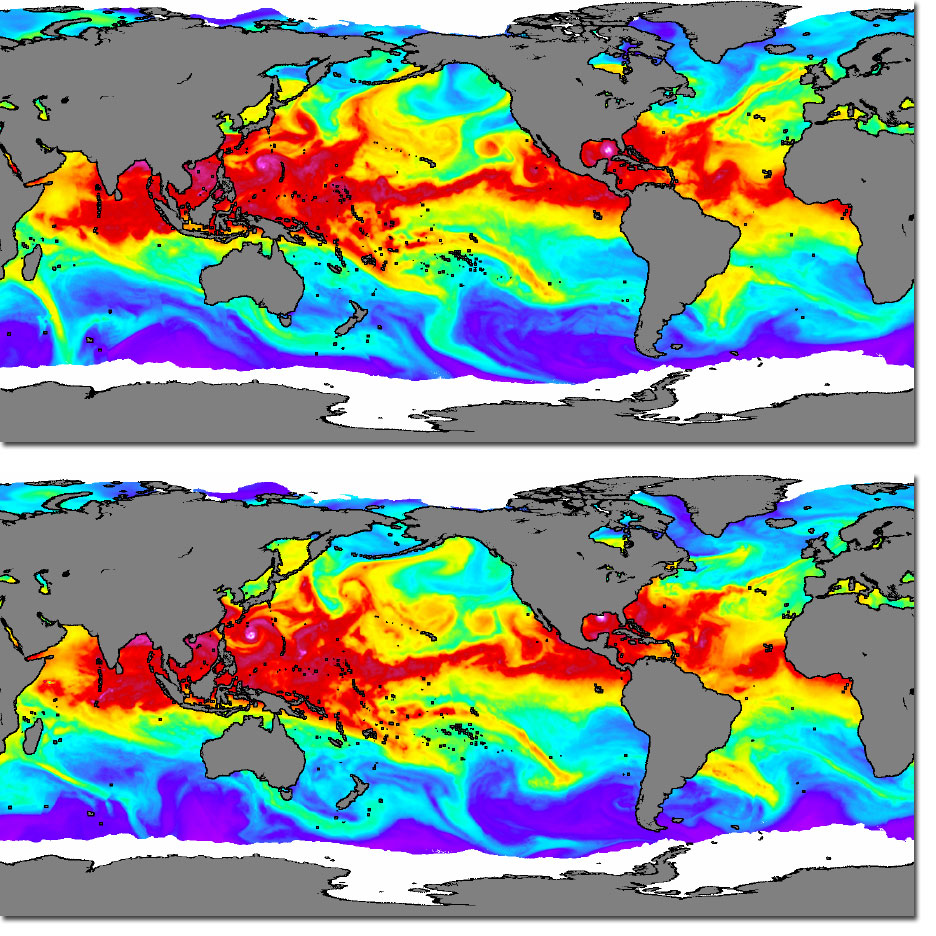
Observations and climate model results confirm that human-induced warming of the planet is having a pronounced effect on the atmosphere’s total moisture content.

“When you heat the planet, you increase the ability of the atmosphere to hold moisture,” said Benjamin Santer, lead author from Lawrence Livermore National Laboratory’s Program for Climate Modeling and Intercomparison. “The atmosphere’s water vapor content has increased by about 0.41 kilograms per cubic meter (kg/m²) per decade since 1988, and natural variability in climate just can’t explain this moisture change.

Phosgene is most famous for being part of the chemical arsenal used in the trenches during World War I - generals preferred it over chlorine because soldiers coughed less and therefore inhaled more. It was still stockpiled in military arsenals after the Second World War but its presence in the atmosphere today is due to man-made chlorinated hydrocarbons used in the chemical industry.

Phosgene still plays a major role in the preparation of pharmaceuticals, herbicides, insecticides, synthetic foams, resins and polymers.

Professor Peter Bernath of the Department of Chemistry at the University of York and a research team have carried out the first study of the global distribution of the gas.

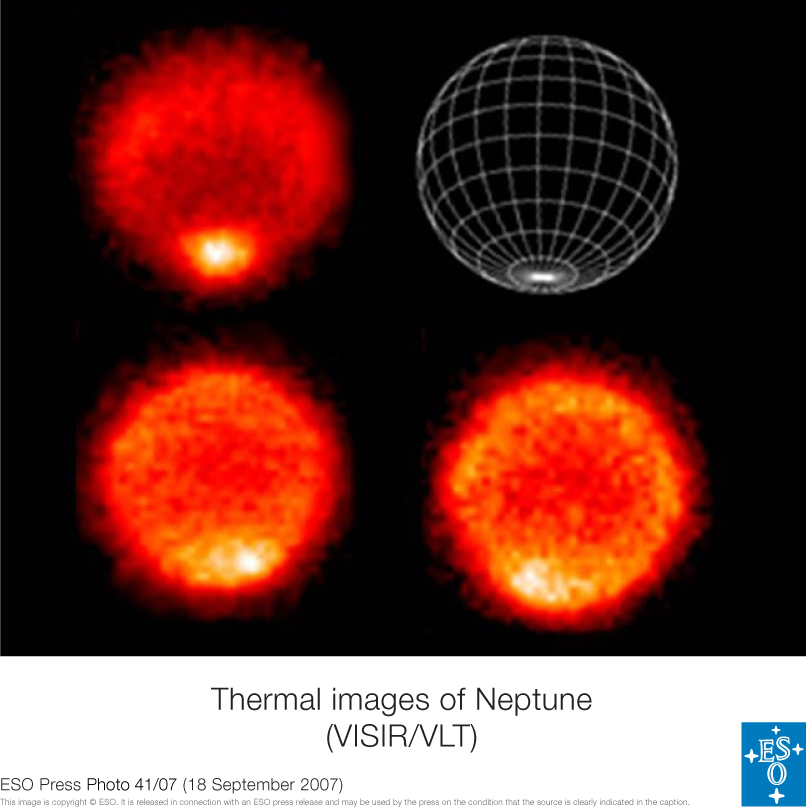
An international team of astronomers using ESO's Very Large Telescope has discovered that the south pole of Neptune is much hotter than the rest of the planet. This is consistent with the fact that it is late southern summer and this region has been in sunlight for about 40 years.

The scientists are publishing the first temperature maps of the lowest portion of Neptune's atmosphere, showing that this warm south pole is providing an avenue for methane to escape out of the deep atmosphere.

"The temperatures are so high that methane gas, which should be frozen out in the upper part of Neptune's atmosphere (the stratosphere), can leak out through this region," said Glenn Orton, lead author of the paper reporting the results.

Everyone knows that how you say something can be as important as what you say. "Framing" is the science buzzword for 2007 and, as discussed in Do scientists need to 'frame' the debate for non-scientists? framing can be used for good or evil.

Both sides of the global warming debate accuse each other of framing and even some science sites persistently use framing to advance whatever agenda they are promoting. This has led to a great deal of discussion and research.

It's been recognized that most scientists are quite ethical in their research but discussions with non-experts is more of a grey area.

