A scientific indicator of how easily distracted you are has been designed by a UCL (University College London) psychologist. It could be used as another assessment tool during the recruitment process and would have particular benefits in fields where employee distraction could lead to fatal errors.

People who are more easily distracted are at greater risk of being involved in accidents.

Professor Nilli Lavie, UCL Psychology, who led the research published in Psychological Science, said: “When you are easily distracted, you are more liable to do things like put your keys in the fridge or call out ‘come in’ when answering the phone. These are the more amusing consequences of distraction but distraction can have more serious implications.

It doesn't get more self-explanatory than that, does it?

Researchers in Slovakia have been able to derive mesenchymal stem cells from human adipose, or fat, tissue and engineer them into “suicide genes” that seek out and destroy tumors like tiny homing missiles. This gene therapy approach is a novel way to attack small tumor metastases that evade current detection techniques and treatments.

“These fat-derived stem cells could be exploited for personalized cell-based therapeutics,” said the study’s lead investigator, Cestmir Altaner, Ph.D., D.Sc., an associate professor in the Cancer Research Institute of the Slovak Academy of Sciences in Bratislava.

Anyone can buy a suit that fits - but elite geeks are going to own clothes embedded with tiny electronics that can monitor heart and respiratory functions wirelessly. After three days, whether it needs it or not, they can take it off and throw it in the wash.

At least that's the future researchers from the University of South Australia envision. They have been using integrated electronic technology to develop smart garments that, when placed on electronic hangers, enable monitored data to be downloaded in a heartbeat to a computer in your wardrobe, and then be recharged ready for wearing.

Scientists at Oxford University have come up with a way to make electricity biologically. It’s not an English version of Ed Begley, pedaling his stationary bike attached to a turbine to make tea and crumpets. Nope, two different enzymes (hydrogenase and laccase) work together to kick start the chemical reactions that make electricity from hydrogen. It’s a biological fuel cell.

Traditional fuel cells generally use platinum to catalyze the reactions. The precious metal is scarce and toxic, making it expensive and hardly eco-friendly. The enzymes in bio-fuel cells are ubiquitous, found in plants and micro-organisms. They are pretty much infinitely renewable and completely biodegradable. They effectively make biological batteries that never run out as long as there is some hydrogen around. And what’s more, the hydrogen stream does not have to be pure, as it does for chemical catalysts. The enzymes simply pick and choose the hydrogen atoms from a smorgasbord of gases that would render the traditional fuel cell utterly impotent.

Ain’t life grand!

The university’s commercialization company, Isis Innovations has a couple of bio-fuel cells running a digital watch as a demo, reminiscent of, but a jot more sophisticated than sticking electrodes into a spud. The company hopes the invention will juice up all kinds of small electronics, and eventually more power-hungry gizmos.

However, the Oxford profs have a nagging little problem in common with traditional fuel cell developers.


Artificially replicating the male genome could help men with very low sperm counts become fathers, a scientist told the 23rd annual conference of the European Society of Human Reproduction and Embryology (Tuesday 3 July). Professor Takumi Takeuchi, of Weill Medical College, Cornell University, New York, USA, said that mouse experiments by his team, led by Professor Gianpiero D. Palermo, had shown that offspring born as a result of such replication had shown a level of abnormalities consistent with that shown in cloned animals.

Hundreds of thousands of vibrant blue and red stars are visible in this new image of galaxy NGC 4449 taken by the NASA/ESA Hubble Space Telescope. Hot bluish white clusters of massive stars are scattered throughout the galaxy, interspersed with numerous dustier reddish regions of current star formation. Massive dark clouds of gas and dust are silhouetted against the flaming starlight.

NGC 4449 has been forming stars since several billion years ago, but currently it is experiencing a star formation event at a much higher rate than in the past. This unusual explosive and intense star formation activity qualifies as a starburst.

A Cardiff University research collaboration is working to recycle precious metals from road dusts and vehicle exhausts to create greener energy.

The innovative research by scientists from the School of Earth, Ocean and Planetary Science working with the University of Birmingham is to be featured at the Royal Society Summer Science Exhibition (2-5 July).

Catalytic converters which keep exhaust pollutants from vehicles down to an acceptable level all use platinum, however over the years the platinum is slowly lost through exhaust pipes. Dr Hazel Prichard, School of Earth Ocean and Planetary Science estimates that many kilogrammes of platinum is being sprayed onto streets and roads every year.

Forget expensive moisturisers and cosmetic surgery, a compound found in the humble elderberry could give a natural boost to skin.

In the first study of its kind, a team of researchers led by Prof Aedin Cassidy at the University of East Anglia and Dr Paul Kroon at the Institute of Food Research, will explore whether the skin’s condition is improved by a compound which gives berries their vibrant colour (called ‘anthocyanin’).

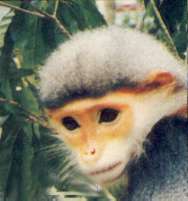
A team of scientists from WWF and Conservation International (CI) has discovered the world’s largest known population of grey-shanked doucs (Pygathrix cinerea), increasing chances that the endangered monkey can be saved from extinction.

The grey-shanked douc is one of the world’s 25 most endangered primates and has only been recorded in the five central Vietnamese provinces of Quang Nam, Kon Tum, Quang Ngai, Binh Dinh, and Gia Lai. Fewer than 1,000 individuals are believed to still exist, and until now, only one other population with more than 100 animals was known.

African societies, including those of the Bwaba of Burkina Faso and the Bassar of northern Togo, consider certain natural sites located on their territory as sacred. With each of these places these communities associate supernatural beings, kinds of spirits, that they have to come to terms with.

Maintenance of relations with these spirits requires strict preservation of the sites that they occupy. This is the case notably for the sacred groves, where wood cutting and all forms of removal of materials or organisms are strictly forbidden.