





In the film version of "The Martian", the main character is trapped on the red planet and is forced to figure out how to grow food. He declares he is going to "science the s--t out of" the issue before instead engaging in regular old agriculture mixed with some engineering.

But science may soon help, researchers have discovered a gene that could open the door for space-based food production. Professor Peter Waterhouse, a plant geneticist at QUT, discovered the gene in the ancient Australian native tobacco plant Nicotiana benthamiana, known as Pitjuri to indigenous Aboriginals tribes, which has been used for decades as a model plant upon which to test viruses and vaccines.

Want to be an athlete but think it is too much work?

Psychoactive drugs may be the answer.

Let's face it, exercise is a lot of work. Our ancestors worked all of the time and they lived to be 35 so we have clearly evolved to be lazy. Effort is the largest barrier to why people do not exercise so Professor Samuele Marcora at University of Kent suggests that reducing perception of effort during exercise using caffeine or other psychoactive drugs (e.g. methylphenidate and modafinil) could help many people stick to their fitness plans. By fooling them into thinking it is less effort than it is.

Products like milk have been fortified with Vitamin D for decades because of its importance in uptake of calcium in the bones, along with other cellular and immune processes. The body creates vitamin D in the form of cholecalciferol within the skin itself, if there is a sufficient amount of sunlight. 

A new survey reveals that couples enjoyed more frequent and satisfying sex for both partners when men made a fair contribution to housework. The same paper also says there's no relationship between the amount of housework male partners completed and the sexual functioning of a couple.

Using solar or wind power to produce carbon-based fuels is a self-defeating approach to making a greener world, but when governments decide to engage in advocacy rather than science, and throw money at problems, bad corporate habits are learned. Instead of funding more basic research to make green energy viable, the White House opted to engage China in a price war on solar panels, and $72 billion later we have the same issues.

This week I am in Warsaw, where I attend the XI workshop on particle correlations and femtoscopy. I am actually here to give a seminar on statistical methods in particle physics next Thursday, but of course I am also going to try and deepen my understanding of the field of investigations of heavy ion collisions.

Jan Pluta, one of the old-schoolers of the field, gave an introductory talk this morning. It was titled "A brief history of femtoscopy and particle correlations - a personal view". I am reporting below some impressions from his presentation.

What is femtoscopy ? Jan started by warning that he would indeed only give a personal view of the history of the field, and that the view of others may be very different.
If you are into Nuclear Physics there is very good chance you know about nuclear electromagnetic moments. Actually, nuclear electromagnetic moments has been the field of my specialty from the beginning of my scientific career. This is also why my blog in science20.com was named "Moment Zero" and not because there was some zero-time singularity I broke into writing about scientific stuff (not that I have been very active in here either!). The term nuclear electromagnetic moments 90% of the time refer to the magnetic dipole and the electric quadrupole moment. Each of these physics observables have something important to say about the nucleus.

Methane hydrates are a kind of ice that contains methane, and that
form at certain depths under the sea or buried in permafrost. They can also form in pipelines that transport oil and gas, leading to clogging. Yet methane hydrates are nearly impossible to study because it is very hard to get samples, and the samples themselves are highly unstable in the laboratory.

A team of scientists from Norway, China and the Netherlands has now shown how the size of grains of the molecules that make up the natural structure of methane hydrates determines how they behave if they are loaded with weight or disturbed.

Public health policies targeted at smokers may actually have the opposite effect for some people trying to quit, according to a paper which indicates that stigmatizing smoking can, in some cases, make it harder for people to quit because they become angry and defensive and the negative messages lead to a drop in self-esteem.

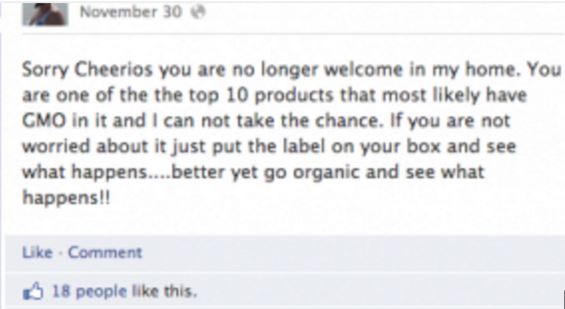
In the 1970s, scientists used genetic modification to insert the gene for human insulin production into yeast and bacteria cells. They turned those cells into tiny insulin factories, meaning insulin no longer had to be created from animal pancreases, which created allergy issues. This was a breakthrough for science and two generations of people have benefited from this GMO insulin.


