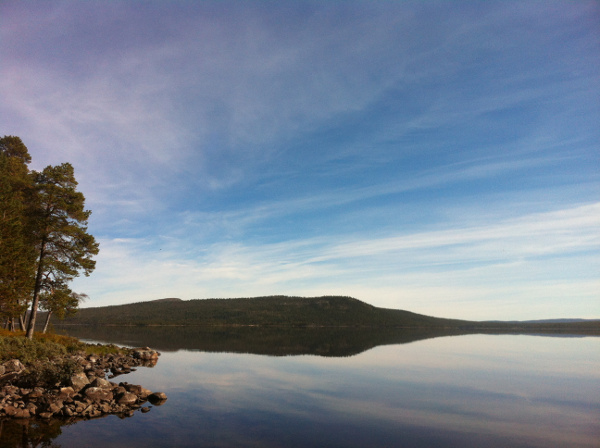
Our cabin is situated in one of the most remote places in Norway. My family got the place in the early 60ties and at the time there were no roads leading to what then was a fox farm kitchen. It is still one of the most remote areas of Norway. I grew up listening to the stories about the hardship of life in what for us was a recreational haven. The most exciting stories were about the predators, brown bear and wolves, that were roaming around our cabin.

Despite all the hype we hear about revolutionary new approaches to combating cancer, such as genetic analysis of tumors, targeting cell growth pathways, and immunotherapy, the reality is that most cancer patients are still treated with cytotoxic drugs (cell poisons), many of which have been used for more than 50 years.

The following table gives examples of commonly used cytotoxic drugs, when they were first used, and how likely they are to cause vomiting:
Individually, we use thousands of chemicals in our households and very few of us think about whether they are harming the environment. We often think about buying a “green” detergent to wash our clothes, but the simple act of shampooing and conditioning our hair, even with green products, results in more than 30 chemicals being washed into our sewers.

Despite our best efforts in the supermarket, our waste water treatment systems are well designed for removing most of these chemicals, as the majority are biodegradable. However, a number of household chemicals are difficult to remove and end up being discharged into our coastal environments and waterways.

The high frequency and magnitude of volcanic eruptions could have been the cause of the progressive cooling of ocean surfaces over a period of 1,800 years, according to a new study.

The study emphasizes that this trend came to an end with the beginning of the Industrial Revolution and the resulting global warming caused by human activity. It further shows that the lowest temperatures in the first 1,800 years of the Common Era were recorded between the 16th and the 18th centuries, a period known as the "Little Ice Age".

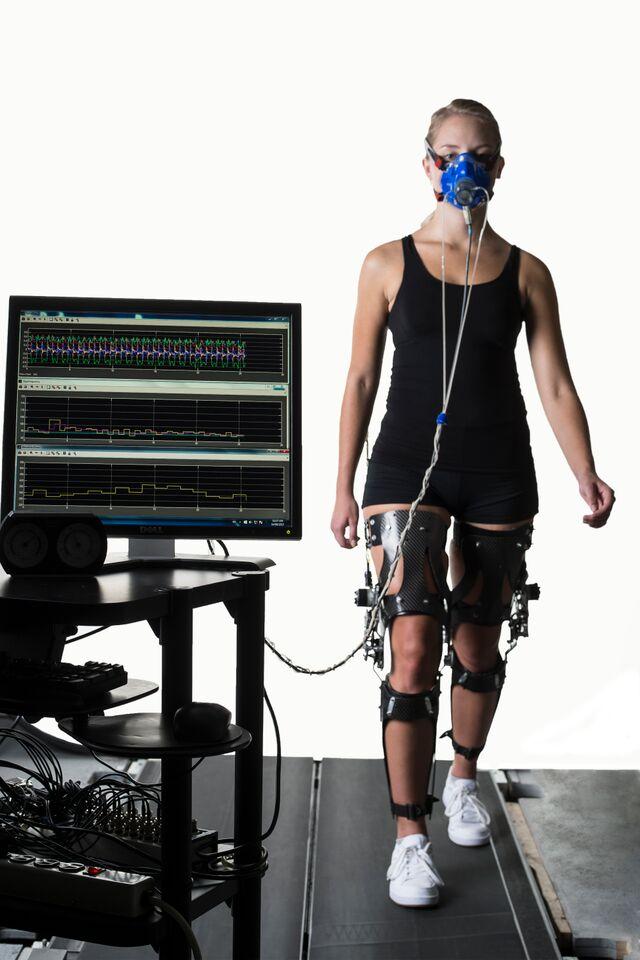
Every time you go to the gym to burn off those Dim Sum calories from the night before, your nervous system is subconsciously working against you.

Researchers have found that our nervous systems are remarkably adept in changing the way we move so as to expend the least amount of energy possible.

In other words, humans are wired for laziness.

The findings, which were made by studying the energetic costs of walking, likely apply to most of our movements, the researchers say.

In the Mediterranean climate of California, with its warm, wet winters and hot, dry summers, the snowpack in the Sierra Nevada mountains plays a critical role. It serves as a natural water storage system that feeds waterways and reservoirs during the dry summer months.



That’s why it was very fitting that when Governor Jerry Brown announced the first-ever mandatory statewide water restrictions, he did it from the snow-barren Phillips snow course station in the Sierra Nevada. The April 1 snowpack’s water content has been measured at this station since 1941 and has averaged at 66.5 inches over this period.

Researchers ave shown that well-developed eyes come at a surprising cost to other organ systems. 

Researchers have long associated the presence of a well-developed brain with major energy consumption. This means that animals that develop advanced nervous systems require environments where this is possible. There has to be good access to nutrients, and every investment in an organ comes at a cost to some other organ system that is less essential in that particular environment. Up to now, there have been few concrete measurements of how high the cost of a nervous system actually is.

The study involving Mexican cavefish shows that the visual system can require between 5% and 15% of an animal's total energy budget.

Over one million people in sub-Saharan Africa will contract malaria this year because they live near a large dam, according to a new study which, for the first time, has correlated the location of large dams with the incidence of malaria and quantified impacts across the region. The study finds that construction of an expected 78 major new dams in sub-Saharan Africa over the next few years will lead to an additional 56,000 malaria cases annually.

Since the Food and Drug Administration (FDA) cautioned against using a minimally invasive method to treat fibroid tumors called power morcellation, there was a nearly quarter increase in hospital readmissions and 27 percent increase in major postoperative complications after hysterectomies in Michigan, a new University of Michigan study says.

After the first FDA safety communication in April 2014, the percent of women receiving minimally invasive hysterectomies in a large Michigan database also went down by an absolute 1.7 percent decrease.

The findings appear in the American Journal of Obstetrics&Gynecology.

More than half of Asian Americans and nearly half of Hispanic Americans with diabetes are undiagnosed, according to researchers from the National Institutes of Health and the Centers for Disease Control and Prevention. Additionally, prevalence of diabetes for all American adults went up, from nearly 10 percent to over 12 percent between 1988 and 2012. Diabetes prevalence - how common the condition is - also went up in every age, sex, level of education, income and racial/ethnic subgroup. One bright spot: The proportion of people with diabetes that was undiagnosed decreased 23 percent between 1988-1994 and 2011-2012.

The statistics account for age differences across the surveys.



