
On April 20, 2010, BP's Deepwater Horizon (DWH) drilling rig experienced a failure resulting in the discharge of gas and light sweet crude oil from a depth of approximately 5,000 feet.


Discharge continued for 87 days until July 15, 2010, five years ago this week, when the well was capped and the leak was contained.

From trilobites to tyrannosaurs, most fossils are of creatures with hard shells or bones. These materials don’t easily biodegrade and sediment has time to build up around them and turn them into a record of the creature that is still with us millions of years after it has died. Soft-bodied organisms like worms, on the other hand, decay rapidly and their fossil record is decidedly patchy.

In exceptional circumstances, however, their remains are preserved and sometimes in the most unusual places. With the right detective skills, palaeontologists can use such discoveries to open up whole new windows on the history of life on Earth. A recent discovery found in 50-million-year-old rocks from Antarctica has yielded a particularly incredible example: fossilised worm sperm.

From the frozen forests of Russia to the scorching sands of the Kalahari Desert, leopards are the most widely distributed large cat on earth. Their iconic spotted coat has been admired and coveted by humans for millennia.

But in one part in their vast range - the Malay Peninsula - leopards are almost entirely black in color.

Yes it turns out those have spots also. By modifying the infrared flash on automatic camera traps and forcing them into ‘night mode’ a team of wildlife experts has revealed the black leopard’s spots. Using infrared flash, the seemingly ‘black’ leopards suddenly showed complex patterns of spotting. 

Collectively, diseases of the airways such as emphysema, bronchitis, asthma, and cystic fibrosis are the second leading cause of death worldwide.

More than 35 million Americans alone suffer from chronic respiratory disease. Weizmann Institute of Science researchers have now proposed a new direction that could, in the future, lead to the development of a method for alleviating some of the suffering of these patients. The study’s findings show how it might be possible to use embryonic stem cells to repair damaged lung tissue.

After more than 20 years making the web a slightly more interesting and interactive place, albeit one that pandered to designers’ worst excesses and (in pre-broadband days) led to interminable download waiting times, the word on the net is that Adobe Flash Must Die.
The world population, which stood at 5 billion in 1950, will likely increase to 10.5 billion by 2050, meaning that the planet’s population will have doubled within the lifetimes of many people alive today.  

Beginning in the 1960s, environmental groups and their Doomsday Prophets, including Berkeley's Dr. Paul Ehrlich and current U.S. White House Science 'Czar' Dr. John Holdren, began projecting food riots and mass starvation and advocated for forced sterilization and other schemes to stave off the apocalypse.

Don't expect your social worker to ask you about your religious beliefs, even though licensed clinical social workers, who account for the largest number of clinically trained helping professionals, believe that discussions about clients' religion and spirituality can often lead to improved health and mental health, says Holly Oxhandler, Ph.D., assistant professor in Baylor University's Diana R. Garland School of Social Work.

Around half of all breast cancer patients could one day benefit from having the cheap and widely-available female hormone progesterone added to their treatment, according to a paper by UK researchers published in Nature. 

China and Taiwan have enhanced government ability to be more effective in ensuring food safety and guarding against food fraud, according to a July 13th panel discussion atthe Institute of Food Technologists meeting in Chicago.

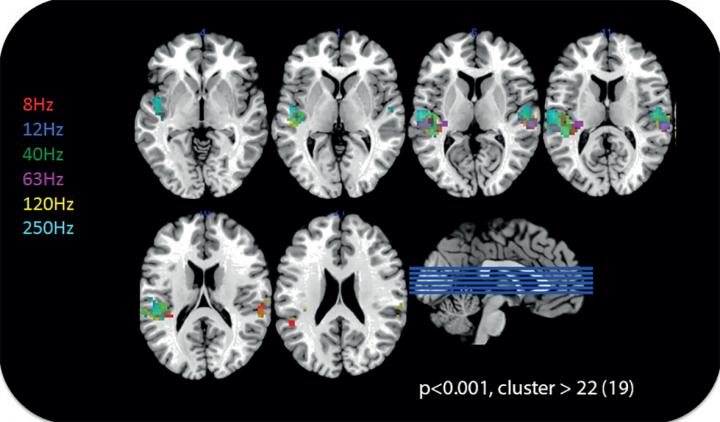
Are wind farms harmful to humans? Some believe so, others refute this; this controversial topic makes emotions run high. To give the debate more objectivity, an international team of experts dealt with the fundamentals of hearing in the lower limit range of the audible frequency range (i.e. infrasound), but also in the upper limit range (i.e. ultrasound). The project, which is part of the European Metrology Research Programme (EMRP), was coordinated by the Physikalisch-Technische Bundesanstalt (PTB). At PTB, not only acoustics experts, but also experts from the fields of biomagnetism (MEG) and functional magnetic resonance imaging (fMRI) were involved in the research activities.