Bud Light may create a marketing campaign to try and increase its brand but when it comes to pricing, experimentation isn't needed. If you want the most sales, target people who shop prices.
It is certainly true that if you have a product during a fad wave, you can charge more. Or, if supplies of a product are scarce, prices will be higher. Yet limited supply means limited revenue. The big money is instead in those who are price shoppers.
To make solar power viable, there need to be gigantic installations in remote locations. Then there need to be new power lines equivalent to every paved road in America. Then the grid needs to be modernized with battery storage.
None of that is happening any time soon but what may spur at least grid improvements is the reliance on natural gas. Though alternative energy gets mandates and subsidies conventional fuel supplies 80 percent of American energy, but natural gas needs energy to get from place to place. While most of that is still, fittingly, supplied by natural gas, in places where it is supplied by electricity, or even less reliable solar electricity, pipelines are far more subject to outages.
In what they are calling the first study to systematically identify aggressive driving behaviors, a team believe they have
measured the changes in driving that occur in an aggressive state.
Obviously non-professional aggressive drivers drive faster and make more mistakes than non-aggressive drivers, they put other road users at risk. They also pose a challenge to engineers working on self-driving car technology. UK officials claim that 80 percent of UK road deaths are “predominantly caused by dangerous and reckless drivers.”
Natural events like solar cycles, wildfires, and volcanoes have created dramatic shifts in climate throughout history. Sometimes they even have cultural impact, such as the 'year without a summer' in Europe due to a volcano on the other side of the world, which helped inspire Mary Shelley's "Frankenstein."
Less understood have been underwater events.
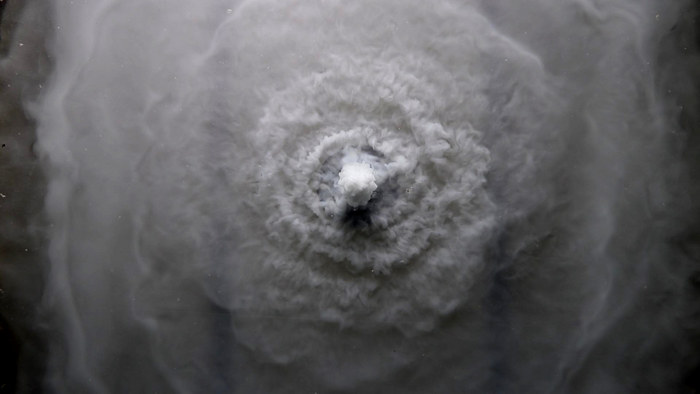
A new analysis of bronze-age underwater volcanic eruptions is helping researchers better understand the size, hazards and climate impact of their parent eruptions, which will mean more accurate climate simulations in the future.
Using data on the structure of galaxy clusters,
a recent study made detailed measurements of X-ray emission from galaxy clusters, which revealed the distribution of matter within them. In turn, the data helped the scientists test the prevailing hypothesis of the structure and evolution of the universe, known as Lambda-CDM.
America doesn't have a science literacy problem, at least in a relative sense. Though only 29 percent of American adults can demonstrate good science literacy, that is still enough to be number one in the world.(1)
Behavioral data often reveal differences that don't show up on surveys, where answers are free and often aspirational. Data show, for example, that men donate more than women while people who support charities more also have more conservative political stances. The rational is they choose the organizations they want to help, the ones doing work they like. Yet if you get a coffee paid for by the person in front of you at Starbucks, it is likely someone on the left. Charity and generosity are often distinct.
A new survey isn't actual behavior but it does lend to the belief that left wing people feel like they are more altruistic.
If you’re a gardener, you may use peat moss - decomposed Sphagnum moss - in soil because it helps retain moisture.
Peatlands, wetlands characterized by a thick layer of water-saturated, carbon-rich peat beneath living Sphagnum moss, trees, and other plant life, cover just 3 percent of Earth’s land area but may store a third of all soil carbon. That's made possible in large part by microbes. Two microbial processes in particular — nitrogen fixation and methane oxidation — strike a delicate balance, working together to give Sphagnummosses access to critical nutrients in nutrient-depleted peatlands.
The
Swedish Institute for Space Physics (IRF) is located in Kiruna, a minerary town close to the northern tip of Sweden, above the arctic polar circle. The Space Campus of Kiruna is one of three different centres - the IRF space lab, the EISCAT center, and the Lulea University of Technology department of Space Technology and Atmospheric Science. Close to the complex is the Esrange space center, a multipurpose launching base benefiting from a large unpopulated impact and recovery area.
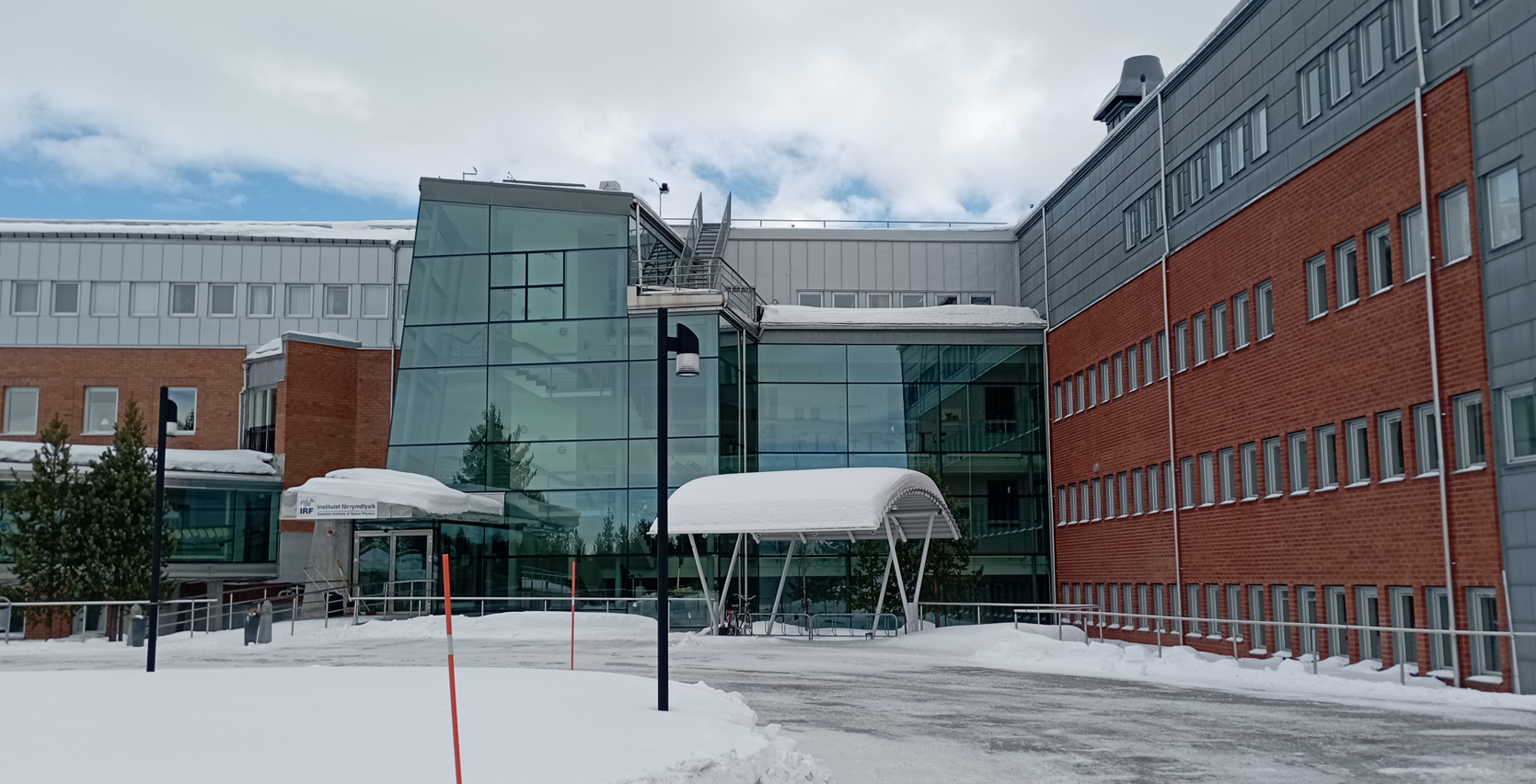 Above: the IRF from the visitor parking
In the last couple of days I have been busy writing a project to explore the potential of artificial intelligence to extract more information from particle detectors. In fact, while the development of these instruments in the course of the past 80 years has closely followed, and sometimes been a driver, of technological developments, I can see the issue of a progressive mis-alignment of detector design with the ultimate potential and final goals of large experiments. That mis-alignment is due to the rapid evolution of deep learning tools. They have now become the real elephant in the room in this area of studies: an entity that is present, but that risks being ignored despite its enormous impact.