Have a telescope? Heck, do you have a pair of binoculars?
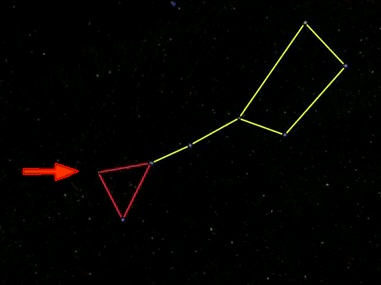
If so, head outside the city and take a look at a Type 1A supernova. It's 21 million light-years away, which sounds like a lot, but to astronomers and modern optics that's actually pretty close. So close that over the next few weeks you can even spy it with a pair of good binoculars (25x100), a short while after sunset.
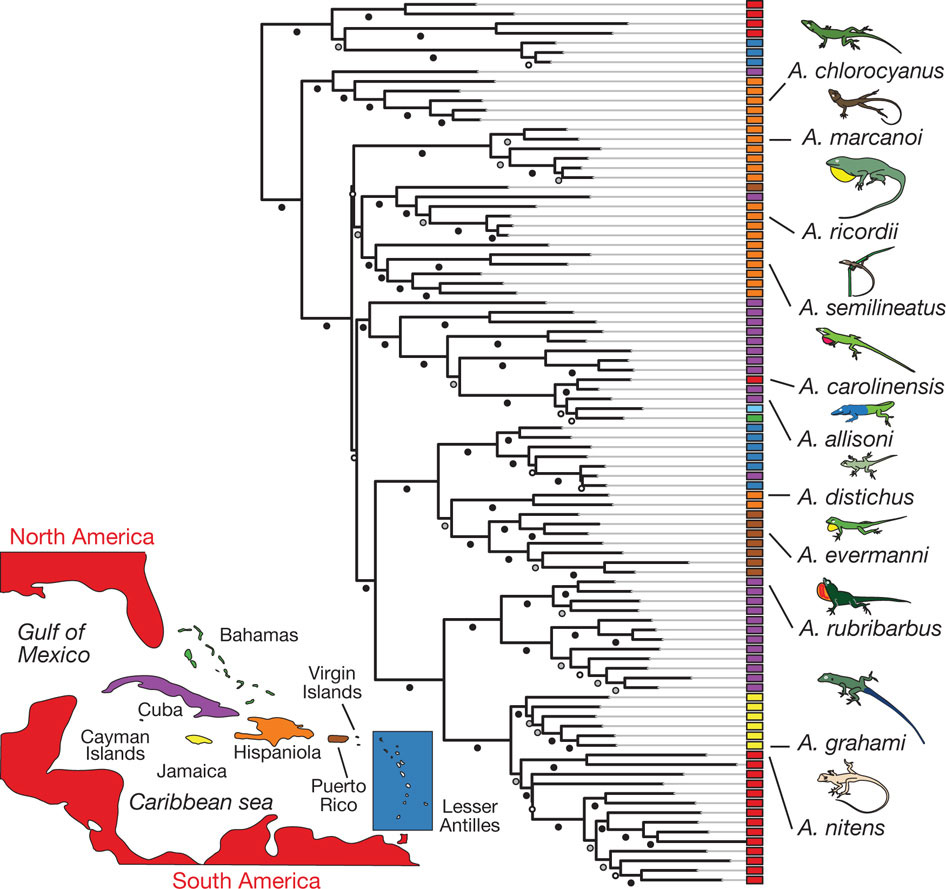
As the genome sequencing technologies progress, and the costs per genome sequenced go down, the number of genomes sequenced increases. So far, several hundreds of genomes have been sequenced, with many more on their way. Now, the first lizard genome has been sequenced. The genome of the green anole (Anolis carolinensis) is the first non-bird reptile genome sequenced, and, as such, an important ‘gap’ in the vertebrate genome record is beginning to be filled.
Already, some interesting observations have been made.
Note: I have discussed today's topic in one of my best articles here some time ago, and I also gave even more technical insight in another piece. I decided to revisit the topic once more under the stimulus of a online HEP magazine, which is going to feature a text of mine soon. They do not care if I use the same text here too, so you get to read it here first.
A non-invasive disease detection facility has been unveiled for use in Leicester Royal Infirmary's A&E department. It will detect the "sight, smell and feel" of disease without the use of invasive probes, blood tests, or other time-consuming and uncomfortable procedures.
If you're thinking that sounds like Dr. McCoy's tricorder on the "Star Trek" television series, you are right. But right now it's more like his sick bay than a portable device.
The University of Leicester have three different types of cutting-edge technology in combination under a range of situations. All the methods are non-invasive and could speed up diagnosis.
Entropic gravity is back in the news. Various science blogs again carry headlines dealing with entropic gravity. This time round, the reports are less favorable towards the idea of gravity being entropic, with headlines like
Experiments Show Gravity Is Not an Emergent Phenomenon screaming for attention.
Sounds like a death stab to Erik Verlinde's brainchild, right?
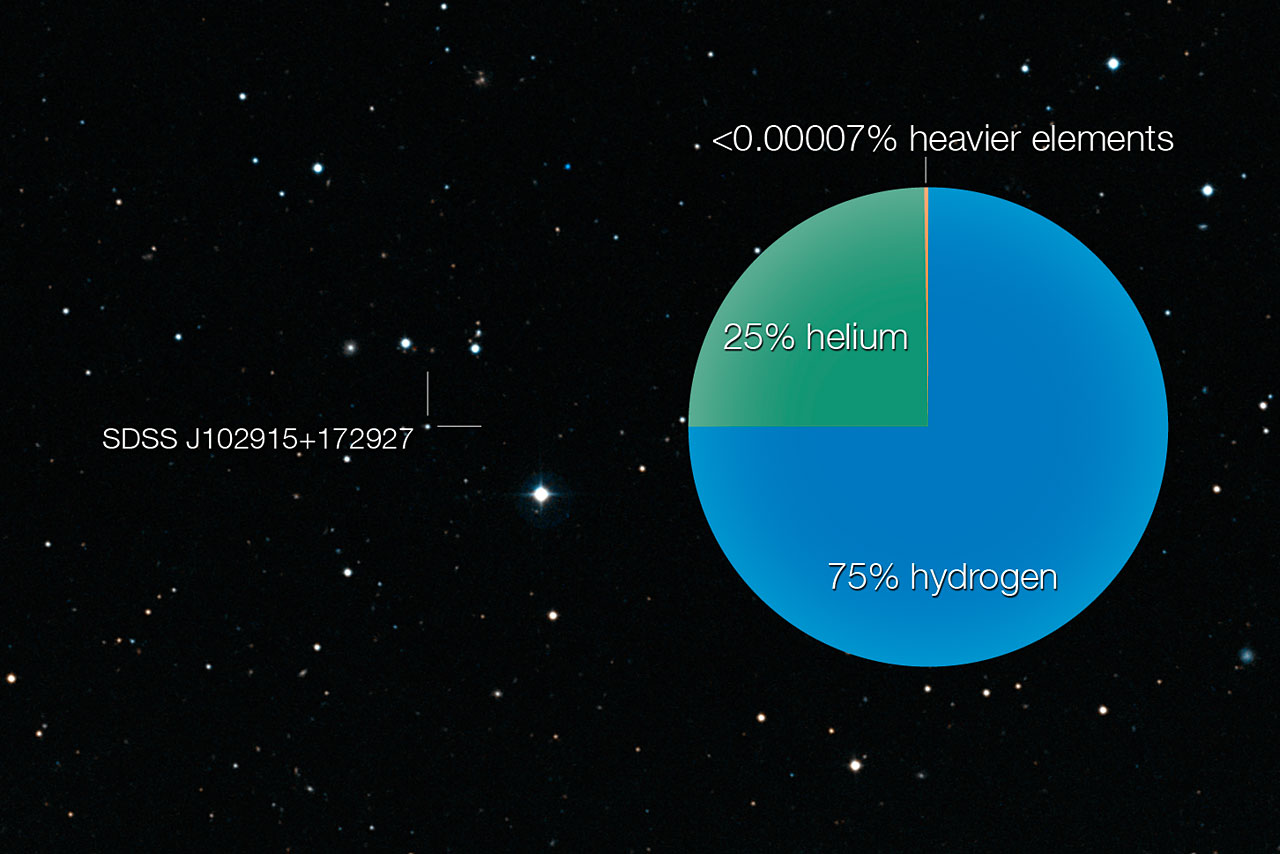
SDSS J102915+172927 is in the constellation of Leo. It has a mass smaller than that of the Sun and is probably more than 13 billion years old and has been found to have the lowest amount of elements heavier than helium (what astronomers call "metals") of all stars yet studied.
The mystery? It shouldn't exist.
The Moon And The Telephone
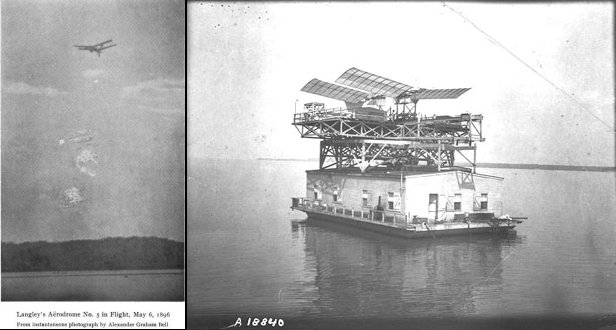
In the history of the discovery of climate change and its causes, there are many pioneers whose work in relevant areas is all but forgotten. Some of these people are not widely known. Others are widely known, but their climate-related work tends to lie forgotten in the archives. For example: Edison is famous as an inventor and Langley is famous as an aviation pioneer, but both men made little-known contributions to our knowledge of heat.
Picture the scene: you are about to start in a new school as a science teacher.
The pupils are due back in one week.
You have lessons to plan and resources to prepare.
You walk into your lab for the first time and see, with a sinking feeling, that the display boards are bare.
What on earth do you fill them with?
Planetary waves, named Rossby waves because they were discovered by
Carl-Gustav Rossby in the 1930s,
are intriguing natural phenomena that travel from East to West.
A new NASA study suggests two of the most destructive natural disasters of 2010 were completely natural and closely linked even though they occurred 1,500 miles apart.
As solar power continues to grow in popularity, science issues like pollution are being swept under the rug in hopes future technology will solve it before it becomes a crisis, much like with ethanol, MTBE, PBDEs and other once-popular efforts environmental lobbyists spent millions promoting.
Chris Cherry, assistant professor in civil and environmental engineering at University of Tennessee-Knoxville, says solar power's reliance s on lead batteries has the potential to release more than 2.4 million tons of lead pollution in China and India, a pattern likely to be repeated throughout much of the developing world, such as in Africa.