If you work in experimental high-energy physics you soon acquire a particular sensitivity to the economical display of relevant information. Producing figures that convey the most meaning with the minimum effort is sort of an art, and it is a necessary consequence that HEP experimentalists -the smart ones- end up converging on the definition of graphs which are better than all others in this respect.
You ever wondered why it is that we share only 50% of our genes with a sibling but 98% with chimpanzees?
Humans are a freak of nature. We are in between a so called ‘tournament species’ and a ‘pair-bonding species’. In other words: naturally very aggressive primates constantly stressed in the pressure grip of macro evolution. These and many other important issues are touched on in Robert Sapolsky's lecture on Behavioral Biology, Biology 150.
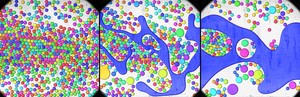
In microfluidic devices, small separated droplets flow in a stream of carrier liquid. Occasionally, selected droplets have to be merged to carry out a chemical reaction, which can be greatly facilitated with the use of electric field through a process of electrocoalescence.
Researchers from the Institute of Physical Chemistry of the Polish Academy of Sciences have recently found what governs the process and how to maximize the efficiency of merging.
Why would Mohamed Atta graciously let a car rental agent know the check oil light was on in the car he returned and then help crash a plane full of people and fuel into the World Trade Center on Sept. 11, 2001, an act of simple religious hatred?
It's a puzzle of psychology. The ability to deal kindly with people on an individual level and then demonize them when they are in a group has been a longstanding mystery. Group behavior, being social, obviously had benefits for early man; trying to live without a group was practically a death sentence even when an 'individual' victory in ways large and small was absolutely necessary for survival.
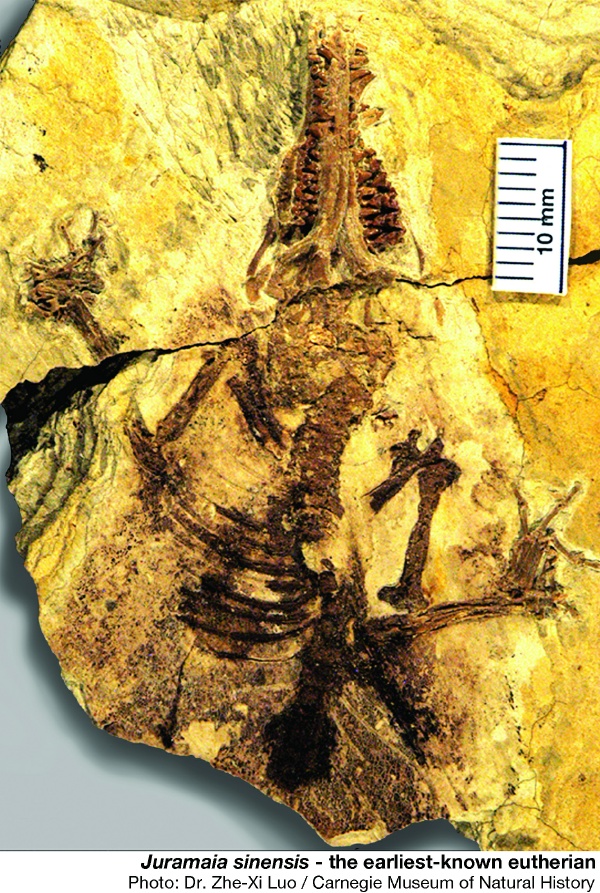
A fossil discovered in northeast China has pushed back mammal evolution 35 million years and provides new information about the earliest ancestors of most of today's mammal species—the placental mammals.
A team of scientists led by Carnegie Museum of Natural History paleontologist Zhe-Xi Luo describes in Nature Juramaia sinensis, a small shrew-like mammal that lived in China 160 million years ago during the Jurassic period. Juramaia is the earliest known fossil of eutherians, the group that evolved to include all placental mammals, which provide nourishment to unborn young via a placenta.
Successful aging and positive quality of life indicators correlate with sexual satisfaction in older women, according to a report in the Journal of the American Geriatric Society which also shows that self-rated 'successful' aging, quality of life and sexual satisfaction appear to be stable even in the face of declines in physical health of women between the ages of 60 and 89.
The study used 1,235 women enrolled at the San Diego site of the Women's Health Initiative (WHI) study, an ongoing program funded by the National Institutes of Health which has addressed causes of death, disability and quality of life in more than 160,000 generally healthy, post-menopausal women since 1993.
The authors of a new study in Nature Neuroscience studied mechanisms used by the brain to store information for a short period of time. The cells of several neural circuits store information by maintaining a persistent level of activity; a short-lived stimulus triggers the activity of neurons, and this activity is then maintained for several seconds. The mechanisms of this information storage phenomenon occurs in very many areas of the brain.
There's long been a maddening belief by a subset of psychologists who have never actually been to the Eastern part of the world that Asia is some collectivist Utopia.
When it comes to inflated self-importance - hubris, even - some research contends, there is more of it in the west because Western culture prides itself on independence, personal success and uniqueness while in the East where harmony and belonging are supposedly valued, people are more modest.
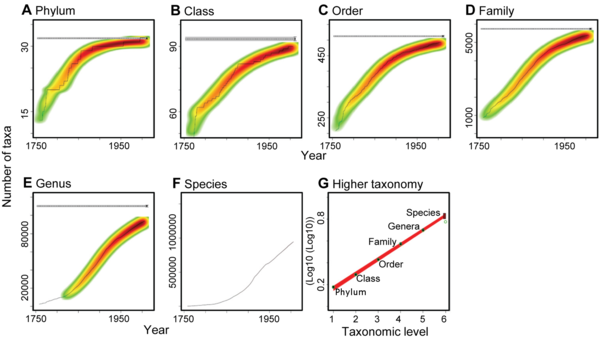
How many organisms live on this little planet of ours? A pretty straight-forward question. The answer, however, is much more enigmatic. Estimates range from a careful 3 million to a huge 100 million. Now, a new approach, published in PLoS Biology, has yielded another estimate. The new method used resulted in an estimate of 8.7 million (± 1.3 million SE) eukaryotic species, of which 2.2 million (± 0.18 million SE) can be found in the oceans. As about 1.2 million species are catalogued, this would mean that roughly 86% of organisms on earth still await discovery, a number that rises to 91% in the oceans.
Where do these numbers come from?
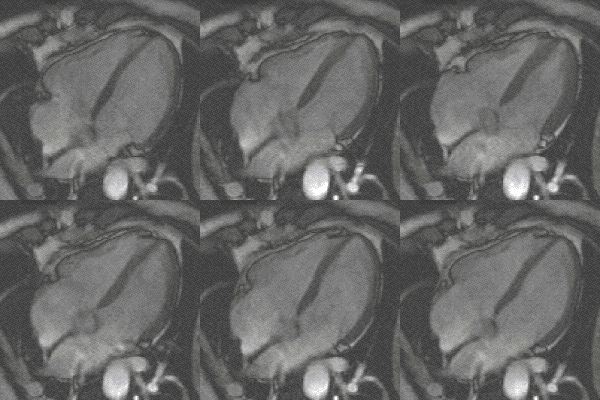
Cardiovascular diseases (CVD) already account for one third of all global deaths and raising, with effective heart regeneration therapies yet to be developed despite worldwide research efforts. But a new study by scientists from Oxford University and the University of Coimbra in Portugal might have put us a step closer with the discovery of the key molecule regulating the development of several heart and blood vessels’ tissues in the zebrafish embryo.