Conventional Canadian wisdom suggests that all women should have a screening mammogram starting at age 50 (age 40 in most of the USA). The reason given is that mammograms detect cancers earlier, while it is still possible to treat them. Instead of dying of cancer, you can be a “survivor”. It’s a powerful message preying on the fears of women and their families. October is “breast cancer awareness” month and the promoters of screening mammography were out in full force when I got the telephone call to come in and get my first mammogram. I left their message on my machine to think about it.
Fellow Tubesat pioneer Wesley Faler of
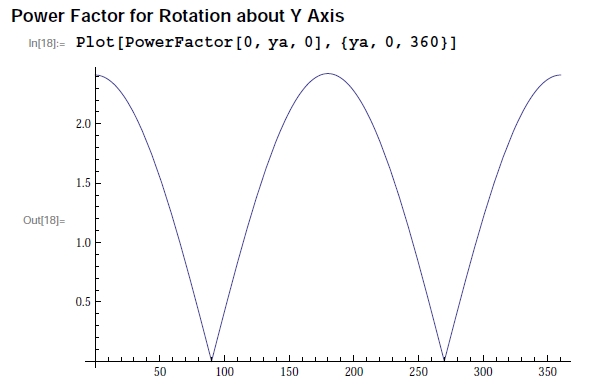
Fluid&Reason has calculated power curves we can expect for our orbiting picosatellites. His summarized estimate is that 6-cell solar panel in a sun-synchronous polar orbit with perfect positioning can expect to produce 0.5 Watts. This sets our ultimate power budget for the satellite, and helps us choose appropriate instrumentation and control schemes.
Think you can't live without caffeine? Some bacteria can live on caffeine.
Previous studies discovered caffeine-degrading bacteria, but new research one goes a step further and identifies four bacteria that can live on the compound. One of them, known as Pseudomonas putida CBB5, was found in a flowerbed outside a University of Iowa research laboratory. Now they have identified the gene sequence that enables the bacterium to break down the caffeine compound in nature.
The expansion of the universe should slow as time marches on, some even conjectured it would slow and then collapse again - that's what all that mass and its gravity in the universe should do.
But Hubble showed us distant supernovae in the 1990s and researchers realized the universe had actually been expanding slower in the past, not faster - and that was a pickle for current theory. So researchers hypothesized Einstein's theory of gravity and a cosmological constant might account for it, or some strange kind of energy-fluid filled space or Einstein's theory of gravity was wrong and a new one including some kind of field creates cosmic acceleration. No one knew what it was, but they called this mystery Dark Energy.
Protein folding is where the coiled strings of amino acids that make up proteins in all living things fold into more complex three-dimensional structures. Incorrectly folded proteins in humans result in such diseases as Alzheimer's, Parkinson's, Huntington's, emphysema and cystic fibrosis, so developing better modeling techniques for protein folding is a good strategy to assist in creating more effective pharmaceutical treatments for such diseases.
By understanding how proteins fold, and what structures they are likely to assume in final form, researchers are then able to move closer to predicting their function.
The three conditions mentioned in the title, malaria, HIV and tuberculosis, are responsible for about 5 million deaths per year and thus constitute some of the most compelling challenges in biomedical research. Slowly but surely, new knowledge is being gathered about these conditions, improving the odds of developing a functional vaccine.
The recent rise of systems biology might also provide an important tool, according to Rappuoli and Aderem (2011). Through using systems biology to analyze data sets obtained during proof-of-concept trials, correlates of protection or signatures of immunogenicity could be identified, thereby aiding the acceleration of large scale clinical trials.
Extraordinary claims require extraordinary evidence. This is true of all science, but especially in palaeontology, where only a handful of exceptional fossils can give a disproportionate amount of weight to a hypothesis. As a consequence, palaeontologists are rightly highly suspicious of exceptional fossils, and thus new finds are, at first, treated with derision and pathological suspicion, until, after much scrutiny, they are found to make the grade.
Never was this more the case than with Archeoraptor. Here was a fossil that had a lot to prove and a long way to fall. But, despite the whinings of Kent Hovind and the like, from the very start, very few people were fooled by Archeoraptor, and the whole debacle barely registered within the scientific community.
Undecidability is weird, much weirder than quantum theory, which is benign by comparison. Let me give a simple example for something that may well be undecidable:
Take any natural number N. If it is even, divide it by two. If it is odd, then first multiply by three and add one before you also divide by two. This gives you a new number N1 which is either N/2 or (3N + 1)/2. Now repeat the same procedure over and over again, i.e. look at whether N1 is even or odd and get either N2 = N1/2 or - well you know what.
A pleasure it is, when Chemistry World drops through my letterbox each month, to read the Historical Profile therein.
This month (June 2011) featured the discovery of
nitrous oxide, aka laughing gas, in
No Laughing Matter, by John Mann, emeritus professor of chemistry, Queen’s University Belfast. The caption declares:
Had it not been for nitrous oxide’s subversion as a recreational folly, its utility as an anaesthetic could have been uncovered much earlier.
It is generally accepted that pathological violence is a combination of factors, both biological and psychological, but brain studies of violent criminals haven't revealed much.
However, a new brain imaging study suggests that men with a history of violent behavior may have greater gray matter volume in certain brain areas, whereas men with a history of substance use disorders may have reduced gray matter volume in other brain areas.