

How The Media Has Hurt The Japanese People


First and foremost I have a personal message for the 180 or so heroes who have been working in shifts around the clock to save their nation from a worse disaster than the one that Japan has already suffered.


To the Heroes of Fukushima: 

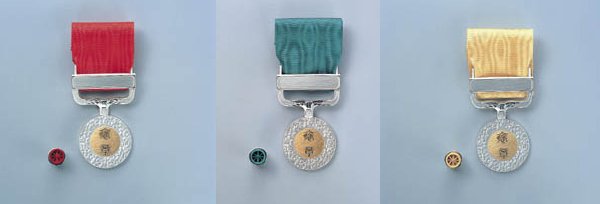
May you each be most correctly and sincerely honored - not just by by your own nation, but by the whole world.  You have risked your lives to save others.  You are morally remarkable people who have actively taken part in serving our global society.  Through your diligence and perseverance you have become public role models.  You each deserve at least these three medals of honor:
Portuguese researchers have discovered a "broad spectrum" cancer suppressor gene called LRP1B which acts by removing proteins crucial for cancer development from the tumor environment.

The fact that LRP1B does not act on the tumor itself (in this study thyroid tumors) but, instead, on molecules which are known to be important to many different cancers is what makes it so interesting. Because this means that LRP1B, and also therapies capable of inducing it (or mimicking its effect), could in theory be used to treat a variety of cancers.

For decades we have been told that with the lessons learned from the 1986 Chernobyl disaster, nuclear energy is safe. As the still unfolding mayhem at the Dai-Ichi plant in Fukushima, Japan, proves, nothing could be further from the truth.

Infants and toddlers can suffer serious mental health disorders, yet are unlikely to receive treatment that could prevent lasting developmental problems, according to an analysis in  American Psychologist.
For years now the generic PC was getting somewhat cheaper and that was generally good for science. Lots of PCs are running or assisting in many different ways experiments and measurements in laboratories of many sorts.

The generic PC could have been getting much cheaper and perhaps specialized, but the complicated interplay between the dominating operating system and consumer market social aspects lead to the development which simply happened. But somehow everybody in science was happy.
In the category of "Duh?" for the week, we have a new article from France looking at how parental beliefs regarding autism dictate treatment choices. Dardennes et al. (2011) put 78 parents through a questionnaire called "the Lay-Beliefs about Autism Questionnaire (LBA-Q; Furnham&Buck, 2003). This questionnaire explores beliefs regarding the etiology and treatment of autism. LBA-Q’s authors considered two main academic theories of the possible causes and treatment of autism: the psychogenic model and the biomedical model" (Dardennes et al.).


