


Supersymmetry, the extension of the Standard Model of particle physics that was once sold as an almost certain discovery that the LHC experiments would bump into upon starting to collect proton-proton collisions, is not in a very healthy situation these days.

The Rubber Hand illusion never fails to teach us new things - not just about neuroscience, but also about culture.

If you are not familiar with the Rubber Hand illusion, it shows that the combination of seeing a touch on a rubber hand and feeing a touch on your own creates the illusion that the fake hand is now part of your body. In a new paper, scholars did that; they asked participants to look at a fake hand being touched, while at the same time the experimenter touched the participants' own hand, hidden out of view.

Between 1994 and 2008, Canada had 66,716 hospital admissions for cycling accidents. 30% of those were head injuries. Cyclists are vulnerable road users and head injuries account for 75% of cycling-related deaths. It's a dangerous way to travel and so the debate has long been whether or not helmet legislation makes any difference in injuries. 

During that time, there was a substantial and consistent fall in the rate of hospital admissions for cycling related head injuries - and reductions were greatest in provinces with helmet legislation - but that trend had been happening before the law was enacted.

A new study uses mouse genetics to demonstrate how a handful of workhorse signaling pathways interact to construct multiple structures that comprise the vertebrate body and how crosstalk between two of those pathways - those governed by proteins known as Notch and BMP (for Bone Morphogenetic Protein) receptors - occurs over and over in processes as diverse as forming a tooth, sculpting a heart valve and building a brain. 

One Notch family protein, Notch2, shapes an eye structure known as the ciliary body (CB), most likely by ensuring that BMP signals remain loud and clear. Understanding CB construction is critical, as excessive pressure is one risk factor for glaucoma.  

The toxin that causes botulism is the most potent that we know of - just 1/1,000th the weight of a grain of salt can be fatal, which is why so much effort has been put into keeping Clostridium botulinum, which produces the toxin, out of our food.

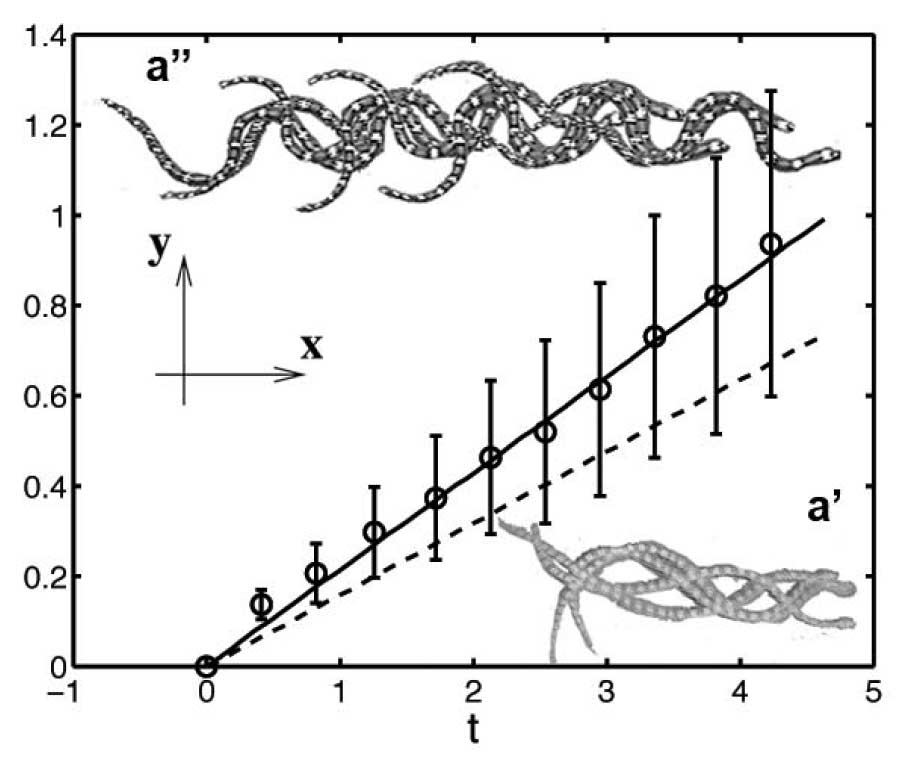
“Previous studies of slithering have rested on the assumption that snakes slither by pushing laterally against rocks and branches.” explain a joint research team from the Applied Mathematics Laboratory, Courant Institute of Mathematical Sciences, of New York University and the Departments of Mechanical Engineering and Biology, at the Georgia Institute of Technology.

The music-recording industry has been under pressure lately, as it struggles to adapt to the age of the internet.  This is the second major structural revolution to challenge the recording industry in the past few decades, the first being when video killed the radio star.  Music videos surged in popularity (and budget) in the '90s, but during the '00s (pronounced "uh-ohs") music video budgets seemed to have plateaued and begun to decline.  In fact, just 3 of the 20 most expensive (inflation-adjusted) music videos of all time were produced after 2000.  The most expensive of all time remains Michael and Janet Jackson's "Scream" at $10 million.

The evolution of the complex, weight-bearing hips of walking animals from the basic hips of fish was a much simpler process than previously thought, according to a new paper.

Tetrapods, four-legged animals, first came to land about 395 million years ago - a significant step, literally and figuratively, and it was made possible by strong hipbones and a connection through the spine via an ilium, features that were not present in the fish ancestors of tetrapods. 

The drug candidate J147 was able to reverse memory deficits and improve several aspects of brain function in mice with advanced symptoms of Alzheimer's disease, according to a new study.


