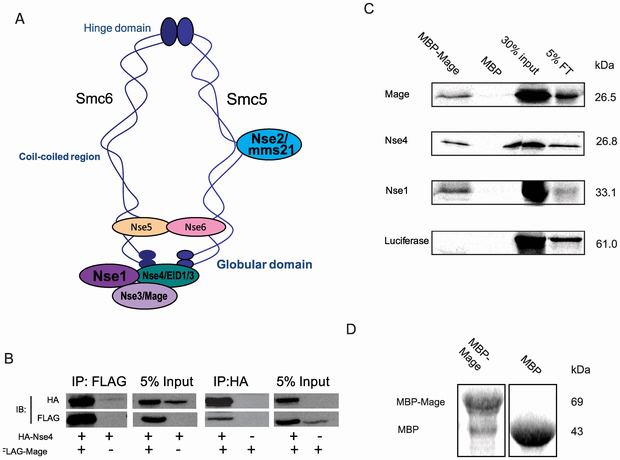



Research has established that caffeine interferes with processes in cancer cells that control DNA repair, a finding that has generated interest in using the stimulant as a chemotherapy treatment, but given the toxic nature of caffeine at high doses, researchers from the University of Alberta have instead taken advantage of caffeine's lethal effects on cancer cells identify genes and pathways responsible for DNA repair.

The research team found that fruit flies with a mutant gene called melanoma antigen gene, or MAGE, appeared normal when fed a regular diet but died when fed food supplemented with caffeine. On closer inspection, they found the mutant flies' cells were super-sensitive to caffeine, with the drug triggering "cell suicide" - apoptosis. 

Researchers have taken a step forward in efforts to help people with memory loss tied to brain disorders, such as Alzheimer's disease. Using sea snail nerve cells, the scientists reversed memory loss by determining when the cells were primed for learning. The scientists were able to help the cells compensate for memory loss by retraining them through the use of optimized training schedules. 

This latest study builds on a 2012 investigation that pioneered this memory enhancement strategy. The 2012 study showed a significant increase in long-term memory in healthy sea snails called Aplysia californica, an animal that has a simple nervous system, but with cells having properties similar to other more advanced species including humans.

X-ray astronomy is only 50 years old but nothing shows the progress of the technology like a new view of a supernova scientists watched over a thousand years ago. 

In 2013, stem cell therapy is touted as the future of medicine by proponents in Europe and Asia while scientists in America urge caution. Contrast that to a decade ago, when the concern was that American President George W. Bush was holding back progress because he limited federal funding for one form of stem cell research. In 2012, Governor Rick Perry of Texas not only believed in stem cell research, he declared that he wanted to make his state the home of American stem cell science.

Some people just don't know how to put patterns and colors together. Or anything about style.

Some of that is cultural, of course. No one really wears corsets any more, for example, and good luck finding anyone outside the Mid-East who knows what a caftan is. Some new technology may herald a future for fashion, its creator claims; computerized fabrics that change their color and their shape in response to movement.

Evolution is misunderstood by millions.  And, it has to be said, a lot of the time, this problem isn't helped by the way things are reported on the TV or in the news.


These are the 5 most common terms that, when I hear them used, I die a little. Though their effect is subtle, all of these terms perpetrate common myths about the way evolution works. The sooner they become extinct, the better!

1. Survival of the Fittest
Those who know the meaning of ‘third culture’, know that since the days when it was lamented that the members of the intellectual elite would not even know the second law of thermodynamics, the land grab of science has been astounding and is indeed an ongoing coming to power by science. 
The emergence of antibiotic-resistant bacteria is a common concern in hospitals worldwide, and is the evolutionary result of the selective pressures caused by our extensive use of antibiotics to fight bacterial infections.

Scientists are often fighting the losing battle against antibiotic-resistant bacteria, with every new antibiotic treatment outwitted by the bacteria’s uncanny ability to adapt to whatever adversity comes their way. Although bacteria’s evasive strategies may have outwitted scientists in the last century, their strategies still fall prey to the nature’s billion-year old bacteria-killing virus known as bacteriophages.

The most powerful batteries on earth are only a few millimeters in size but a cellphone version can jump-start a dead car battery and then recharge the phone in the blink of an eye. 

Led by Professor William P. King, researchers at the University of Illinois at Urbana-Champaign show that the new microbatteries out-power even the best supercapacitors and could drive new applications in radio communications and compact electronics.

When many of us were kids, water-transfer printing meant a fake tattoo. For our children, it will mean peel-and-stick versions of solar cells that charge cell phones, change the tint on windows, or power their toys. 

Peel-and-stick, or water-assisted transfer printing (WTP), technologies were developed by a group at Stanford and have been used before for nanowire based electronics. A new partnership between Stanford University and the U.S. Department of Energy's National Renewable Energy Laboratory (NREL) has conducted the first successful demonstration using actual thin film solar cells, NREL principal scientist Qi Wang said.


