


Originating from Africa, India, and the Middle East, frankincense oil has been found to have many medicinal benefits. Now, an enriched extract of the Somalian Frankincense herb Boswellia carteri has been shown to kill off bladder cancer cells. Research presented in the open access journal, BMC Complementary and Alternative Medicine, demonstrates that this herb has the potential for an alternative therapy for bladder cancer.

Bladder cancer is twice as common in males as it is in females. In the US, bladder cancer is the fourth most common type of cancer in men, whilst in the UK it is the seventh most common cause of death amongst males.

CAMBRIDGE, Mass.--A rising tide is said to lift all boats. Rising global temperatures, however, may lead to increased disparities between rich and poor countries, according to a recent MIT economic analysis of the impact of climate change on growth.

After examining worldwide climate and economic data from 1950 to 2003, Benjamin A. Olken, associate professor in the Department of Economics, concludes that a 1 degree Celsius rise in temperature in a given year reduces economic growth by an average of 1.1 percentage points in the world's poor countries but has no measurable effect in rich countries.

Olken says his research suggests higher temperatures will be disproportionately bad for the economic growth of poor countries compared to rich countries.

(PHILADELPHIA) A novel signaling pathway plays a significant role in the production of aldosterone, a hormone that promotes heart failure after a myocardial infarction, according to a study conducted by Thomas Jefferson University researchers.

The findings, which will be published online this week in Proceedings of the National Academy of Sciences, show that aldosterone production is mediated by a protein called beta-arrestin-1. Beta-arrestin-1 binds to angiotensin II receptors when they are activated by angiotensin II.

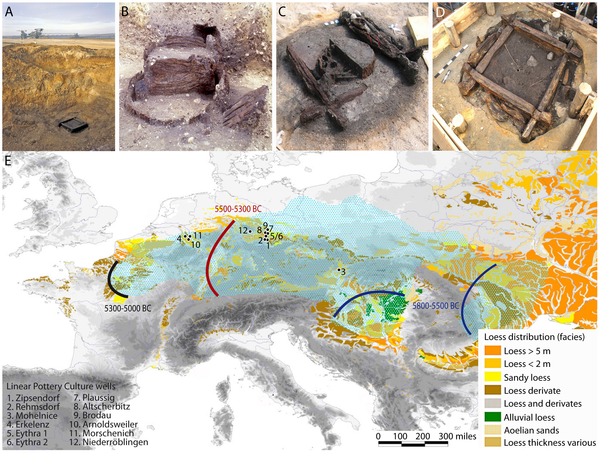
Prehistoric farming communities in Europe constructed water wells out of oak timbers - it seems early farmers were skilled carpenters long before metal was discovered or used for tools. 

 These first Central European farmers migrated from the Great Hungarian Plain approximately 7,500 years ago, and left an archaeological trail of settlements, ceramics and stone tools across the fertile regions of the continent, a record named Linear Pottery Culture (Linearbandkeramik - LBK). However, much of the lifestyle of these early settlers is still a mystery, including the climate they lived in and technology or strategies they used to cope with their surroundings. 

Solar panels are easily susceptible to mechanical problems.  Storms, leaves, you name it - but some of that is because they are rigid.  That rigidity also limits their applications.

New flexible, decal-like solar panels that can be peeled off like band-aids and stuck to virtually any surface, from papers to window panes, could make solar power a lot more deployable.  The world's first peel-and-stick thin-film solar cells have been created by researchers at Stanford University and unlike standard thin-film solar cells, their peel-and-stick version does not require any direct fabrication on the final carrier substrate.

When is diversity a bad thing?  When it comes to environmental action, according to a new paper from  the University of East Anglia (UEA). 

Scandinavian countries, low in ethnic and religious diversity, take more collective action than more diverse nations, like the UK, China and the United States. But the UEA paper frames diversity using the more negative term 'fragmentation'.

Americans may love separation of church and state and the mix of multiple religions in the USA but Dr. Elissaios Papyrakis, a senior lecturer in UEA's School of International Development and a senior researcher at Vrije Universiteit
in Holland, found that religious diversity has an even greater detrimental impact on environmental performance than ethnic diversity. 

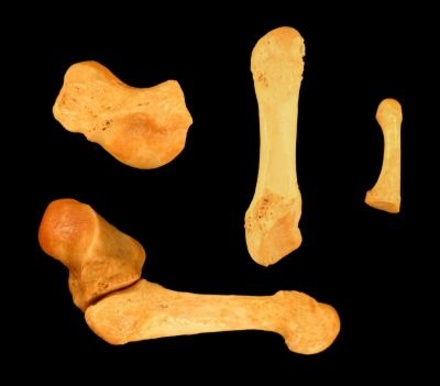
Human hands and their remarkable dexterity have given us everything from the guitar of Segovia to the art of the Dutch masters but, says David Carrier from the University of Utah, they evolved to be what they are for a more practical reason.  As a weapon. 

Carrier and colleague Michael Morgan publish their hypothesis that human hands evolved their square palms and long thumb to stabilise the fist and produce a compact club for use in combat in The Journal of Experimental Biology.

Outrage about another school shooting does its part to increase vigilance against the odd ones out, the misfits soiling the norm of usual irrationality, the a-socials, the depressed, the autistic, the evil psychopaths.  Gate keeping HR departments homogenize the workforce.  “Professionalism” cleans academia of all that does not perform under the marketing paradigm.

Scientists have found that therizinosaurs defied the sterotype of sensory abilities of plant-eating animals. Their  exceptional sensory abilities - smell, hearing and balance - were well developed and might have affected or benefited from an enlarged forebrain, something typically associated with predators. 

In many modern discussions about bacteria, or germs, we find that novel descriptions are used that are more self-involved than accurate regarding the role of bacteria and microbes.  Certainly there is an increased awareness that many microbes are commensal [or "good"] and are necessary for our well-being, while others are considered "bad" and cause disease.

